For years, SA learned to live carefully, planning her days around uncertainty, limiting her movements and carrying a quiet fear she could not easily explain.
At 27, the young mother should have been rebuilding her life after childbirth. Instead, she found herself withdrawing from the very routine that once defined her.
“It started after I gave birth,” she says.
“I knew something was not right, but I didn’t understand what it was.”
A third-degree tear during delivery had not been properly repaired. What followed was something she had never anticipated: persistent urine leakage that disrupted her daily life and slowly eroded her confidence.
“I could not hold urine for long. Even simple things like exercising became difficult. I was always worried.”
Her world became smaller. Social spaces felt uncomfortable.
Physical activities became a risk. And like many women facing similar conditions, she struggled in silence.
Her turning point came during a visit to the Jaramogi Oginga Odinga Teaching and Referral Hospital (JOOTRH), where she learned about a free fistula repair camp. She chose to try.
Now recovering after surgery, she speaks with a sense of cautious relief.
“I feel better already. I’m not fully there yet, but I know I’m healing,” she says.
The hidden burden
Obstetric fistula is often described in clinical terms but its true weight is carried in silence.
According to the World Health Organization, between 50,000 and 100,000 women are recorded annually, many of them go untreated.
Behind these numbers are lives quietly reshaped by a condition that affects far more than the body.
For Sly*, a survivor and warrior who visited the mothers to encourage them after surgery, her journey began in 2011 following the birth of her last child. What followed was not merely a health complication but a gradual loss of normalcy.
“I didn’t understand what was happening to me. I just knew I was in trouble,” she says.
The symptoms persisted, bleeding, leakage and discomfort.
But it was the social impact that cut deepest.
“I could not stay close to people. I avoided them. I felt alone.”
Over time, isolation became part of her life. At one point, she had to leave her home, unable to cope with the condition and the pressure that came with it.
“I didn’t know where to go or how to get help,” she recalls.
“And the cost of treatment felt impossible.”
For years, she lived in that uncertainty until 2023, when she accessed treatment in Homa Bay.
Recovery brought more than physical healing. She returned to her family. Rebuilt her life and started a small clothing business.
“Now I am okay. I live normally again.I tell other women not to hide. Help is there,” she says.
Stories like SA’s and Sly’s are common—different journeys, but similar struggles.
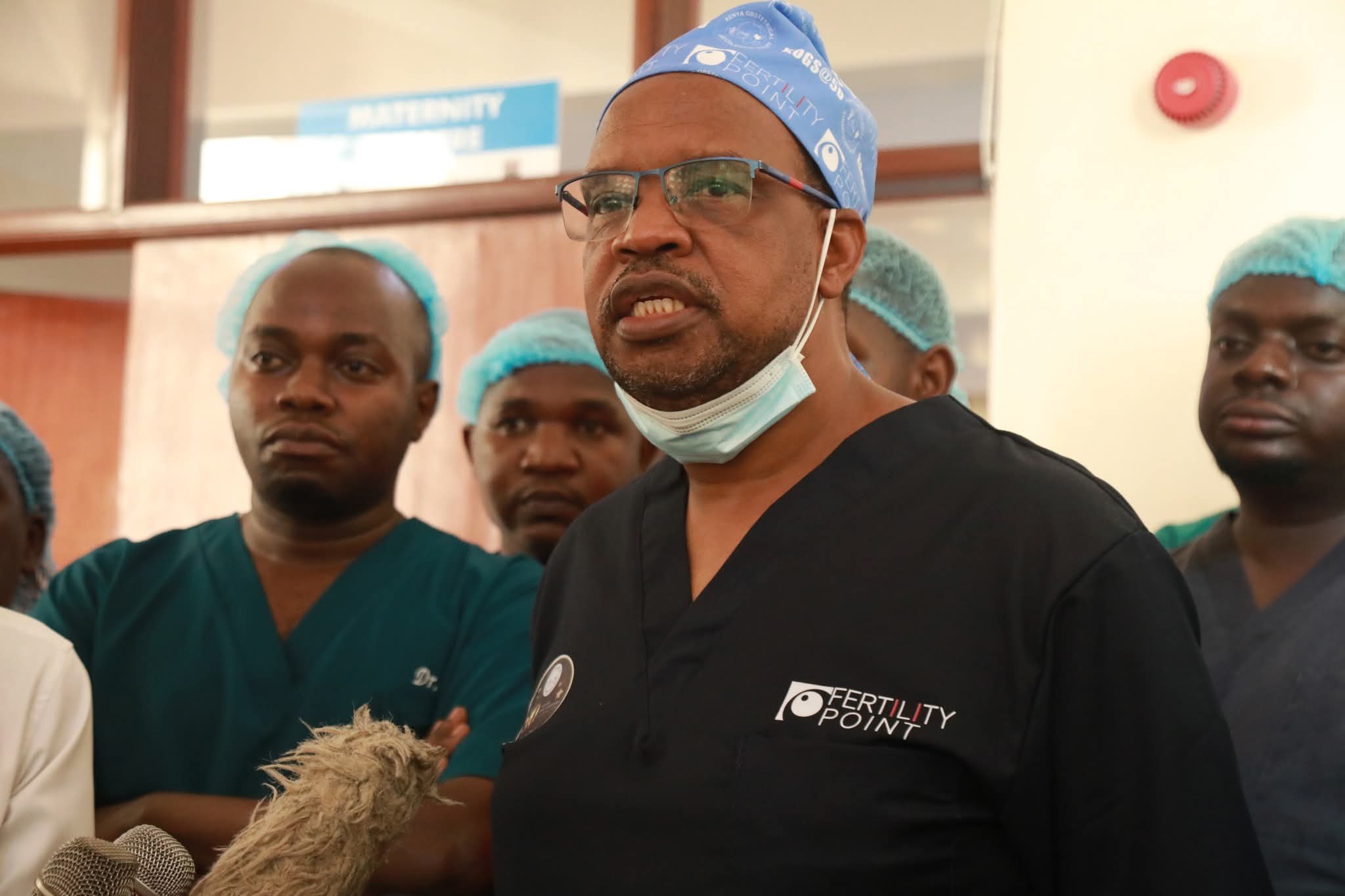
Dr Paul Mitei, an obstetrician and gynaecologist at JOORTH describes fistula as one of the most devastating maternal health conditions not just physically, but psychologically and socially.
“These women go through intense psychological trauma,” he explains.
“When you have a fistula, you begin to feel like you are no longer part of society.”
He says the uncontrollable leakage of urine or stool and the associated smell, often leads to stigma and deep personal distress.
“You find that many of them isolate themselves. They withdraw from family, from church and from community life. Even when visitors come, they stay away,” Mitei says.
The impact extends beyond the individual.
“Families are affected. Some relationships break down. These women are no longer able to perform their roles in society or contribute economically. Their productivity is affected.”
Yet even with the burden so visible, access to treatment remains limited.
Dr Mitei points to a critical shortage of skilled fistula surgeons in Kenya.
“We have only a few specialists, yet we continue to see about 3,000 new cases every year,” he says.
“This means we will still be dealing with fistula for a long time.”
Some cases, he explains, are complex and difficult to treat.
“There are fistulas you repair and they fail. You repair again and they still leak. Some are very frustrating and may never fully heal,” Mitei says, noting that such cases often require repeated procedures that can affect a patient’s quality of life.
Beyond treatment, he stresses the urgent need for prevention.
“We must ask ourselves what we are doing to stop fistula from happening in the first place,” he says.
Most cases, Mitei explains, are linked to prolonged labour without timely medical intervention often in settings where access to emergency obstetric care is limited.
Despite the challenges, what keeps him going is the transformation he witnesses.
“When a woman heals, when she becomes dry again, when she goes back to her family and her work, that is the biggest motivation,” he says.
Mitei emphasises the central role women play in families and communities
“A mother is the centre of the family. When she is well, the family thrives. When she is not, everything is affected.”
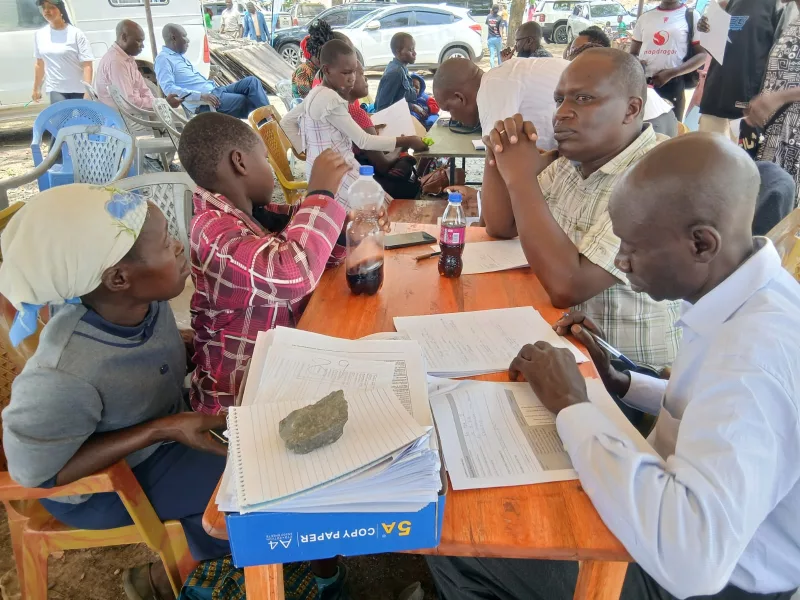
The recently concluded fistula repair camp in Kisumu was part of efforts to bridge this gap.
Supported by the M-Pesa Foundation in partnership with the Flying Doctors Society of Africa, the initiative brought together medical teams, resources and awareness to reach more women.
For many patients, it was their first real opportunity for treatment.
Zizwe Awuor from Safaricom says the experience of witnessing the surgeries was deeply moving.
“You meet women who have lived like this for years. Some cannot believe it can be fixed,” she says.
She notes some procedures take less than an hour but have lifelong impact.
“The joy after surgery is something you cannot describe. It changes everything.”
For Tanya Nduati, CEO of the Flying Doctors Society of Africa, says addressing fistula goes beyond surgery.
“We are treating more than a physical injury. These women need emotional and social support to fully heal,” she says.
A future reclaimed
Back in the ward, SA is beginning to imagine life differently. Not defined by fear. Not limited by uncertainty. Just normal.
“I want other women to know they don’t have to stay like this,” she says.
Around her, other women are beginning similar journeys walking in with years of silence and walking out with something they had almost lost.
And in that quiet transformation, a new narrative is taking shape, one where pain no longer has the final word.