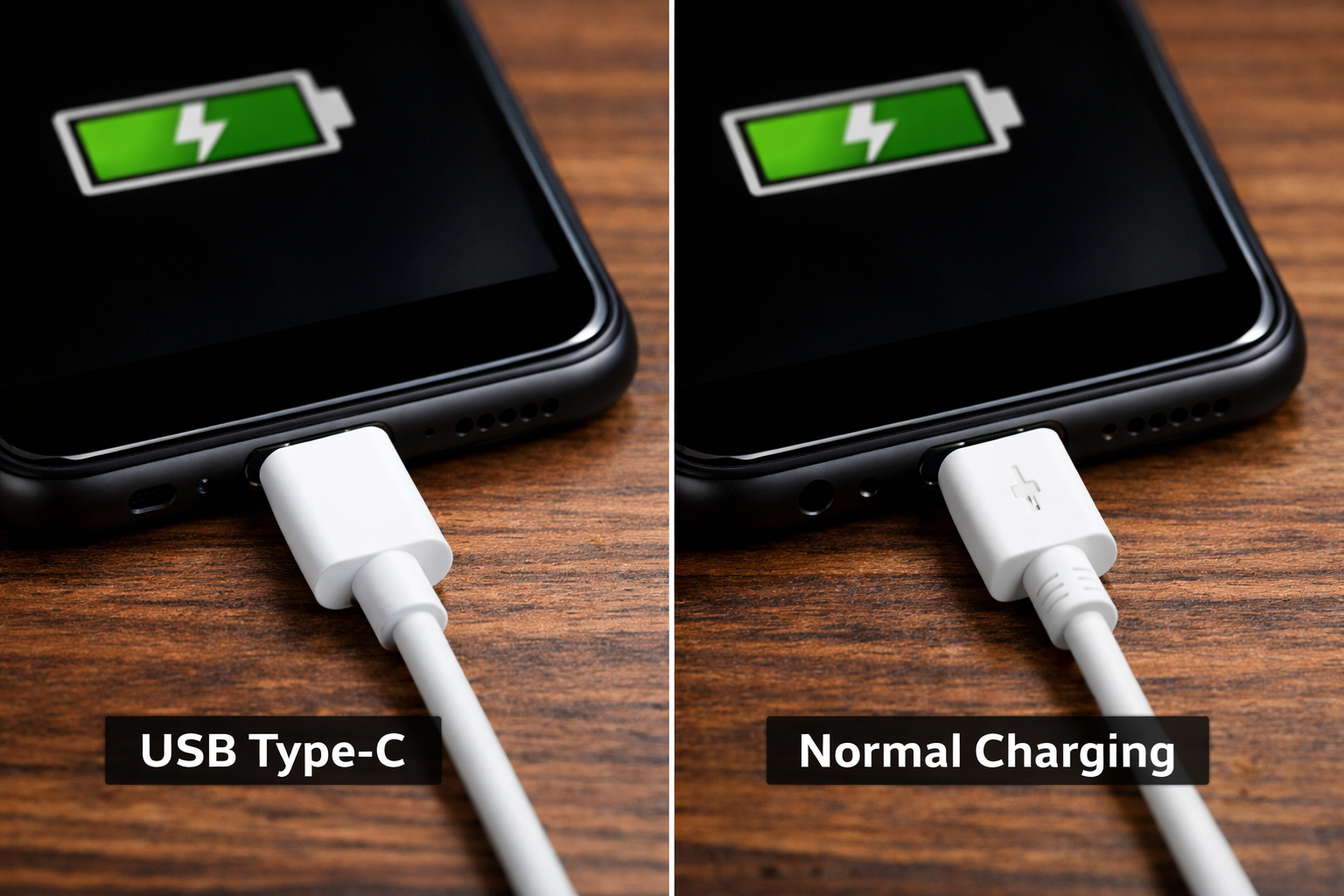
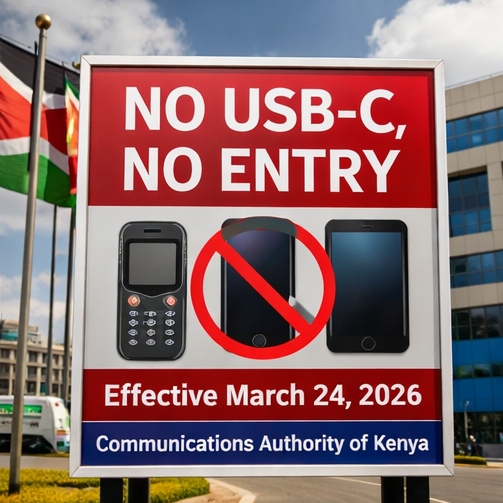
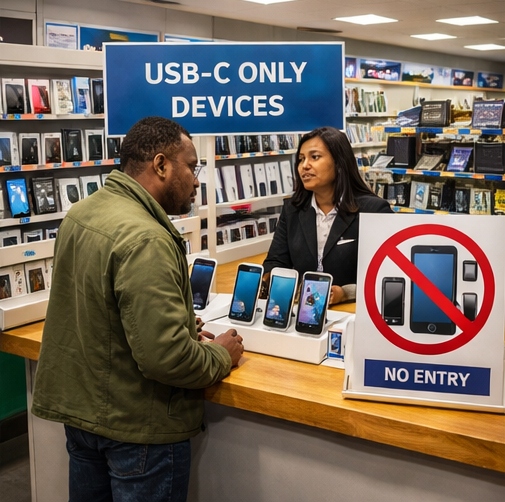
The Communications Authority of Kenya has banned the sale and import of mobile phones and tablets that do not feature USB Type-C charging ports, with the directive taking effect on March 24, 2026.
The new regulation applies to all mobile cellular devices, including smartphones, tablets, and basic feature phones. Devices that fail to meet the requirement will not be allowed into the country, effectively locking out older models and low-end handsets that rely on Micro-USB or proprietary charging systems.
Read Also
Immediate enforcement and scope
Enjoying this article?
Subscribe for unlimited access to premium sports coverage.
View Plans
According to the regulator, the new technical specifications became effective immediately upon publication, without a transition period. This contrasts with other jurisdictions such as the European Union, where similar rules were implemented gradually.
The directive covers manufacturers, importers, assemblers, and retailers. Traders found selling non-compliant devices risk penalties under the Kenya Information and Communications Act, including fines and possible prosecution.
Technical requirements for devices
Beyond the USB Type-C requirement, the new standards introduce additional specifications for devices entering the Kenyan market. These include:
- Minimum battery performance of at least eight hours of talk time and 24 hours of standby time
- Compliance with Kenya’s three-pin “Type G” power plug standard
- Detachable charging cables from power adapters
- Compatibility with national voltage standards of 240V at 50Hz
The regulations also require devices to meet safety, electromagnetic compatibility, and environmental standards.
Impact on the market and consumers
The directive is expected to significantly affect the availability of certain devices. Low-cost feature phones, commonly known as “kabambe,” are among the most affected, as many rely on older charging systems.ALSO READ: Infinix NOTE 60 Pro: The Smartphone That Lights Up Your Personality
smartphone models, including devices released before the global shift to USB-C, are also impacted. This includes pre-2023 models that used proprietary charging ports.
Industry stakeholders have raised concerns about disruptions to supply chains and potential losses for importers with existing stock.
Alignment with global standards
The move aligns Kenya with a growing global push to standardize charging technology. Regions such as the European Union have already adopted USB-C as a universal charging standard for mobile devices, aiming to improve interoperability and reduce electronic waste.
USB Type-C is widely regarded as a modern charging interface, offering faster data transfer and higher power delivery compared to older systems.
Policy objectives
The Communications Authority states that the regulation aims to:
- Reduce electronic waste from discarded chargers.
- Lower costs for consumers by enabling shared chargers
- Improve device safety and performance standards.
- Harmonise charging technology across devices.
“These specifications form the basis for the type approval of mobile phones in Kenya,” the authority said in its notice.
The regulator has indicated that similar requirements could be extended to other electronic devices, including laptops, in the future.







Comments 0
Sign in to join the conversation
Sign In Create AccountNo comments yet. Be the first to share your thoughts!