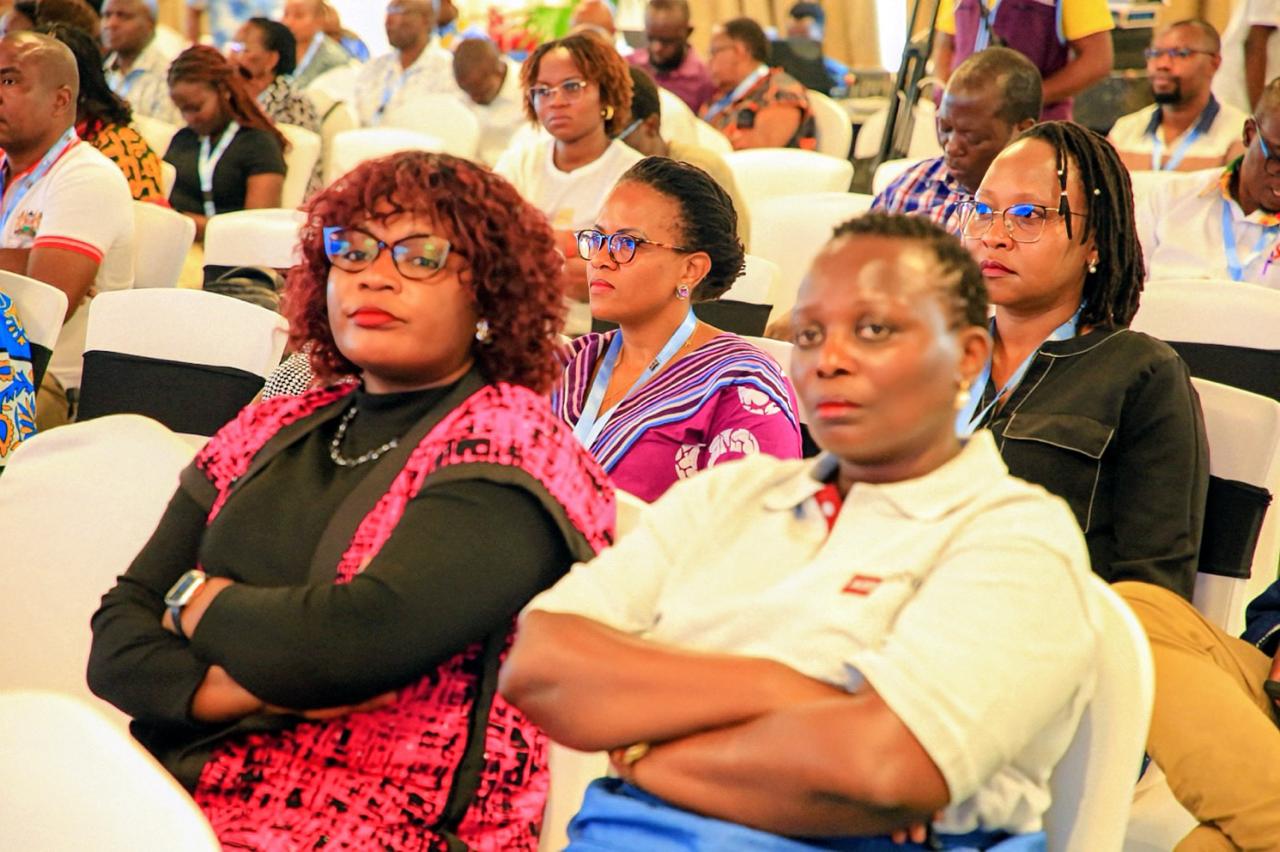
AHF East and West Africa regional advocacy and policy manager Diana Tibesigwa and AHF Africa bureau director of quality management Lydia Buzaalirwa in at the 2026 Health Integration Summit in Mombasa / BRIAN OTIENO
Health rights groups have raised concerns the government’s push for health service integration could undermine gains made through safe spaces for key populations.
The groups, including AIDS Health Foundation (AHF) Kenya, acknowledged that integration may be necessitated by recent reductions in donor funding, but stressed the need for proper dialogue on its implementation.
Their main concern is that merging services could increase stigma, prompting some populations to avoid seeking healthcare in mixed environments.
“We do not have a problem with integration. It is the stigma and discrimination we fear. We need to come together and articulate our issues in a space where programmes are co-created with us, without excluding anyone,” the groups said on Monday.
Last week, the government unveiled a Sh153 billion plan to integrate health services, aiming to reduce costs amid funding cuts.
Medical Services PS Ouma Oluga said the plan exceeds the current budget of the state department, requiring tough decisions.
Kenya relies heavily on donor support, with 35 per cent of health funding previously sourced externally.
The US government alone contributed around $350 million (Sh45.3 billion) before recent cuts, while the Global Fund, Gavi, Danida, GIZ and other partners have reduced or ended support.
“This year alone, the Global Fund has reduced financing by Sh6.9 billion. Gavi is reducing funding, Danida is ending support, and other partners are deprioritising health," Oluga said.
"We cannot ignore the reality: every Kenyan requires healthcare, so we must find sustainable ways to fund it ourselves.”
He said the Social Health Authority must function, noting the policy architecture for integration already exists, with discussions taking place at facility, community and policy levels.
However, health rights groups warned the integration plan could erode community structures that serve as safe spaces for certain populations, particularly youth and people living with HIV.
“Youth need spaces where they can express themselves freely and access services without fear of discrimination. This fear prevents many from knowing their HIV status,” a health rights activist said.
AHF East and West Africa regional advocacy and policy manager Diana Tibesigwa stressed the importance of maintaining quality care and community involvement during integration.
“The voice of the patient must be heard. Community structures, such as the Community Power Voice established by AHF, empower patients and communities to own their health programmes,” she said.
Tibesigwa highlighted that existing HIV response models, including youth-friendly services and safe spaces, have been critical in reaching populations who might otherwise avoid public healthcare facilities due to fear of judgement.
“Even within the integration agenda, some initiatives can be maintained. Youth-friendly corners and services in health facilities, for example, can continue to operate effectively,” she said.
Another health rights activist urged the government to continue engaging affected populations, noting that stigma remains a major barrier to care.
“Stigma is a serious issue in our country; four in 10 people may face discrimination, particularly those living with HIV,” the activist said.
As Kenya moves towards integrated healthcare, the challenge will be balancing efficiency with safeguarding safe spaces that protect vulnerable populations from stigma and ensure continued access to essential services.