Mercy Aduke holds her newborn son close, her face reflecting relief and disbelief.
The child referred to as Baby Miracle survived a rare and dangerous abdominal pregnancy, a condition in which a foetus develops outside the uterus.
For nearly eight months, the baby grew inside Aduke’s abdominal cavity, surrounded by vital organs instead of the protective environment of the womb.
Doctors say such pregnancies are extremely risky and rarely result in both mother and child surviving.
Last week, a team of specialists at Jaramogi Oginga Odinga Teaching and Referral Hospital (JOOTRH) successfully delivered the baby through a complex surgical procedure, saving both lives.
According to the medical team, the operation required careful planning due to the position of the placenta, which had attached itself to major blood vessels and parts of the intestines.
Attempting to remove it could have triggered severe bleeding. Instead, surgeons opted for a safer approach delivering the baby while leaving the placenta in place to gradually shrink and be absorbed by the body over time.
The procedure brought together experts from different fields, following the initial detection of abnormalities during a scan.
Maternal-foetal medicine specialist Dr Kays Muruka coordinated the case after sonographers raised concerns.
“This is a very rare occurrence, and in most cases, it poses a serious threat to the mother’s life,” Muruka said, urging women to seek early antenatal care and ultrasound scans to help detect complications in good time.
The surgery was led by senior surgeons Dr Gabriel Eliazaro and Dr Owila Edward, with support from a team of anaesthetists and nurses.
For Aduke, the experience was filled with uncertainty.
A mother of two teenagers, she initially did not realise she was pregnant, mistaking early signs for normal menstrual cycles.
“When I was told I was pregnant, I was surprised,” she said.
“One doctor warned that it was too risky and suggested termination, but I chose to keep the pregnancy.”
As the pregnancy progressed, she sought further medical attention, but the situation remained unclear.
At one point, she was informed that the baby had died after she fell ill during a trip.
However, during a routine visit at home, a Community Health Promoter noticed signs that suggested otherwise.
“I later felt the baby moving, which gave me hope again,” Aduke recalled.
She was referred to JOOTRH, where specialists confirmed the pregnancy was developing outside the uterus.
Aduke was stabilised and prepared for emergency surgery.
“When I woke up and saw my baby, I was overwhelmed with joy. I am thankful to the doctors and nurses who took care of me,” she said.
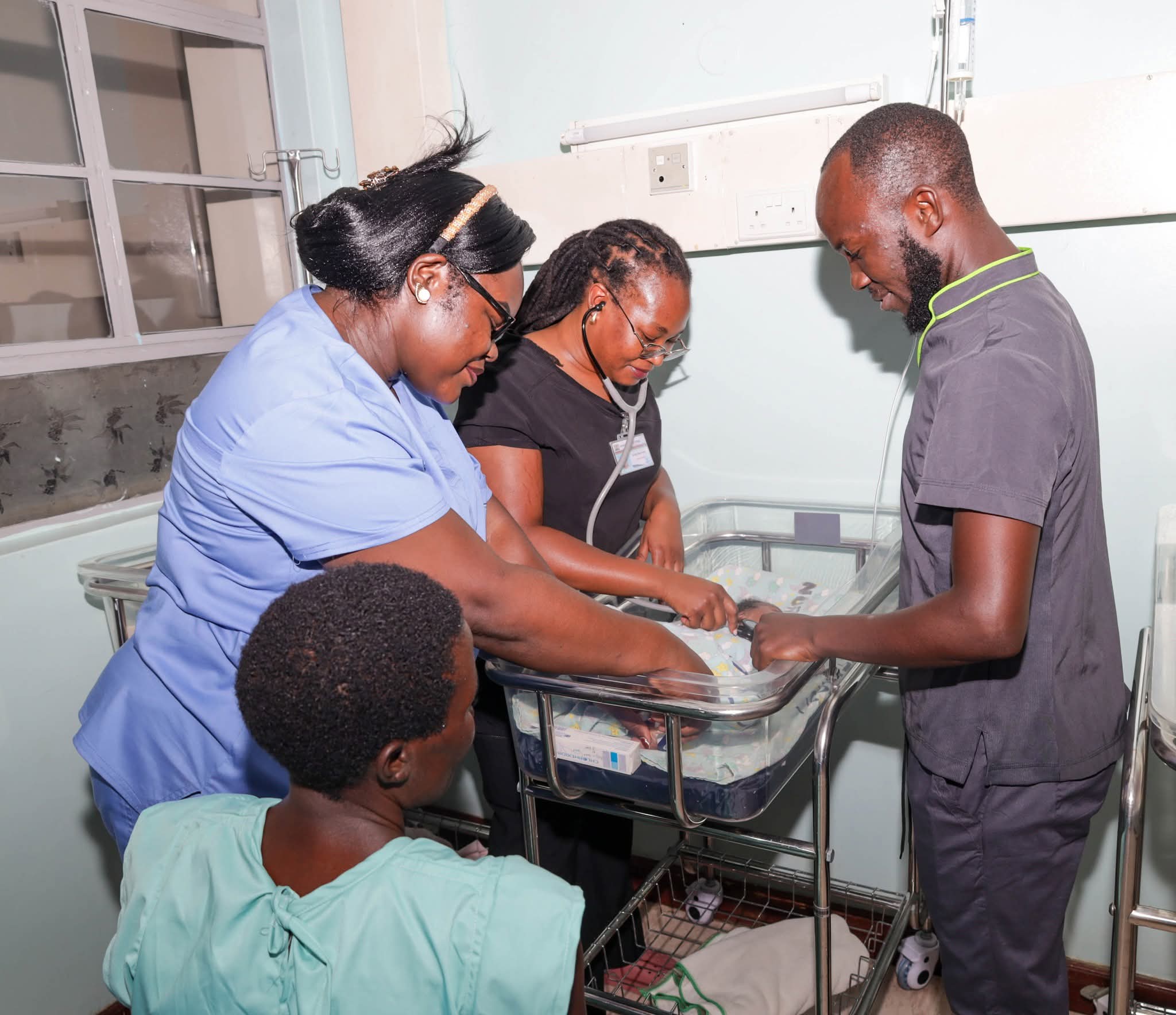
The baby, delivered at 38 weeks, is currently under observation in the Newborn Unit after developing a fever.
“I haven’t named him yet,” she said with a smile. “For now, he is my miracle.”
Health experts say the case underscores the importance of early detection and access to specialised care.
It also highlights the growing ability of referral hospitals such as JOOTRH to manage complex medical conditions.
For Aduke, the outcome is nothing short of extraordinary, a journey marked by fear, resilience and, ultimately, a safe delivery against overwhelming odds.