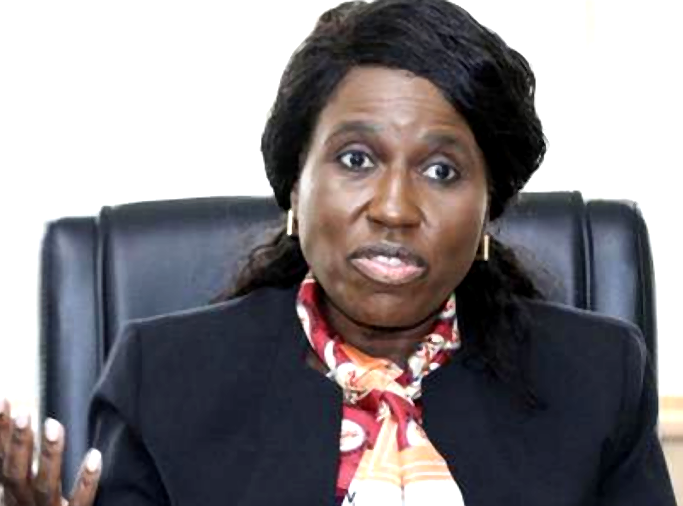
 Higher Education PS Beatrice Inyangala /FILE
The University Fund is staring at a staggering Sh20.8 billion deficit in student scholarship funding, raising fresh concerns over the sustainability of university education financing.
Fresh disclosures in Supplementary Estimates No. 1 for the 2025–26 financial year submitted to the National Assembly show the funding gap comprises Sh12.6 billion for the current year and Sh9.6 billion in arrears carried over from the 2024–25 fiscal cycle.
The State Department for Higher Education indicates that the total scholarship requirement for 2025–26 stands at Sh29.5 billion, against an allocation of just Sh16.9 billion—leaving a significant shortfall.
The deficit traces back to the previous financial year, when the fund required Sh26.5 billion to support students from three KCSE cohorts under the Student-Centered Funding Model (SCFM), but received only Sh16.9 billion.
This created a Sh9.6 billion gap that has now rolled into the current budget cycle.
“The situation is worse in the financial year 2025–26,” the fund noted.
For the ongoing financial year, the fund requires Sh9.7 billion to support 122,634 third-year students from the 2022 KCSE cohort.
A further Sh10.7 billion is needed for 134,889 second-year students from the 2023 cohort, while Sh9 billion is required for 180,125 first-year students drawn from the 2024 KCSE class.
Although an additional Sh1.5 billion was injected through the supplementary budget, reducing the current year’s deficit to Sh11.2 billion, the funding remains insufficient.
The extra allocation pushes total scholarship funding to Sh18.4 billion, raising coverage from 57 per cent to 62.25 per cent. However, this still falls short of supporting the full student population of 437,648.
“The cumulative shortfall over the two years amounts to Sh20.8 billion,” the fund said, underscoring the strain posed by the Sh9.6 billion arrears from 2024–25.
The University Fund is mandated to advise the government on university financing, mobilise resources, and develop criteria for equitable distribution of funds across institutions.
Data shows enrolment pressure is intensifying, with new student numbers rising sharply from 134,889 in 2024–25 to 180,125 in the current financial year.
The deepening funding crisis comes as public universities grapple with mounting financial distress. As of December 31, 2025, institutions had accumulated pending bills totalling Sh98 billion—liabilities not factored into the proposed 2026–27 budget.
At the same time, the State Department flagged urgent funding needs to complete stalled infrastructure projects critical to the rollout of Competency-Based Education in 2029.
These include an administration block, staff offices and lecture theatres at Laikipia University requiring Sh274 million.
At Egerton University, science and agriculture laboratories need Sh211 million and Sh382 million respectively.
At Moi University, a water supply project requires Sh3 million, while the faculty of science needs Sh412 million and hostels Sh184 million to reach completion.
Meanwhile, University of Nairobi requires Sh920 million to complete a proposed School of Pharmacy and Sh329 million for student hostels at the Lower Kabete campus.
With enrolment rising and financial obligations piling up, the funding gap now threatens both student access and institutional stability across the public university system.