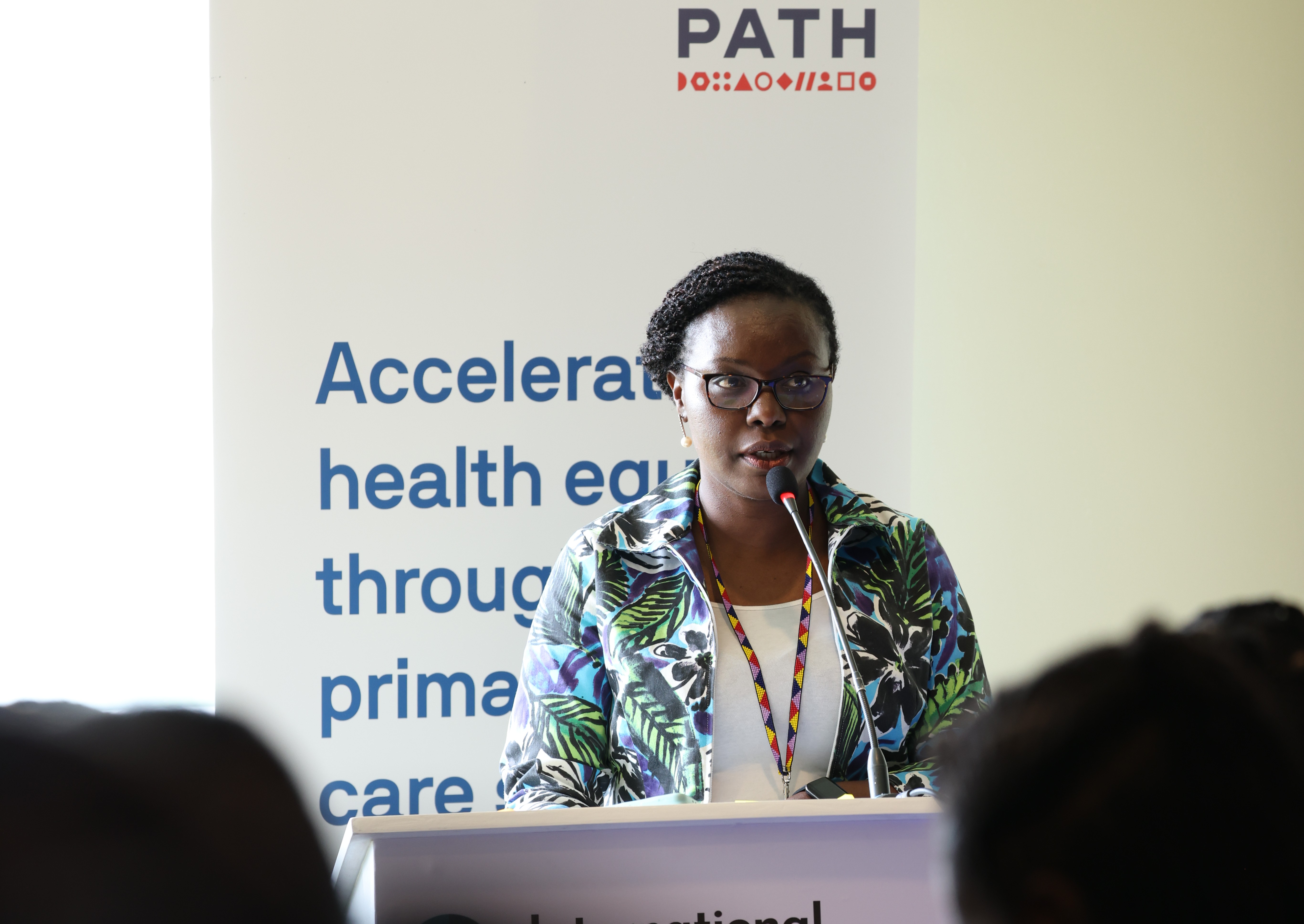
 Rachel Ndirangu, PATH’s Regional Director of Advocacy and Public Policy delivering a speech on March 24./HANDOUT
Kenya lost as much as half of its funding for maternal and neonatal health in 2025 following sharp cuts in donor support, raising fresh concerns about a potential surge in preventable deaths across the region.
A new analysis of ten sub-Saharan African countries shows the consequences could be severe. The decline in international aid risks reversing decades of progress, with maternal mortality projected to rise by nearly 30 percent and child deaths by 23 percent if the gaps are not filled.
The study, conducted by the Program for Appropriate Technology in Health (PATH) and presented at the ongoing International Maternal Newborn Health Conference (IMNHC), found that Kenya experienced one of the steepest drops in donor support, losing up to 55 percent of its funding. Only South Sudan and Uganda recorded comparable declines.
The funding shock has already had visible effects. According to the report, Kenya experienced disruptions in vaccine and commodity delivery, as well as reduced outreach services, particularly affecting rural and marginalised communities.
Across the region, the findings point to a broader pattern: donor funding for maternal, newborn and child health (MNCH) may have fallen by nearly half in 2025, while immunisation funding dropped by about a third.
Faced with shrinking external support, Kenya has moved to accelerate reforms and revive previously explored financing options.
The PATH report shows that the government allowed health facilities to collect and retain revenue directly through a mechanism known as the Facility Improvement Fund. Previously, facilities were required to remit collected funds to county or national accounts and wait months—sometimes until the end of the financial year—for disbursement after submitting budgets.
The shift is intended to improve cash flow at the facility level and reduce service disruptions.
Kenya has also intensified efforts to build new partnerships, including public-private collaborations, as it seeks to plug widening financing gaps.
The report comes a day after Director-General for Health, Dr Patrick Amoth, said the government would increase domestic funding for healthcare.
However, analysts warn that Kenya’s ability to replace lost donor funding remains limited.
According to Dr Caleb Mike Mulongo, a consultant to PATH and one of the researchers, the funding cuts have come at a time when the country’s fiscal space is already under pressure from rising debt.
“For every shilling, 66 cents go to debt servicing, leaving less than 30 cents not only for healthcare but also for other public needs like education, security and others,” Dr Mulongo said.
While Kenya has met the benchmark of collecting more than 15 percent of GDP in taxes, high debt obligations have significantly reduced the funds available for public services.
The study also highlights a deeper structural challenge: Kenya’s maternal and neonatal health programmes have long depended on external financing.
“This is particularly hard when more than half of the funding comes from sources that are not reliable and predictable,” Dr Mulongo said.
The consequences of funding shortfalls are most visible at the community level.
The report notes that disruptions in last-mile delivery of vaccines and medical supplies, combined with reduced outreach services, are widening health inequities—especially for rural, displaced and marginalised populations.
In some cases, workforce shortages have also emerged as governments struggle to absorb health workers previously funded by donors.
Across the ten countries studied—Kenya, Uganda, Tanzania, Ethiopia, Nigeria, Malawi, Mozambique, the Democratic Republic of Congo, South Sudan and Somalia—donors have historically financed a significant share of health spending, often exceeding government contributions.
Health policy experts say the crisis underscores the urgency of strengthening domestic financing, particularly at the primary healthcare level.
Rachel Ndirangu, PATH’s Regional Director of Advocacy and Public Policy, said governments must prioritise investment where it has the greatest impact.
“Primary health care is where maternal and child health becomes a reality for many families,” Ms Ndirangu said.
The report recommends increasing domestic allocations, improving efficiency in spending, and integrating donor-funded programmes into national systems to reduce fragmentation.
However, with limited fiscal space and growing demand, the transition away from donor dependence is expected to be slow—and potentially costly.
For Kenya and its regional peers, the findings suggest that without urgent and sustained action, the gains made in reducing maternal and child deaths over the past two decades could begin to unravel.