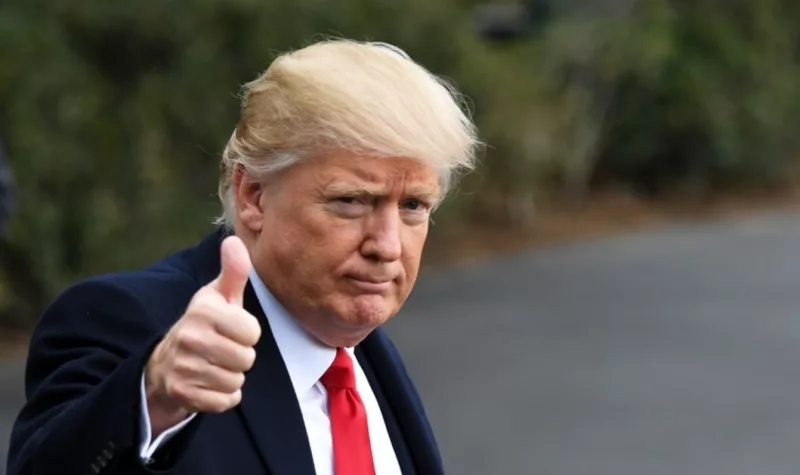
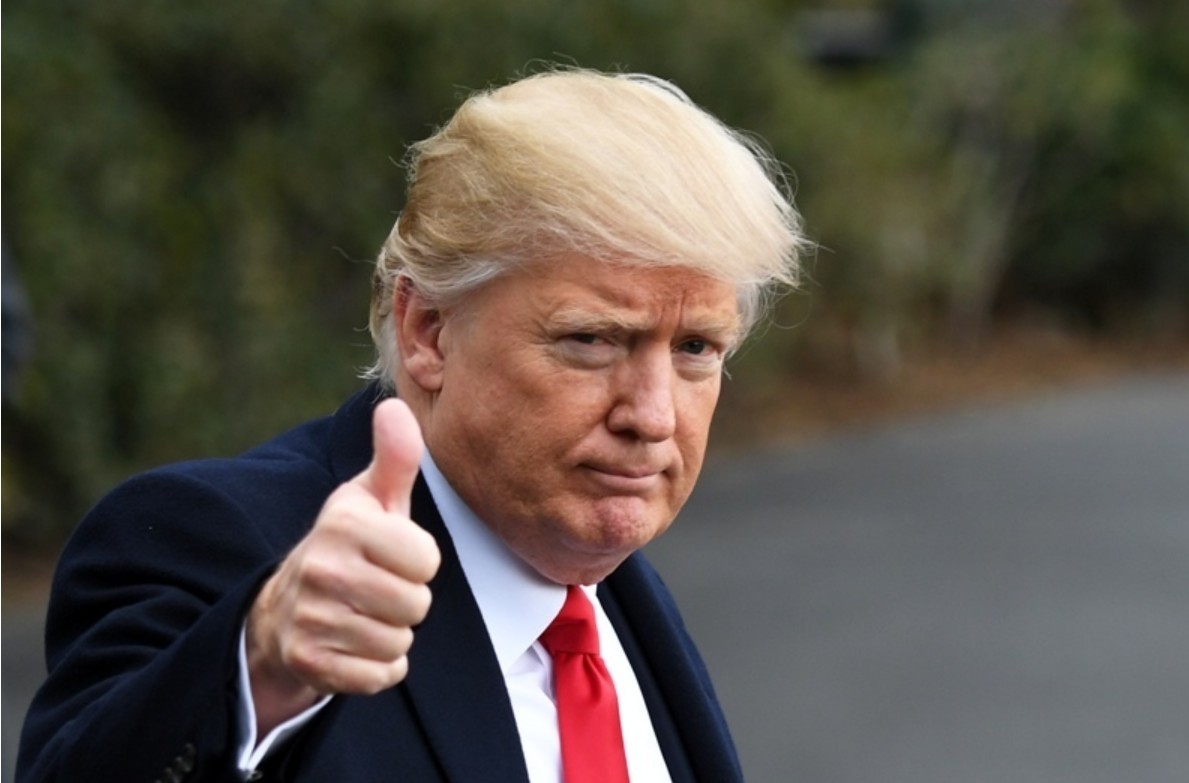
 US President Donald Trump gestures to media before boarding Marine One departing for Andrews Air Force Base en route to West Palm Beach, Florida, at White House in Washington D.C.,the United States, Feb. 3, 2017. (Xinhua/Yin Bogu)
The US–Iran war has entered its fourth week, with indications it could last longer than initially expected, even as President Donald Trump on Monday struck a more conciliatory tone, citing “productive talks” with Tehran.
Trump had anticipated a swift, short-term campaign to force Iran into submission after the United States and Israel launched coordinated airstrikes on February 28.
However, Iran retaliated with attacks on US bases in the Gulf and Israeli targets, signalling a more sustained confrontation.
The offensive was aimed at destroying Iran’s missile industry, dismantling its nuclear programme capability, and curbing the country’s regional influence.
Early in the war, Trump declared that the US had “won” and that Iran’s capabilities were “virtually destroyed”.
The US and Israel demanded Iran’s unconditional surrender after initiating the airstrikes, but Tehran publicly rejected the calls and escalated its response, targeting US bases in the Gulf and effectively disrupting traffic through the Strait of Hormuz—the critical waterway between Iran and Oman through which about 20 per cent of the world’s oil consumption flows.
Despite significant casualties reported within Iran and more than 7,000 targets struck by US Central Command, Tehran has demonstrated notable resilience, responding with precision drone strikes inside Israel.
On March 22, Trump issued a 48-hour ultimatum demanding that Iran reopen the Strait of Hormuz or face the “obliteration” of its power plants. Iran responded by declaring it was prepared to close the strait indefinitely and target regional infrastructure if the threat was carried out.
The ultimatum followed earlier remarks by Trump suggesting a possible “winding down” of the military campaign, during which he praised the “stamina” of both countries in the conflict.
In a dramatic turn, Trump on Monday said the 48-hour deadline had been postponed for five days following what he described as “productive” talks, pending successful negotiations.
Some analysts interpreted the development as a tactical win for Iran, pointing to a softening in Trump’s previously hardline stance.
Tehran firmly dismissed Trump's claims of there having been any form of talks.
“We deny what US President Donald Trump said regarding negotiations taking place between the United States of America and the Islamic Republic of Iran. The Islamic Republic of Iran adheres to its position rejecting any type of negotiations before achieving Iran’s goals from the war,” Iran’s foreign ministry said in a statement as quoted by CBS News.
Iran’s Fars News Agency, affiliated with the Islamic Revolutionary Guard Corps (IRGC), also quoted an unnamed source saying there was “no direct or indirect contact with Trump."
The source added that after “hearing that our targets would include all power stations in West Asia, he backed down."
Iran had warned that if Trump followed through on his threat, it would target Saudi Arabia, the UAE, Kuwait, Qatar, Bahrain, and Oman with drones and missiles, focusing on US military bases, energy infrastructure, and civilian sites.
Speaking to the media before boarding his plane in Palm Beach, Florida, Trump maintained that a deal remained within reach.
“They want very much to make a deal; we’d like to make a deal too,” he said, adding that discussions would likely be finalised “probably by phone” and that “partners in the Middle East” were “very much in mind in the discussions."
“We’re doing a five-day period, and we’ll see how that goes. If it goes well, we’re going to end up with settling this,” Trump said, referring to the postponement of energy strikes.
“Otherwise, we’ll just keep bombing our little hearts out,” he added.
Trump’s rhetoric has notably shifted from early, aggressive threats of “fire and fury” and total destruction of Iran’s infrastructure to a more measured and conciliatory tone.
The change suggests a recognition of Iran’s military resilience and the risks of a prolonged conflict. It also reflects a growing inclination toward securing a rapid resolution, potentially through diplomacy, to avert further escalation and limit global economic fallout.
Oil markets reacted sharply to the the US attacks on Iran. Prices surged by roughly 50 per cent, peaking at about $113.63 to $113.75 per barrel as Iran restricted passage through the Strait of Hormuz.
Following Trump’s announcement signalling a pause, oil prices fell to as low as $96 per barrel before rebounding to around $103.
Meanwhile, London’s FTSE 100 index recovered to close 0.3 per cent higher after earlier dropping by more than 2 per cent on Monday.
In a post on Truth Social, Trump said that over the past two days the US and Iran had held “very good and productive” talks aimed at “a complete and total resolution of our hostilities."
The statement marked a shift from his remarks on Saturday, when he claimed the US “has blown Iran off of the map” and that he had “met my own goals … and weeks ahead of schedule”.
He further reiterated that Iran’s “leadership is gone, their navy and air force are dead, they have absolutely no defense, and they want to make a deal."
As the battlefield gives way to brinkmanship, the next moves will likely be shaped less by firepower and more by political calculation.
Whether the narrow window opened marks the beginning of the end or merely a pause in escalation, Trump appears to have come to the realisation that he might have bitten off more than he could chew—at least for now.