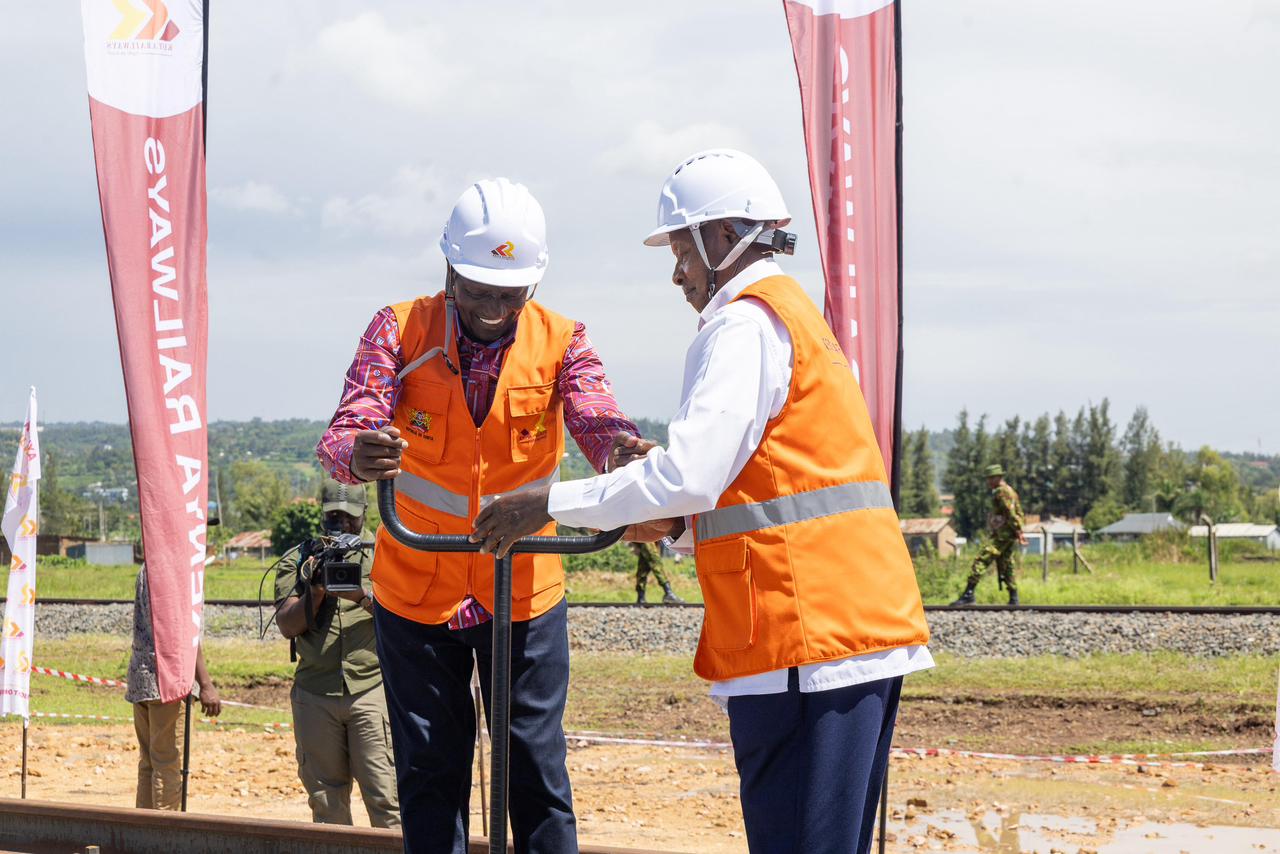
 President William Ruto and his counterpart President of Uganda Yoweri Kaguta Museveni during the official launch of Naivasha-Kisumu-Malaba SGR, Kisumu County on March 21, 2026/PCS
Kisumu is poised for a major economic transformation following the launch of the Standard Gauge Railway (SGR) extension, a project expected to position the lakeside city at the centre of regional trade and connectivity.
The construction of the railway line from Naivasha to Malaba, officially launched in Kisumu by President William Ruto alongside his Ugandan counterpart Yoweri Museveni, is seen as a defining moment for the region’s economic future.
According to a statement by Nyanza Regional Commissioner Flora Mworoa, the project will not only enhance Kenya’s transport network but also firmly anchor Kisumu County in the broader East African economic landscape.
The railway is expected to transform Kisumu into a critical regional hub, linking Kenya to neighbouring countries through both rail and water transport via Lake Victoria. The city will serve as a strategic artery connecting inland economies, boosting trade and easing the movement of goods and people across the region.
Beyond the SGR, the government highlighted significant progress across multiple sectors in Kisumu, pointing to a broader development agenda already underway. Housing and urban development have emerged as leading drivers of change, with large-scale investments reshaping the city’s skyline and creating employment opportunities.
Among the flagship projects is the Lumumba Affordable Housing Project, which is now 56 per cent complete. The initiative is part of a wider programme targeting more than 9,000 housing units in the area. Officials say the project is not only addressing housing shortages but also generating jobs for local residents.
Trade infrastructure is also receiving a boost, with several modern markets nearing completion. These facilities are expected to improve livelihoods by providing traders with dignified working environments equipped with essential amenities such as water, sanitation, and electricity.
In the water sector, the Lake Victoria Water and Sanitation Programme has reached approximately 85 per cent completion. The project is set to significantly improve access to clean and reliable water, a key factor in enhancing public health and supporting economic activity.
Education and skills development are equally gaining momentum, with investments in Technical and Vocational Education and Training institutions and student accommodation. Planned and ongoing hostel projects are expected to house more than 10,000 learners, expanding access to education and strengthening the region’s skills base.
Energy infrastructure is also nearing completion, with the Sondu transmission line at 94 per cent. Once complete, it is expected to stabilise power supply and support industrial growth across Kisumu and neighbouring areas.
However, challenges remain in the transport sector, where several infrastructure projects are still between six and 25 per cent complete. Delays have been attributed to pending bills, contractor withdrawals, and land compensation issues.
Mworoa expressed optimism that these bottlenecks are being addressed and that progress will accelerate in the coming months.
“The progress we are witnessing across Kisumu County is a clear demonstration of the Government’s commitment to transforming livelihoods and strengthening local economies. We will continue to work closely with all implementing agencies to address existing challenges and ensure timely completion of all projects,” she said.
With the SGR now underway and multiple development projects advancing, Kisumu is steadily positioning itself as a key engine of growth in western Kenya and the wider East African region.