
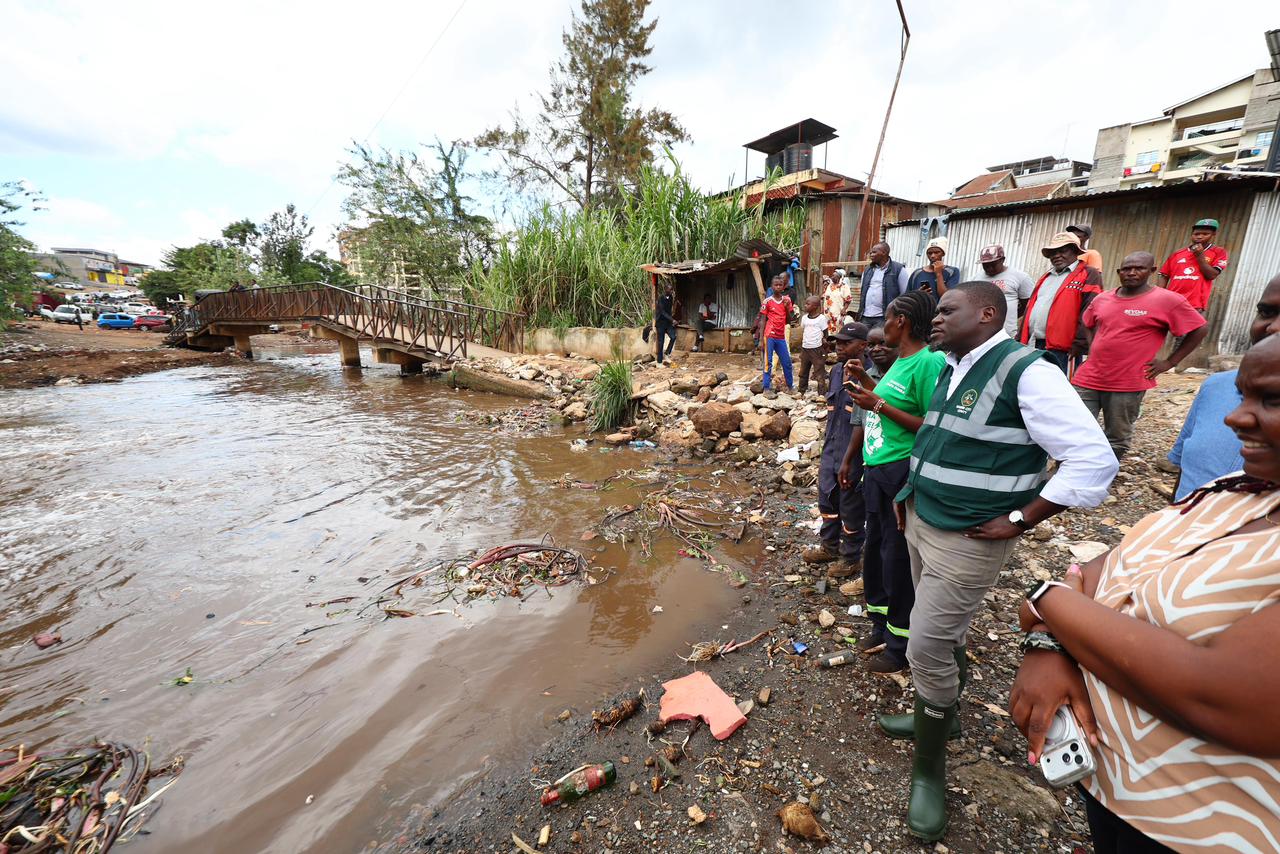
Nairobi Governor Johnson Sakaja has issued a strong warning to residents living along riverbanks, urging them to relocate immediately as the county ramps up efforts to restore the Nairobi River and prevent future disasters.
Sakaja reaffirmed his commitment to the Nairobi River regeneration programme, saying the county will continue clearing rivers and reclaiming riparian land despite resistance.
“Even if it is a problem of 130 years, we shall address it. We must make tough decisions,” he said.

“We have lost so many people and property, but we shall never go there again. We are saving a generation,” he said.

He warned that a possible breach could have devastating consequences and urged nearby residents to evacuate immediately.
“This is not a time for politics. Those inciting people must understand that saving lives comes first,” he said.

“For those living along riverways, please move. If need be, they will be moved,” he warned.
Defending ongoing evictions and river clearance operations, Sakaja cited over a century of warnings about Nairobi’s vulnerability to flooding.

He traced the city’s flood problems back to the early 1900s, noting that colonial administrators had raised concerns about Nairobi’s location on a swampy floodplain.


“The less privileged were left in low-lying areas while the elite occupied higher grounds like Karen, Muthaiga and Lavington,” he said, adding that the current administration is determined to correct what he described as a 130-year problem