 KCB's Humphrey Mieno in a previous match/ HANDOUT
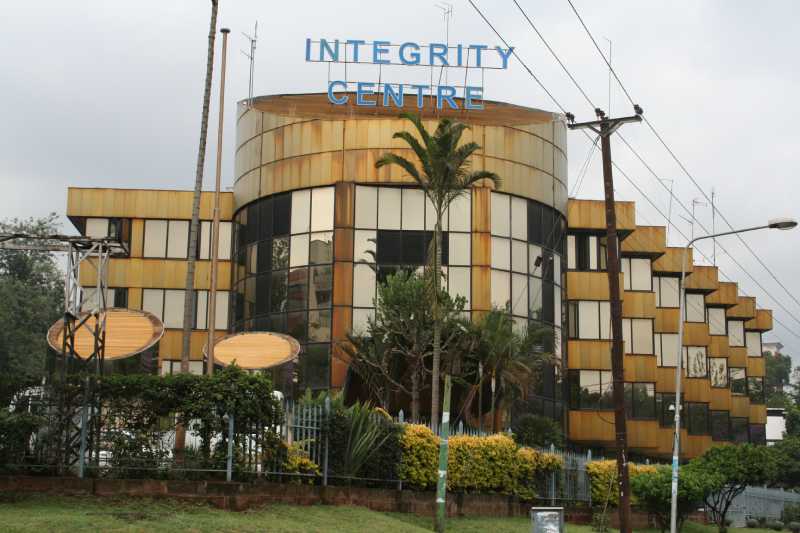
The dossier tabled in Parliament has revealed how fraud, ethical breaches, and outright impunity are entrenched in the civil service.
The commission's 2024/2025 Annual Report details hundreds of advisories and cautions given to various public servants during the review period.
It paints a disturbing picture of how forged qualifications, illegal political activity, and corrupt recruitment are commonplace.
The rot starts at the point of entry into the civil service.
An EACC’s integrity verification process, which cleared 2,783 individuals for public office, flagged 50 candidates with serious ethical violations, barring their appointment.
The verification uncovered a disturbing trend of individuals with fraudulent pasts persistently seeking influential positions.
The commission’s advisories further cast a spotlight on scandals within major institutions.
The National Health Insurance Fund (NHIF) was cited for ‘recruitment irregularities’ orchestrated by its former CEO.
Similarly, the University of Nairobi, the country’s premier institution of higher learning, faced scrutiny over the recruitment of its acting Chief Operations Officer.
The report further highlights widespread disregard for electoral law, with many officers seeking elective offices without resigning as required by law.
The law demands that a civil servant seeking elective office quit six months before the election, although the IEBC gives special guidelines for by-elections.
A number of public officers have been named and shamed in the EACC report.
They include a Senior Immigration Officer, a Clinical Officer, an Assistant Community Health Officer, and three teachers.
The report shows that they illegally clung to their taxpayer-funded jobs while campaigning for elective positions.
EACC urged the Director General of Immigration and the PS for medical services to take administrative action against the officers under their jurisdiction.
They were cited for blatant conflict of interest, the incidents revealing the sense of entitlement on the part of the officers, placing their personal political ambition above public service ethics and the rule of law.
A manager of a top corporation in the energy sector was also advised to conduct due diligence before offering employment.
The commission further urged the revocation of a board appointee at the Kenya Accountants and Secretaries National Examination Board (KASNEB).
It cited a pending court case, exposing how individuals with questionable integrity are often elevated to oversight roles.
Furthermore, the EACC has demanded that the University of Nairobi revoke a university degree from an employee who was convicted of uttering a forged certificate.
A similar case was highlighted at the University of Eldoret, where EACC asked the management send away an employee who was accused of forging his academic papers.
The EACC crackdown also revealed procedural chaos in county governments, especially in the recruitment of staff.
In Homa Bay, four officials were cautioned for the ‘irregular recruitment of Universal Health Coverage Workers,’ a scheme vital to national healthcare.
Separately, a former governor was cited for “providing misleading information to the Public Service Commission regarding the composition of the County Public Service Board.”
As per the report, there are several incidents of systemic financial misconduct on the part of many public officers.
The commission issued recovery notices for salaries illegally paid to officers.
Some Sh144,845 was recovered from an officer from the Ndia Constituency Office, being a salary that was irregularly paid by the constituency office.
The commission made similar orders to Siala Technical Training Institute on some Sh127,998 salary that was irregularly paid to an officer.
Several other officers were also flagged for operating overseas bank accounts irregularly.
The law requires public and state officers to declare and justify any foreign holdings.
Several others held the accounts after the lapse of the authorised period.
The naming of institutions and individuals is viewed as a critical step towards transparency.
EACC Chairperson Dr David Oginde has stated that the ambition is to foster an ‘integrity-driven and values-based Kenyan society.’
"The commission remains steadfast in its commitment to transparency, accountability, and the rule of law... I call upon all stakeholders to continue supporting the commission's initiatives in fostering an integrity-driven and values-based Kenyan society,” Oginde said.
During the reporting period, the Commission issued 134 advisories, 4 formal notices, and 12 cautions to public entities and individuals.
The advisories targeted senior leadership in major institutions, indicating that ethical lapses permeate high levels of public service.
The report asserts that the fight against corruption must begin with the fundamental reform of the civil service.
It recommends the strengthening of vetting processes, enforcing legal consequences for electoral violations, and ensuring that recruitments are transparent.
With the EACC lifting the lid on the pervasive rot, eyes are cast on Parliament, the executive, and the public to demand an overhaul, to weed out the rogues.
INSTANT ANALYSIS
The report exposes the grand scale of the challenge of integrity. When the guardians of health, education, and county services are all implicated, it points to a cultural problem that requires more than advisories.