My productivity anxiety and I were in a very toxic
situationship. It whispered to me at 6.04am before my alarm even goes off: “So…
what are we achieving today?”
I’m still in bed in my oversized T-shirt with a motivational quote I never consented to wear. My phone lights up with a friend’s Instagram story. She was at a co-working space in Nairobi, laptop open, matcha in hand, caption: “Soft life but still grinding.”
Meanwhile, I was calculating whether showering counted as a win. Spoiler: My brain said no. It wanted a startup, a side hustle and passive income by lunch.
That’s productivity anxiety: the constant, chest-tightening fear that you’re not doing enough, fast enough or impressively enough, especially when your timeline looks like a TED Talk highlight reel, and your bank balance looks like a sad joke.
It’s not just wanting to be productive. It’s feeling like rest is a moral failure and every quiet moment is a missed opportunity to become a “better version” of yourself.
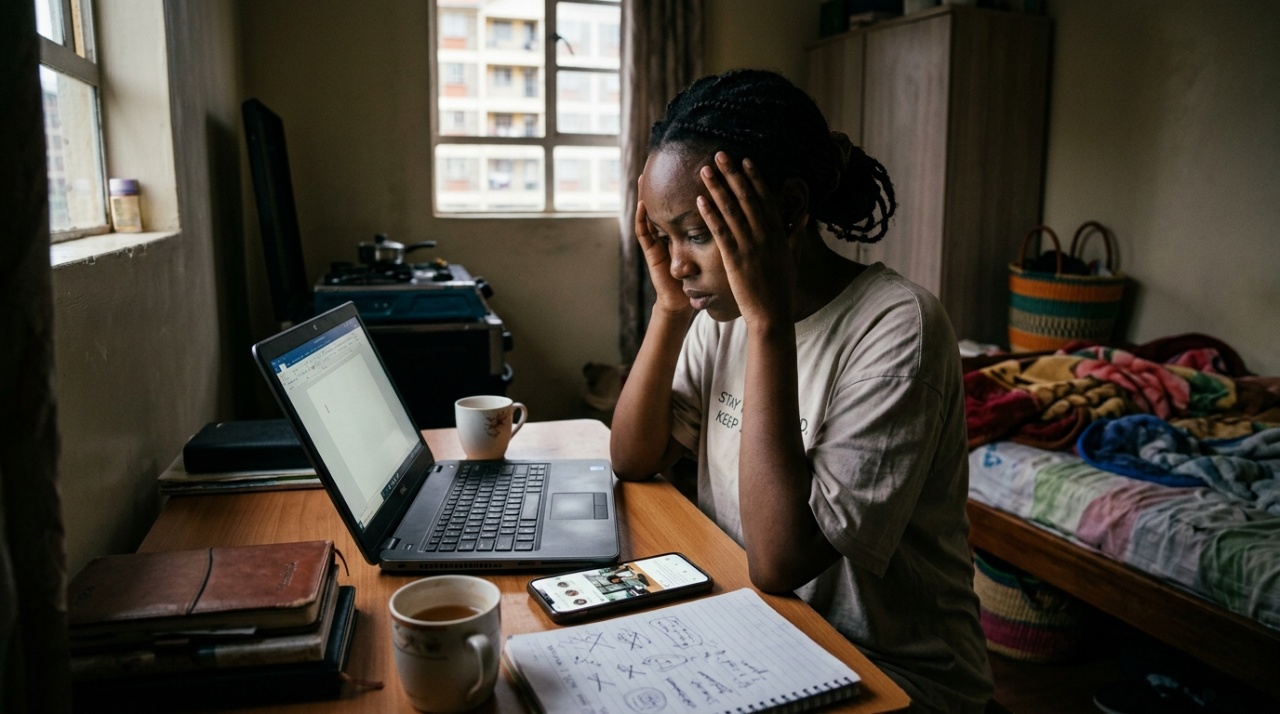
Mine started innocently. First it was a planner. Then it was five planners. I’d wake up in my bedsitter, open my laptop and stare at a blinking cursor while my mind ran a marathon of comparisons. My cousin had just launched an online thrift store. A classmate was freelancing for a startup and posting sunrise beach runs like cardio was a personality. I, on the other hand, was negotiating with myself about whether replying to emails at 11.47am was “too late to be taken seriously”.
Here’s the funny part: The more pressure I put on myself to be productive, the less I actually did. I’d plan to write for two hours, spend 40 minutes perfecting my playlist (because vibes are essential, obviously), then doomscroll through TikToks of people claiming they built empires before breakfast. By lunchtime, I was exhausted from thinking about working. My brain was busy cosplaying as a CEO; my output was a half-written paragraph and a cold cup of tea.
Gen Z culture adds fuel to this fire. We’re told to be resilient, innovative, entrepreneurial — basically, to hustle our way out of structural problems like unemployment. It’s true that youth unemployment here is high, and opportunities can be wildly uneven depending on where you live, who you know and whether your WiFi behaves. But online, the narrative flattens all that into: If you’re not winning, you’re not trying hard enough.
My friend Brian Mugo, 24, said it casually over fries in town: “If I’m tired, that’s just my comfort zone screaming. No one’s coming to save me.”
Later that week, as we waited for a matatu that was definitely never coming, Aisha Salim, 22, rolled her eyes at that logic, saying, “We’re not lazy. We’re tired of being told to fix a broken system with just vibes and grind.”
Both of them are right in different ways.
The pressure shows up in small, very Kenyan moments. I’d sit in traffic on Thika Road, watching hawkers weave between cars, selling phone chargers and boiled eggs, and feel guilty for being stuck when I “could be working”.
I’d go to a family function and someone would ask, “So what are you doing now?” — that question that sounds simple but hits like a pop quiz on your entire life. I once mumbled something vague about “content and projects”, which is adult for “I’m figuring it out, please don’t ask follow-up questions”.
Here’s my unpopular opinion: Productivity anxiety isn’t just a personal mindset problem, it’s a social problem. Platforms reward visibility and constant output. Algorithms love consistency, not rest. Our economy rewards hustle while quietly ignoring burnout. And mental health? We talk about it now (love that for us), but we still glorify being “booked and busy” like exhaustion is a badge of honour.
To be fair, there’s an opposing view that deserves airtime. Some of my friends say the pressure helped them move. And honestly, I get it. Fear can be a fuel. But fear is a terrible long-term engine. It burns hot, fast and then leaves you stranded on the side of the road with your hazards on, pretending you meant to stop here.
What helped me start unclenching was getting specific about what myproductivity is for. Not “be successful” (which is as vague as Nairobi weather forecasts), but “finish this article”, “apply for two gigs this week”, “take a walk without my phone and not feel guilty about it”. I started tracking outputs instead of hours spent pretending to work. I also learned to schedule rest like a task, because my brain respects calendar events more than my humanity.
The wildest twist? When I eased up, I actually got more done. Without the constant self-roasting, I could sit with a hard paragraph instead of running from it. I could take a day off without narrating my failure in my head. Productivity anxiety thrives on shame. It shrivels when you replace it with clarity and a little compassio
So if you’re staring at your phone at 6.04am, feeling behind before your feet hit the floor — hi, you’re not broken. You’re living in a culture that confuses your worth with your output. Hustle if you want. Rest if you need. Just don’t let a blinking cursor convince you that you’re nothing more than what you produce.