Technology is rapidly transforming modern healthcare, offering new ways to diagnose diseases, guide treatment and improve patient outcomes. But as cancer cases rise across Africa, the real test is whether these innovations can move beyond promise and begin closing the continent’s long-standing treatment gap.
Cancer is one of the leading causes of death in Africa, with more than 1.1 million new cancer cases diagnosed annually, according to the World Health Organisation. In Kenya, about 42,000 new cases are recorded every year, with nearly 27,000 deaths.
The growing numbers have become a burden to healthcare systems, which are already struggling to offer timely, effective and affordable treatment to patients. While some hospitals have specialists and equipment needed for cancer treatment, access remains limited. Less than 30 per cent of patients are able to access radiotherapy for their treatment, says Science, Research and Innovation PS Prof Abdulrazak Shaukat.
Behind these statistics are patients whose ability to cope with cancer often depends not only on the treatment available but also on support systems around them. One breast cancer patient diagnosed in 2024 recounted how the disease took a toll on her mental health because of the repeated hospital visits, mammograms and radiotherapy sessions. But she considers herself fortunate to have had the support of her family and mostly her husband throughout the journey.
Having medical insurance helped ease the financial burden of treatment. But her experience also points to a deeper reality: Not every patient has a strong support system at home or insurance to cushion them from the high cost of care. For many others, access to treatment depends entirely on what public health systems can provide.
That raises an urgent concern. What happens to cancer patients who must face the disease without family support, without insurance and with limited ability to afford private care?
In countries where many households already struggle to meet daily needs, the burden often falls on governments and public hospitals to bridge the gap. Yet across much of Africa, public cancer care remains overstretched, underfunded and unevenly distributed.
CHANGING THE NARRATIVE
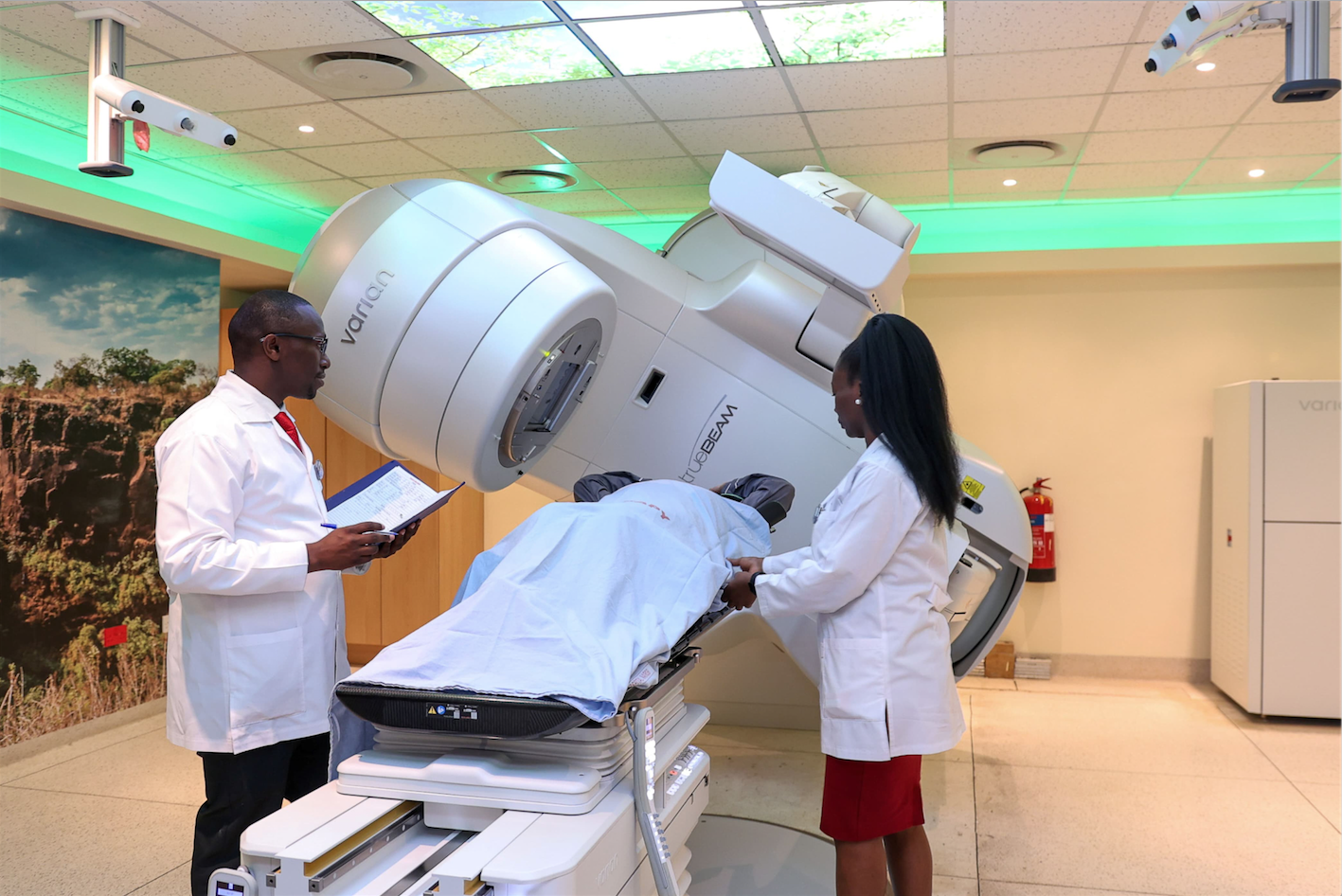
It is against this health crisis that the AI-enabled TrueBeam radiotherapy technology has now been introduced in Kenya. The Aga Khan University Hospital recently launched the system, which is expected to deliver fast, highly precise radiotherapy treatment for cancer patients, reducing the amount of time taken for radiotherapy sessions to under 10 minutes.
Supporters say the AI-enabled technology will allow doctors to target tumors with submillimeter accuracy, while tracking natural patient movement, such as breathing, to ensure healthy tissues are protected.
TrueBeam technology, which offers next-generation radiotherapy, remains rare across Africa, with its availability limited to a small number of centres in South Africa, Egypt, Kenya and Nigeria.
But its arrival also raises a bigger question: Can advanced radiotherapy transform cancer outcomes in Africa, or will it remain beyond the reach of the majority who need it most?
For many across Kenya and Africa, the greatest barrier to cancer treatment is not always the absence of technology but the cost of accessing it. Even where advanced services exist, they are often concentrated in major urban centres and private facilities, placing them beyond the reach of patients who are from marginalised communities.
The introduction of smarter radiotherapy is an important sign of progress in Africa’s cancer response. It shows how technology is beginning to reshape treatment in ways that could improve precision and give patients better chances of recovery.
But innovation on its own is not enough. Its true value will depend on whether African health systems and governments can expand access, strengthen public care and ensure that the benefits of innovation extend beyond a small number of patients to the wider population.