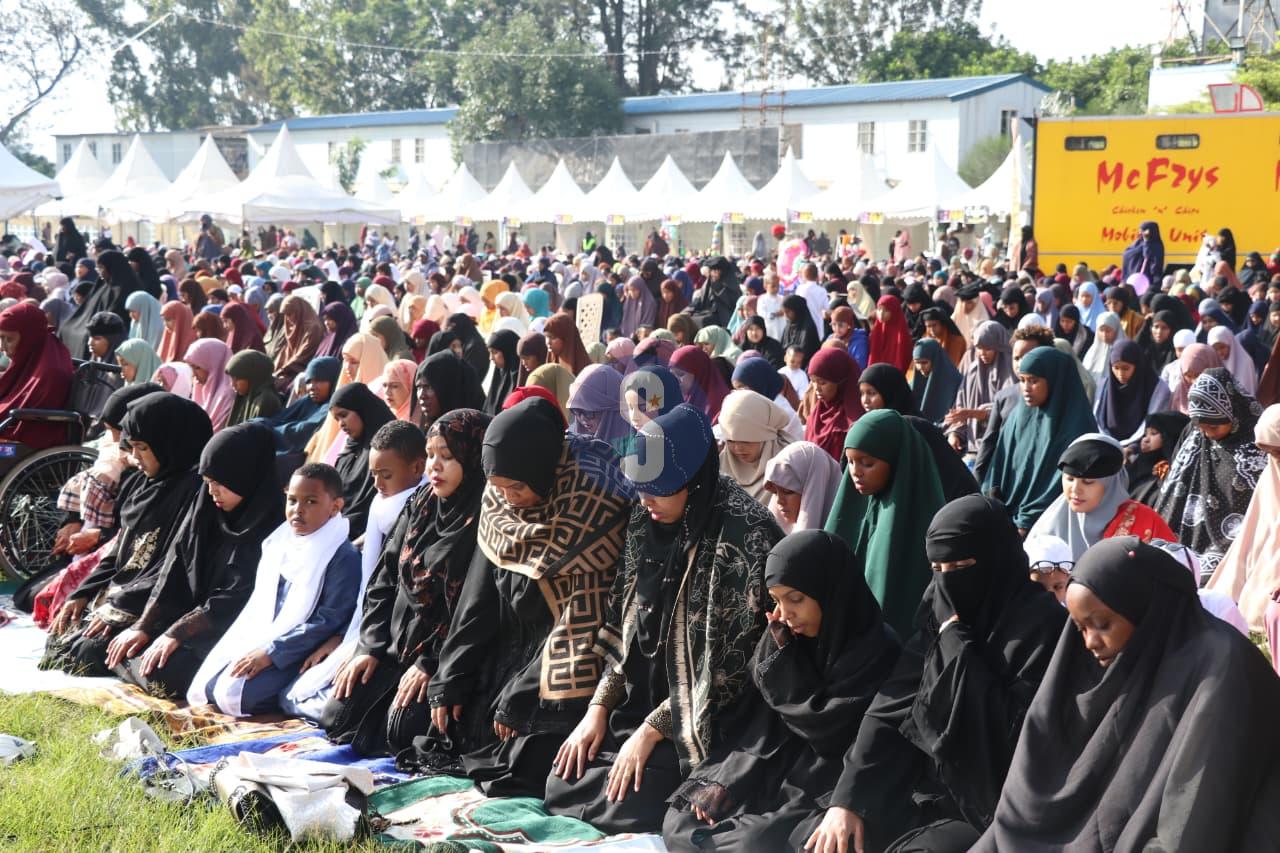
 Muslim women during prayers as they mark Idd-Ul- Fitr at Sir Ali ground, Nairobi on March 20, 2026/LEAH MUKANGAI
Muslims in Kenya and across the world are once again celebrating Eid‑ul‑Fitr, a significant religious festival that marks the end of the holy month of Ramadan, a period of fasting, prayer, reflection and spiritual growth observed by Muslims worldwide.
Eid‑ul‑Fitr, often called the “festival of breaking the fast,” marks the conclusion of Ramadan, the ninth month in the Islamic lunar calendar, during which Muslims fast from dawn until sunset.
The festival celebrates the discipline, patience and spiritual renewal Muslims achieve through a month of dawn‑to‑dusk fasting and increased devotion.
For many believers, Eid is both a reward for completing Ramadan and a profound reminder of gratitude, charity and community.
Muslims thank Allah (God) for giving them strength to observe the fast and strive to carry forward the self‑control and compassion learned during Ramadan into the rest of the year.
When Eid Is celebrated
Eid‑ul‑Fitr falls on the first day of Shawwal, the tenth month of the Islamic lunar calendar.
The exact date varies each year because the Islamic calendar is based on the lunar cycle rather than the solar Gregorian calendar, as a new month begins when the crescent moon is first sighted in the sky.
In Kenya, Eid‑ul‑Fitr draws large congregations of worshippers from Nairobi to Mombasa, Garissa, Coast counties and beyond, reflecting the country’s diverse Muslim populations.
Muslims begin the day with special Eid prayers (Salat al‑Eid) held in mosques and open grounds, including school fields, community spaces or beaches, particularly in coastal areas where space and tradition favour such outdoor gatherings.
After the prayer service and a short sermon, worshippers exchange greetings like “Eid Mubarak” (Blessed Eid) and “Eid Sa‘id” (Happy Eid), share food and visit family and friends.
Children often wear new clothes, receive gifts or money from relatives and enjoy sweets and celebrations throughout the day.
Before attending the Eid prayer, Muslims in Kenya and elsewhere fulfill the religious obligation of paying Zakat al‑Fitr, a form of charity meant to support those less fortunate so that they too can participate in the Eid festivities.
Common traditions and practices
- Eid prayer: The day begins with a community prayer that brings worshippers together in unity and joy.
- Charity: Giving Zakat al‑Fitr and performing acts of kindness to the needy are central to the celebration.
- Festive meals: Families prepare and share special dishes, sometimes blending local and cultural culinary traditions, emphasising togetherness and hospitality.
- Family and community visits: Eid is an opportunity to reconnect, forgive, share meals and strengthen bonds.
Global significance of Eid‑ul‑Fitr
Eid‑ul‑Fitr is celebrated by Muslims in every corner of the globe, from the Middle East, Asia, Africa to Europe, the Americas and beyond.
It is a time when about 1.9 billion followers of Islam come together in worship, gratitude and communal joy.
Despite differences in culture and language, core elements of Eid, prayer, charity, feasting, greetings and togetherness remain universal.
The spirit of Eid
For Muslims, Eid‑ul‑Fitr is far more than a festive day; it is a symbol of spiritual renewal, patience, compassion and community responsibility.
It highlights the values of generosity, empathy for the less fortunate and the joy of faith shared with others.
As Kenya’s Muslim community observe the occasion this year, many households are already having special gatherings, communal prayers and charitable activities that reflect both religious devotion and cultural heritage.