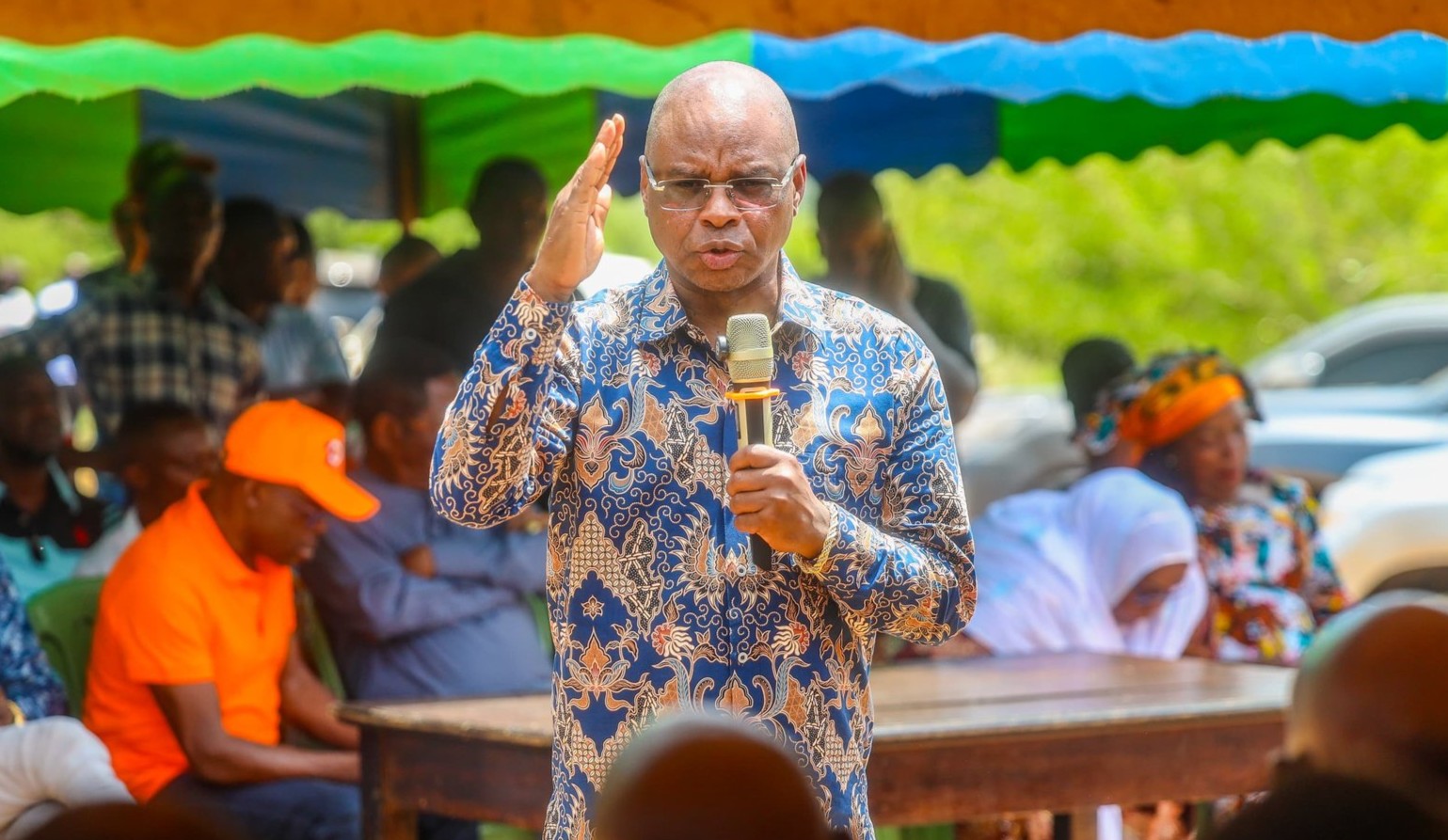
 Senate Speaker, Amason Kingi/FILE
Senate Speaker Amason Kingi has announced that the Pamoja African Alliance (PAA) party will not field any candidates in the 2027 General Election, marking a significant political shift.
In a decisive declaration, Kingi stated that PAA would not sponsor any candidate for elective positions in 2027. Instead, individuals who had initially planned to contest under the PAA banner will now seek election through UDA, the ruling party.
“I want to publicly announce that next year, PAA will not field any candidate in any position. Those who intended to vie through PAA will now do so under UDA,” he said.
Speaking at a public gathering attended by grassroots leaders and supporters, Kingi acknowledged the confusion among party loyalists, many of whom had backed PAA candidates in the 2022 elections.
He recalled the party’s strong presence during the last polls, highlighting campaigns for various seats, including the gubernatorial bid led by lawyer George Kithi.
Kingi noted that the decision follows a series of consultations with President William Ruto in Nairobi, where discussions centred on political unity ahead of the next election cycle.
According to the Senate Speaker, the meetings brought together key stakeholders, including grassroots leaders, to deliberate on a unified political direction.
“Many of you are wondering why I stand before you today among people in yellow jerseys and not blue,” Kingi said, referring to the shift from PAA’s traditional colours to those associated with the United Democratic Alliance (UDA).
“We have had many meetings with the President on how we will approach the next elections as one people,” he added.
The Kilifi-based party leader emphasised that the resolution was not made unilaterally but was the outcome of inclusive consultations involving leaders at different levels.
He maintained that the move is aimed at strengthening political cohesion and avoiding fragmentation that could undermine development goals.
The announcement signals a strategic alignment between PAA and UDA, potentially consolidating support bases, particularly in the coastal region where PAA has enjoyed considerable influence.
However, the decision has sparked mixed reactions among PAA supporters who had identified strongly with the party’s independent stance. Some commented that the shift may result in a loss of political identity, while others could interpret it as a pragmatic step toward greater inclusion in national governance.
"In short, he doesn’t want to tell us that he has folded the party," one social media user asked.
Kingi sought to reassure supporters that their interests would remain protected under the new arrangement. He reiterated that the primary goal is to ensure that development priorities are met through collaboration with the national government.
As the country gradually shifts focus toward the 2027 elections, Kingi’s announcement underscores the evolving nature of political alliances in Kenya.