The question of whether a long-term relationship can justify infidelity remains a topic of ongoing debate among relationship experts and the public alike.
While some individuals cite emotional distance or changing feelings over time, research indicates that the length of a relationship alone does not make cheating acceptable.
Studies in relationship psychology suggest that infidelity is usually linked to a combination of underlying issues rather than simply how long partners have been together. Common contributing factors include:
- Declining emotional intimacy
- Poor communication between partners
- Unresolved conflicts
- Changes in physical or emotional needs
- Individual values and personal choices
Read Also
According to research published in journals such as the Journal of Marriage and Family, couples in long-term relationships may experience periods of strain. However, many successfully navigate these challenges without engaging in infidelity.
Experts note that responses to difficulties matter far more than the passage of time. “Infidelity is often a symptom of underlying issues, not a direct result of time spent together,” relationship counsellors explain.
Enjoying this article?
Subscribe for unlimited access to premium sports coverage.
View Plans
Shifting Relationship Dynamics
Relationships naturally evolve. The early stages, often marked by excitement and intense connection, can transition into routines shaped by work, family responsibilities, and external pressures.
If these changes are not addressed, emotional closeness and satisfaction may decline. Counsellors emphasize communication, mutual effort, and constructive dialogue as key tools in maintaining a strong connection.
Options such as counselling or redefining expectations are recommended over secrecy or betrayal.

Public Perspectives
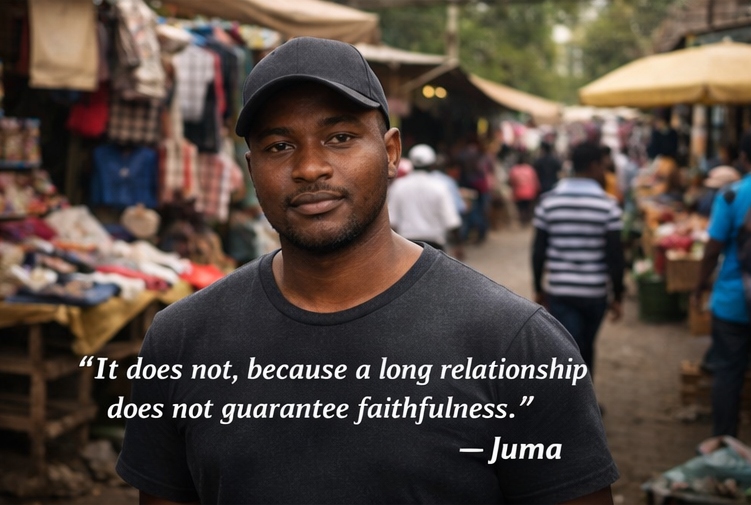
- Juma: “It does not, because a long relationship does not guarantee faithfulness.”
- Isaac: “It fades with time.”
Women interviewed echoed similar sentiments:
- Akinyi: “A long relationship does not justify infidelity. Time should build trust, not break it. Cheating after many years feels like a deeper betrayal because of the history involved.”
- Wanjiku: “Sometimes people say love fades with time, but that doesn’t mean respect should fade too. Even if feelings change, there are honest ways to handle it without being unfaithful.”
- Naliaka: “Staying with someone for years can become routine, and people may feel disconnected. But infidelity is still a choice. It’s not about how long you’ve been together, it’s about how you deal with the changes.”

Evidence and public opinion suggest that long-term relationships, while subject to challenges, do not justify infidelity. Maintaining trust, open communication, and personal responsibility remain central to managing change and ensuring a healthy, respectful partnership over time.




Comments 0
Sign in to join the conversation
Sign In Create AccountNo comments yet. Be the first to share your thoughts!