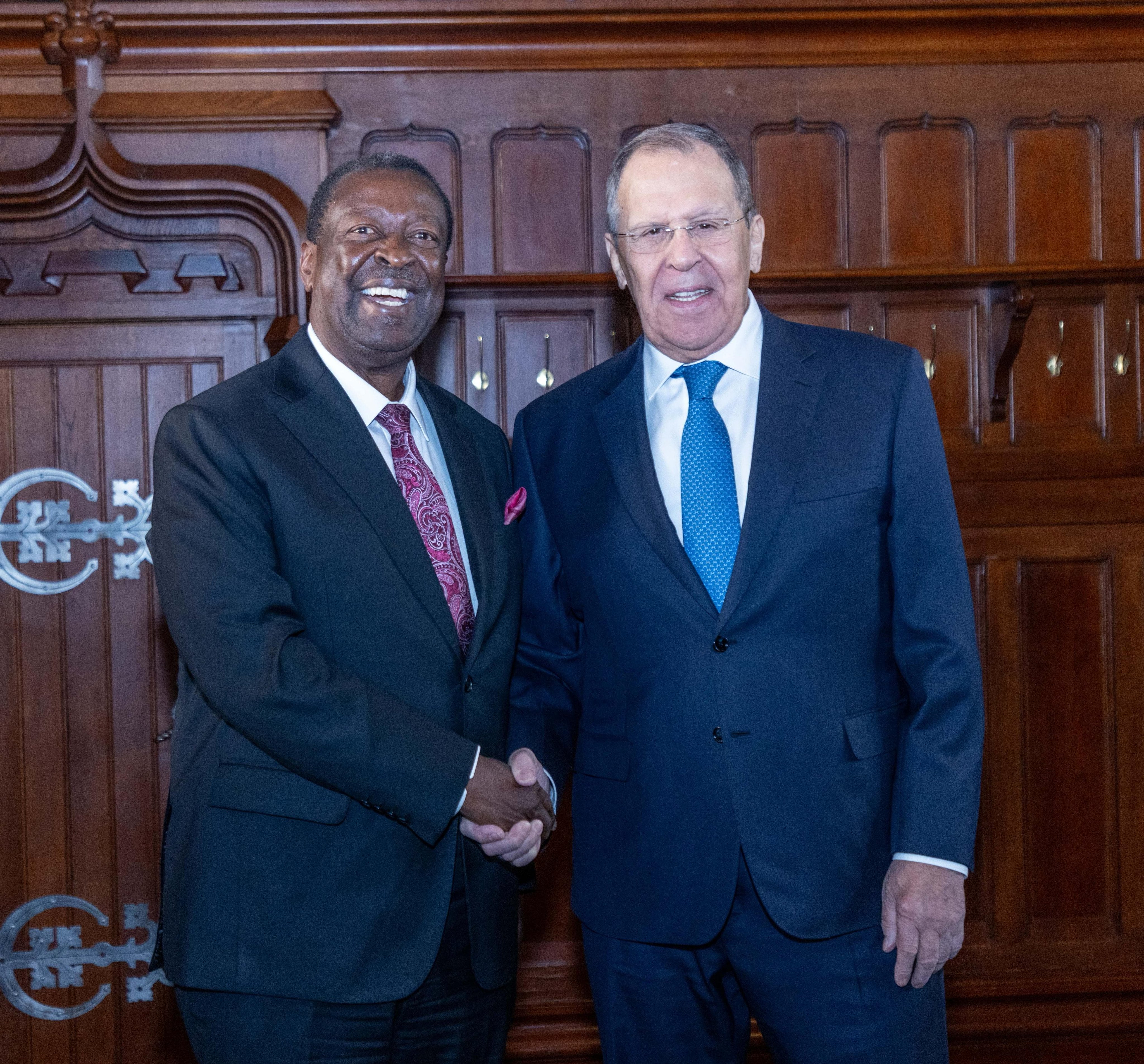
 Prime CS Musalia Mudavadi with H.E. Sergey Viktorovich Lavrov, Minister for Foreign Affairs of the Russian Federation, in Moscow during the talks on March 16, 2026. /HANDOUT
Kenya has secured a diplomatic agreement with Russia to halt the recruitment of Kenyan citizens into Russian military operations and facilitate repatriations.
The deal was reached during bilateral talks in Moscow between Prime Cabinet Secretary and Foreign Affairs CS Musalia Mudavadi and Russian Foreign Minister Sergey Lavrov on Monday.
Mudavadi said the welfare of Kenyans reportedly recruited to fight in Russia’s Special Military Operations was a central issue during the discussions.
“A primary and urgent agenda item was the situation of Kenyans reportedly recruited into the Russian Special Military Operations,” Mudavadi said in a press statement issued from Moscow.
He said Kenya formally asked Russia to halt the recruitment of Kenyan nationals.
Mudavadi explained that Kenyan law prohibits citizens from serving in foreign armed forces without authorization.
“Section 68 of the Kenyan Penal Code outlaws the enlistment of Kenyan nationals in the military or armed forces of any foreign state without written authority of the President of Kenya,” he said.
The law provides for penalties of up to ten years imprisonment unless a court determines that the enlistment was not voluntary.
Following the consultations, Russia agreed to facilitate consular access to Kenyan nationals who are currently receiving treatment in hospitals or staying in civilian facilities.
The arrangement will enable Kenyan officials to assist injured citizens and coordinate their return home.
Russia also agreed to facilitate the dignified repatriation of the remains of Kenyans who may have died in the conflict.
Mudavadi said the Russian government further committed to allowing Kenyan nationals currently involved in the operations to disengage if they wish to withdraw.
“Russia agreed to disengage Kenyans who are currently in the operations and unwilling to continue in the assignment and to expedite applicable compensation processes through appropriate diplomatic channels,” he said.
In addition, the Russian authorities agreed to place Kenya on what Mudavadi described as a “stop list” to prevent future recruitment of Kenyan citizens into the military operations.
The decision acknowledges Kenya’s legal position that citizens should not be recruited into foreign armed forces without official authorization.
The two governments also agreed to strengthen cooperation in tackling human trafficking and illegal recruitment networks.
Mudavadi said both sides will begin sharing information to help curb smuggling and trafficking activities targeting vulnerable job seekers.
“Begin information sharing between the government of Kenya and that of the Russian Federation in an effort to thwart human trafficking and smuggling,” the statement said.
The talks took place during Mudavadi’s official visit to Moscow from March 15 to March 18, where he met Russian officials to discuss bilateral relations and cooperation.
While the discussions covered economic and diplomatic cooperation between the two countries, the issue of Kenyans involved in the conflict emerged as a key concern.
Mudavadi said the agreement marks an important step toward safeguarding Kenyan citizens abroad and ensuring that recruitment into foreign military operations does not violate Kenyan law.
A National Intelligence Service report released to Parliament in mid-February showed that at least 1,000 Kenyans have been recruited into the ongoing Russia–Ukraine war.
The report stated that the majority were allegedly duped by rogue agents who promised lucrative jobs abroad.
According to the report read by the National Assembly Majority leader, Kimani Ichung’wah, many of the affected youth were misled into believing they had secured well-paying security and logistics jobs.
The Kikuyu MP said some Kenyans have left the country through Istanbul, Türkiye, as well as Abu Dhabi, United Arab Emirates.
He said some Kenyans leave the country on transit visas to join the Russian army, due to increased interceptions of suspects at the Jomo Kenyatta International Airport (JKIA).
Some agencies, he noted, have been colluding with rogue airport staff from the Directorate of Immigration, DCI and the National Employment Authority (NEA) to facilitate recruits escaping scrutiny at JKIA.
“Close to 1,000 estimated have not all travelled from Kenya; some are already in the diaspora who have since moved to go and fight in Russia,” he said.
The report indicated that upon arrival, several recruits found themselves redirected to training camps and eventually deployed to the battlefront in the Russia–Ukraine conflict.
Ichung’wah said 39 are hospitalised, 30 have been repatriated, 28 are missing, 35 are deployed in camps, 89 others are on the front line, one is detained and another has completed the contract.
“The ongoing Russian war continues to trigger the recruitment of foreign fighters through rogue agencies targeting ex-military and ex-police, as well as civilians in their mid-20s who are desperate for job opportunities abroad,” he told Parliament.
The Russia-Ukrainian war began in February 2014 and is ongoing. Following Ukraine's Revolution of Dignity, Russia occupied Crimea and annexed it from Ukraine.It then supported Russian separatist armed groups who started a war in the eastern Donbas region against Ukraine's military.