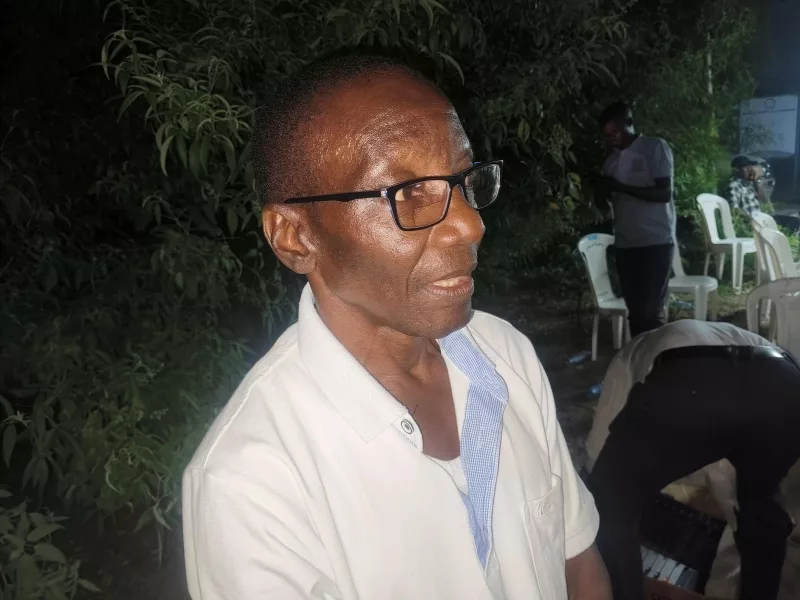
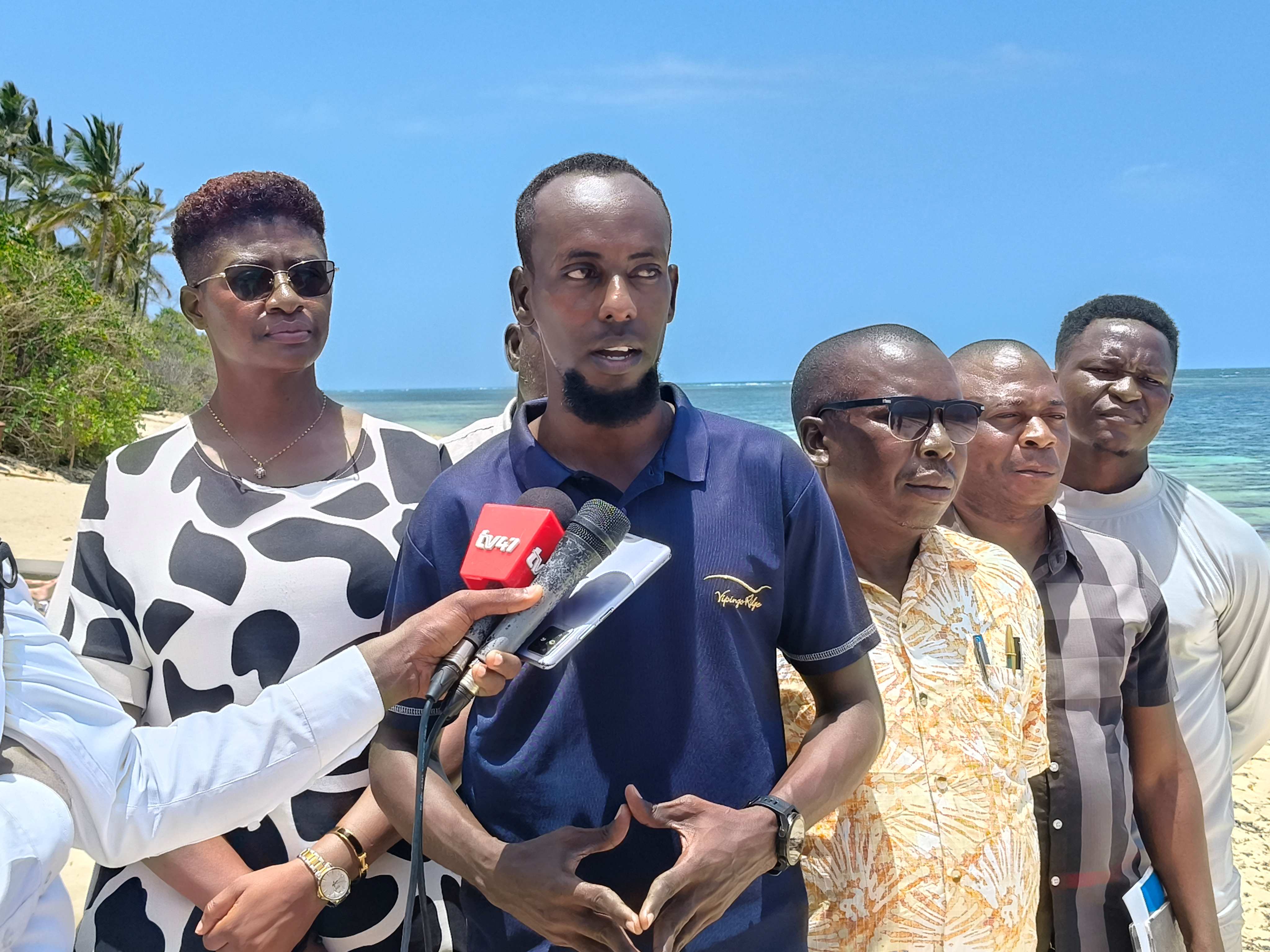
 Vipingo Ridge conservation manager Kusa Abdulla and other partners at the Kuruwitu
conservancy in Vipingo on Friday / BRIAN OTIENO
Vipingo Ridge conservation manager Kusa Abdulla and other partners at the Kuruwitu
conservancy in Vipingo on Friday / BRIAN OTIENOThere is a lot of indigenous knowledge on the ocean and its organisms trapped in local fishermen in Kilifi county that needs to be harvested and documented.
However, they are always left out when it comes to policy formulation and other critical issues, stakeholders in the marine conservation and blue economy sector say.
“In most cases, the voices of the communities are never heard, except when there are disasters,” Media For Nature co-founder Mazera Ndurya said.
"But there is much more that the communities have in terms of indigenous knowledge because they have lived with the ocean and know how it behaves, they understand it, they know the tides, they know when to go fishing and when not to."
This knowledge will be showcased and discussed on May 7 at the second edition of the Annual Environmental Media Dialogue, when stakeholders meet locals at the Kuruwitu conservancy in Vipingo, Kilifi county.
Kuruwitu conservancy is a pioneering, community-led marine sanctuary established in 2003 to restore coral reefs and fisheries.
It covers 30ha of protected area, with a larger co-managed area, and offers tourist activities like snorkeling, diving, boat rides to see restored reefs and more than 200 species of fish and turtles.
Media for Nature, Blue Radio, Vipingo Ridge, the Kuruwitu Conservation and Welfare Association (KCWA) and the local Beach Management Units have partnered to ensure indigenous knowledge is captured and documented for posterity.
Ndurya said this year’s media dialogue will focus on reporting in the ocean from the community’s perspective.
He said this is the indigenous knowledge that journalists need to harness from the community through interaction with them.
There is a risk of this knowledge getting lost, he said, because most of those who have it are aged and when it is not harnessed and documented, it will be gone forever.
“This knowledge will help inform policy that will guide parts of the country in terms of managing climate change,” Ndurya said.
This is more important because the 11th Our Ocean Conference will be held in Africa for the first time this year, and Kenya has been chosen to host it in Mombasa and Kilifi counties from June 16-18.
“The choice of our theme resonates with the conference that is coming. This is an opportunity also for our communities to understand how they will benefit from this conference,” Ndurya said.
Media Council of Kenya Coast coordinator Maureen Mudi said matters environment are never really covered with the weight they deserve in the media.
She said the media are partners in public communication and are key stakeholders in environmental conservation.
“When environmental issues are deeply highlighted, government policies are shaped. And journalists live within communities and are also affected by the things that affect the environment,” Mudi said.
Kusa Abdulla, the conservation manager at Vipingo Ridge, said conservation is an important thing for the society but only a few actually involve themselves in conservation work.
This is despite the ocean being a key cog in the ecosystem.
“So, we call upon other stakeholders to take part in the conservation journey with us. For us, we do conservation work at both marine and terrestrial levels.
“At marine level, we work with Kuruwitu CBO. We support them because they are the ones who do the actual work in the ocean. We do most of our conservation activities at the ridge, in the terrestrial part,” Abdulla said.
He said they rescue orphaned or distressed animals and rehabilitate them.
“For quite some time, poaching has been rampant in this area, especially with children who hunt birds not for food but for fun. They kill the birds for the thrill and compete to see who has killed the most,” Abdulla said.
To curb this, Vipingo Ridge has come up with a programme, the Conservation Education Programme, where they educate school children on the importance of conservation.
This is done one school at a time, with learners from one neighbouring school visiting the Vipingo Ridge per month for the education.
“So that we instill that knowledge early into them with the hope that they will change the next generation,” Abdulla said.
Kuruwitu Conservancy director Daniel Mwangunya and BMU chair Gilbert Nzai urged the community to turn up in numbers on May 7 and learn what the ocean does and how it is important to conserve it.
Charles Nyale, the Kilifi BMU Network chair, said there is a lot of work that goes into conserving the ocean but it goes unnoticed by stakeholders and beneficiaries.
He said the ocean has a wealth of knowledge that needs to benefit all.
INSTANT ANALYSIS
Indigenous and local knowledge (ILK) holders have developed sustainable ways of managing marine resources based on this knowledge, which has proven to be effective in maintaining the ecological balance of their territories. Recognising and incorporating ILK into marine spatial planning can significantly enhance its effectiveness and ensure a balance between conservation goals, economic activities and cultural preservation for a resilient ocean.