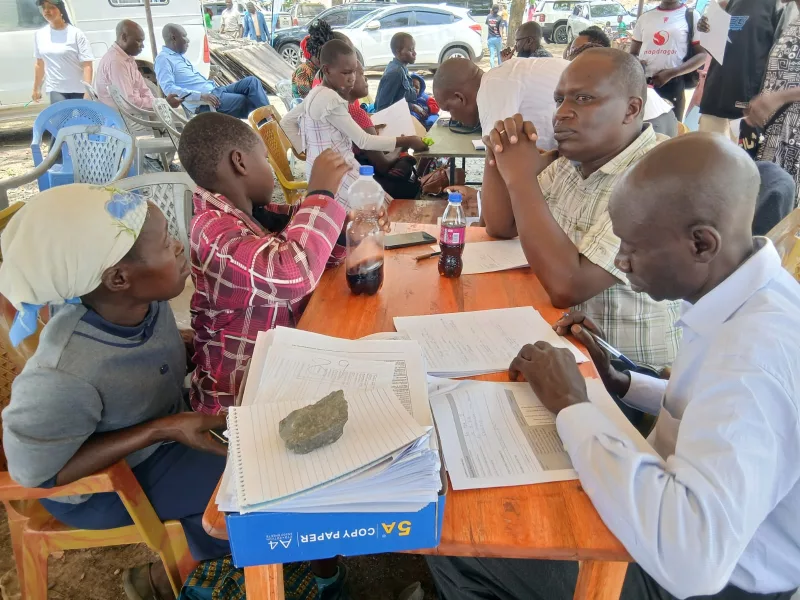
 Duncan Chando National Project Officer ACCEL Africa Project International Labour Organization (ILO). Faith Matete
 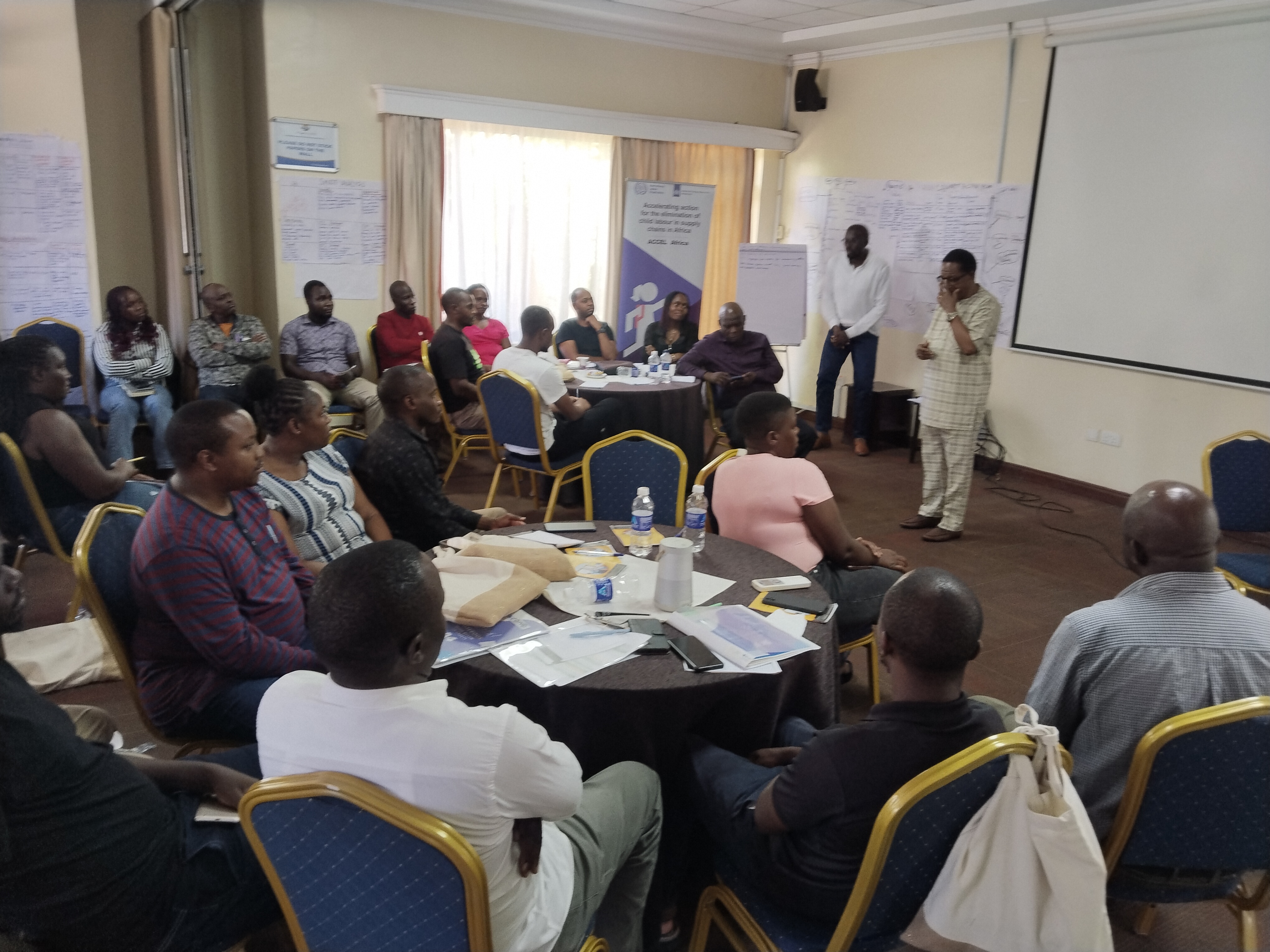 Cooperative officers from Kericho and Kisii counties during a training in Kisumu aimed at strengthening them to help address child labour in the tea and coffee value chains./Faith Matete
 Cooperative officers from Kericho and Kisii counties have undergone a 12-day training aimed at strengthening cooperatives to help address child labour in the tea and coffee value chains.
The training, held in Kisumu, was organised by the International Labour Organization (ILO) under the ACCEL Africa Phase II Project, which focuses on eliminating child labour in key agricultural supply chains.
The workshop brought together cooperative officers, representatives of farmers’ associations, county child labour committees and government officials from Kericho, Kisii, Nyeri, and Meru counties.
Speaking during the training, National Project Officer Duncan Chando said tea and coffee were targeted because the two crops are major export commodities, and cases of child labour can affect their market access and value.
“When we have a value chain that is not tainted by child labour, farmers are able to access better markets and get better prices for their produce,” he said.
Chando said the project is using cooperatives as an entry point to address child labour because they play a central role in organising farmers, improving incomes, and enforcing standards within agricultural value chains.
According to him, participants were trained using three internationally recognised ILO cooperative development tools.
Think.COOP, Start. COOP and My.COOP, which are designed to strengthen cooperative governance and management.
Chando said child labour in farming communities is largely driven by poverty, low household incomes, and limited economic opportunities.
To address this, the project is promoting alternative livelihood opportunities for farming households, particularly targeting women who often do much of the labour in tea and coffee farms but have limited control over the income.
“We are encouraging alternative income sources such as poultry farming or avocado production so that families can have additional income and avoid sending children to work in farms,” he said.
He added that the project is also promoting social protection and occupational safety to ensure farming households are better protected from economic shocks.
Globally, the ILO and UNICEF estimate that about 135 million children remain in child labour, with more than 50 million involved in hazardous work.
Kericho County Director of Cooperatives Dr Leonard Otii said strengthening cooperatives will play a key role in protecting children while improving farmers’ livelihoods.
He noted that Kericho is one of Kenya’s leading tea-producing counties, and cooperatives are at the heart of the county’s agricultural economy.
“By strengthening governance, transparency, and member education within cooperatives, we are addressing the structural factors that contribute to child labour,” he said.
Dr Otii said improving cooperative management will help raise farmers’ incomes and promote compliance with labour standards in tea-growing communities.
Kisii County Deputy Director for Cooperatives Bernard Ochieng said eliminating child labour requires collaboration between government institutions and development partners.
“The total elimination of child labour in the coffee and tea value chains cannot be achieved by development partners alone. It requires concerted efforts from both levels of government and strong partnerships,” he said.
Ochieng said cooperative officers who participated in the training will now cascade the knowledge to cooperative members, managers, and boards across Kisii County.
"This initiative strengthens systems, not just individuals. Cooperative officers are now equipped to ensure child labour prevention is embedded in cooperative policies, education programmes and daily management practices,” he said.
Officials during the training said agricultural cooperatives can play a critical role in eliminating child labour by raising awareness among farmers, improving adult employment opportunities, and embedding child labour prevention measures in their policies.
The officers trained in Kisumu are expected to extend the knowledge to cooperative members and farmer groups in their counties, ensuring that child labour prevention becomes part of the management and governance of tea and coffee cooperatives.
The ACCEL Africa Project, funded by the Government of the Netherlands, seeks to strengthen policies, institutions, and partnerships to eliminate child labour in key supply chains across Africa, including tea and coffee in Kenya.