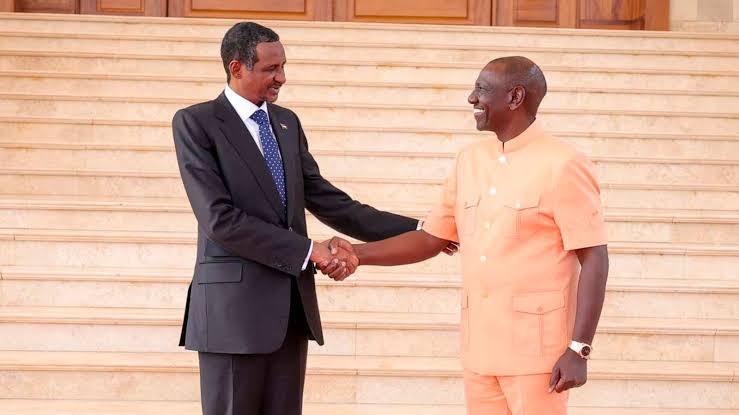
In a strongly worded statement, the Human Rights Foundation said the alleged issuance of Kenyan travel documents to figures connected to the RSF could enable sanctioned actors to evade international restrictions and raise serious questions about Nairobi’s role in the Sudan conflict.
The group warned that the developments represent “another troubling twist” in the relationship between President William Ruto’s administration and the RSF, a paramilitary organisation accused by international observers of committing atrocities during Sudan’s ongoing civil war.
“HRF is alarmed by reports indicating that Kenyan authorities issued passports to a sanctioned Sudanese war financier and other individuals linked to Sudan’s genocidal RSF,” the organisation said, urging the international community to scrutinise Kenya’s actions.
The statement follows reporting based on leaked documents that allegedly show Kenyan officials issued passports to several foreign nationals described as shadowy figures, including a Zimbabwean businessman and multiple individuals linked to the RSF.
Among those cited is Algoney Hamdan Dagalo Musa, the younger brother of RSF commander Mohamed Hamdan Dagalo, widely known as Hemedti. Both men are under United States sanctions.
Hemedti was sanctioned over accusations related to the RSF’s campaign of ethnically motivated killings and sexual violence, while Algoney has been targeted for allegedly financing the paramilitary group and procuring weapons for its operations.
Sudan has been engulfed in conflict since April 2023 following a power struggle between the RSF and the Sudanese Armed Forces, a war that has triggered one of the world’s worst humanitarian crises.
HRF argues that granting passports to individuals linked to the RSF risks undermining the international sanctions regime designed to curb the group’s activities.
The allegations also revive criticism of Kenya’s engagement with the RSF in recent months. Nairobi has faced scrutiny for hosting meetings involving RSF-linked actors and allowing figures associated with the group to operate in Kenya, including hosting a meeting in the capital.
The government has previously defended their actions, saying the country’s involvement is aimed at facilitating dialogue between Sudanese factions in pursuit of a negotiated settlement.
However, critics say the pattern of engagement risks blurring the line between mediation and perceived alignment with one side of the conflict.
Investigative reports cited by the rights group further claim that the RSF has used Kenyan airports as part of its arms supply chain and that weapons linked to Kenya have surfaced in Sudan’s civil war.
While the Kenyan government has not publicly responded to the latest accusations, the claims threaten to complicate the country’s diplomatic standing.
Kenya has long positioned itself as a regional mediator and plays a key role in peace efforts under Igad, the regional bloc tasked with helping broker a ceasefire between Sudan’s warring factions.
Allegations of facilitating travel documents for sanctioned individuals could thus undermine Nairobi’s credibility as a neutral broker in the Sudan peace process.
Already, Sudan has accused Ruto of being biased in the conflict for harbouring RSF commanders. Ruto has denied the accusations.
The call for international action adds to mounting foreign policy criticism and raises difficult questions about how Kenya balances its diplomatic ambitions with international expectations on sanctions compliance and regional stability.