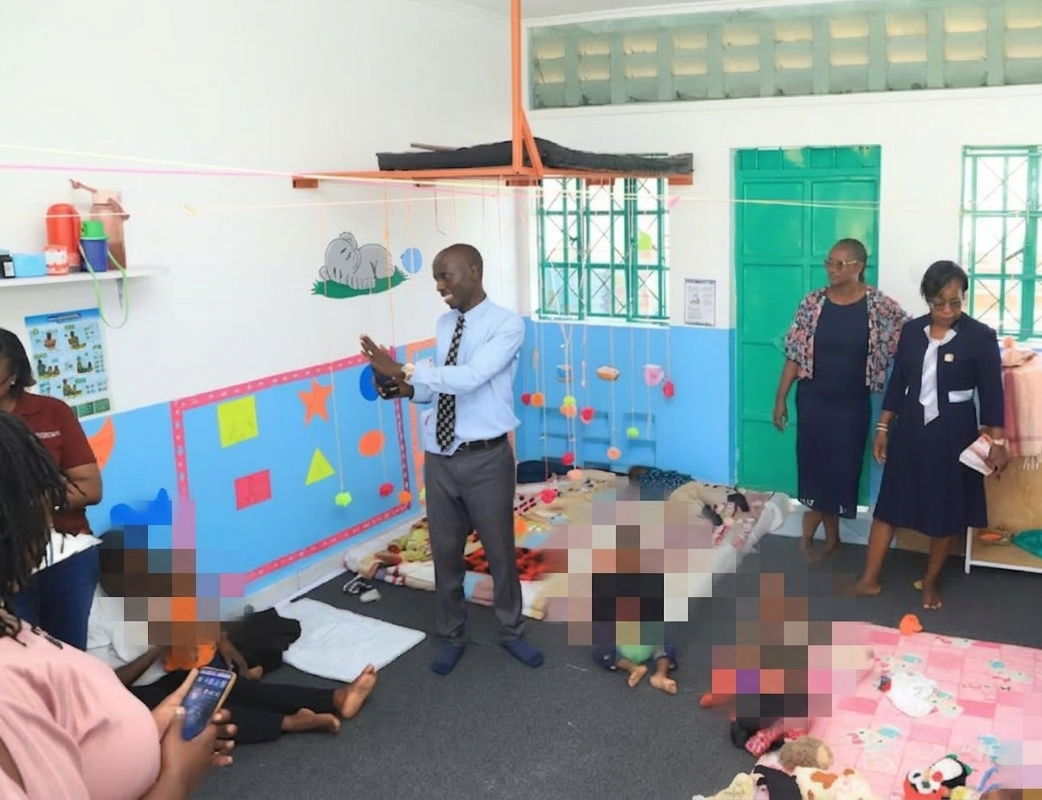
At Akado Vocational Training Centre on the outskirts of Kisumu, the sound of sewing machines and carpentry tools blends with the laughter of toddlers playing in a brightly lit room nearby.
It is an unusual arrangement in conventional education settings, but one that has quietly begun transforming the prospects of young mothers who would otherwise have abandoned their studies.
For years, many young women who enrolled in vocational training centres across the region faced a tough choice: pursue training or stay home to care for their children.
Without safe childcare options, education often came second, dealing a blow to future employment prospects of many young mothers.
The challenge worsened during the COVID-19 pandemic, when prolonged school closures were linked to a spike in unintended pregnancies among school-going girls.
Kisumu county has chosen a different path by integrating childcare services within its Vocational Training Centres (VTCs) and is setting the trend in accommodating young mothers into the school system without compromising parenthood.
The initiative, which allows mothers to attend classes while trained caregivers look after their children nearby, is gradually removing one of the most persistent barriers to women’s participation in vocational training.
Akado VTC previously recorded high dropout rates among female trainees, many of whom left after becoming mothers because they had no place to leave their children during class hours.
A paradigm shift occurred after the county government partnered with Kidogo Innovations to introduce a childcare facility within the centre.
The collaboration, formalised through a Memorandum of Understanding signed in 2021, combined county investment in infrastructure with specialised training for caregivers.
Today, the facility provides structured childcare services that allow mothers to focus on their studies while their children remain within reach.
Since the programme began, at least 15 young mothers have been able to continue with their vocational courses.
Their children, currently numbering 15, are cared for by a trained caregiver employed by the centre, with plans underway to expand capacity as demand grows.
Speaking during a documentation exercise by the Council of Governors under the Nurturing Care Framework, Akado VTC head Martin Owino said the model has helped young mothers remain in training while ensuring their children receive proper care.
“Vocational training fields are often male-dominated, but thanks to this initiative, more young women are encouraged to embrace learning despite the circumstances they face. Mothers can comfortably leave their children at the facility, where care is provided free of charge from 8 am to 5 pm, and the parents are only required to provide meals,” he added.
Within the childcare room, the environment is designed to support feeding, play and rest. The space offers a structured routine for the children while their mothers attend classes in tailoring, carpentry, hairdressing and other technical trades offered at the centre.
Lorine Achieng, a trainee plumber and mother to a six-month-old baby, says the facility has made it possible for her to remain in training while caring for her child.
“I am grateful for the opportunity to complete my plumbing coursework. Knowing that my baby is safe at the baby care centre, with someone watching over her, allows me to concentrate on building my skills without constant worry,” she said.
Achieng says balancing motherhood and training has not been easy, but the presence of the childcare facility within the centre has eased the burden.
“Being a mother hasn’t been easy, especially balancing school and parenting, but I am committed to both roles. The center has been very supportive. I leave my baby there in the morning and check on her every two hours to breastfeed, while the caregiver helps care for her and puts her to sleep.”
Beyond childcare, the initiative is also creating a learning environment that encourages peer support and mentorship. Students who are not parents interact with the children and their mothers daily, gaining a practical understanding of the responsibilities that come with parenthood.
The caregiver assigned to the facility has undergone specialised training in caregiving and first aid, strengthening the safety and quality of services provided.
County officials say the programme is already attracting interest from more young mothers seeking to enrol in vocational courses.
Encouraged by the results, Kisumu county is now scaling up the model across its vocational training system with plans underway to extend the childcare services to all 28 VTCs in the county.
This will potentially enable hundreds of young mothers to continue their education without having to choose between training and childcare.
The move positions Kisumu as the only county in Kenya currently integrating childcare facilities directly into vocational training centres, an approach that aligns vocational education with broader early childhood development goals.
County officials say the programme reflects a wider commitment to nurturing care, a concept that recognises that children’s development depends on a supportive ecosystem that includes health, nutrition, safety and responsive caregiving.
This broader approach is also visible in other basic education institutions across Kisumu county, where early childhood development is increasingly linked with social support programmes aimed at improving children’s well-being.
At Magadi Primary School in the Manyatta informal settlement, for example, learners benefit from an environment designed to address both academic and developmental needs.
The school serves a large population of children from surrounding communities and has introduced several initiatives aimed at supporting holistic development.
Learners receive nutritious meals supported by a kitchen garden and aquaponic farming system established within the school compound.
The produce supplements school feeding programmes while also serving as a practical learning tool for students.
Play spaces designed to be safe and stimulating provide opportunities for physical development, while digital learning tools have been introduced to support modern teaching methods in the classroom.
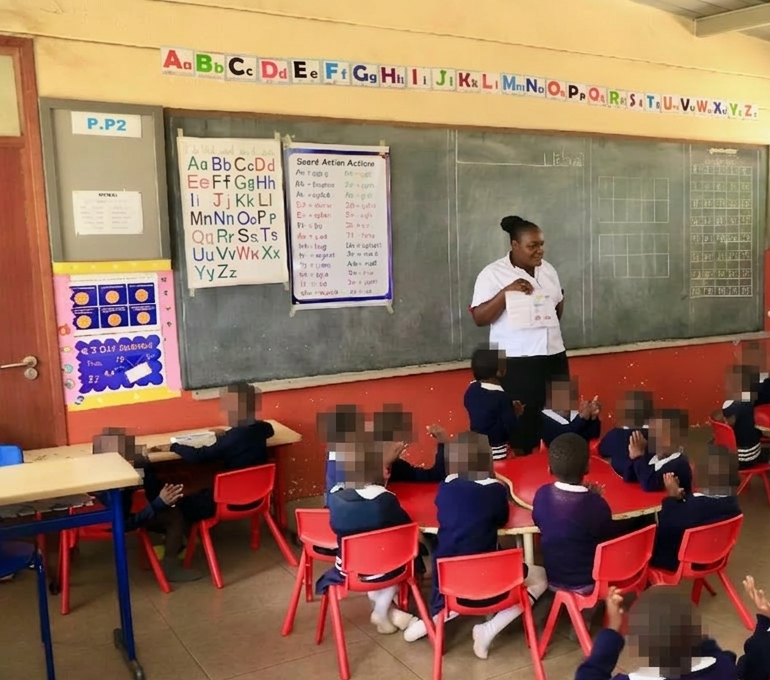
Magadi Primary has also established a special unit dedicated to supporting children living with disabilities, reflecting the county’s emphasis on inclusive education.
The unit currently serves 24 students and is staffed by six trained teachers who support children with a range of conditions, including autism, Attention-deficit/hyperactivity Disorder (ADHD), intellectual disabilities, attention deficit disorders, mental health conditions, cretinism, Down syndrome, multiple sclerosis (MS), and muscular dystrophy (MD).
The programme operates through three stages of support — foundational behaviour modification, intermediate learning and pre-vocational preparation — with teachers working closely with learners to identify their strengths and help them develop practical skills.
Beyond classroom learning, students in the unit are also trained in life skills such as carpet weaving and bracelet making, activities designed to promote independence and prepare them for participation in the wider community.
“County leadership in Kisumu emphasises that nurturing care is ultimately about equity and justice for children. When society speaks for children, it speaks for those who cannot advocate for themselves,” said Cecilia Agola Khaaba, the school deputy in charge of administration.
Such initiatives have been made possible through partnerships with development organisations including Kidogo, Miral Foundation and Play Action International, which have supported teacher training, playground development and the construction of disability-friendly infrastructure.
Kisumu’s approach demonstrates how county governments can combine early childhood development with skills training to address social challenges that often disrupt learning.
The initiative comes at a time when the national government has raised concerns over the development of Early Childhood Development Education (ECDE) and Vocational Training (VTC) programmes at the county level.
In its 2026 Budget Policy Statement and Medium Term Expenditure Framework tabled before the National Assembly’s Standing Committee on Education, the Ministry of Education warned that gaps in attention to ECDE and vocational training could affect foundational skills development central to the country’s economic agenda.
The ministry pointed to the absence of a clear policy on capitation support for ECDE and VTC learners, noting that available data suggest the two subsectors have not consistently received focus in some counties.
Ministry officials warned that the lack of consistent investment has contributed to several challenges within both ECDE and vocational training systems across the country.
Among the issues raised were gaps in financial support for the ECDE school feeding programme policy.
According to the ministry, the shortfall has resulted in situations where learners in some counties do not receive meals, while in others the quality and standard of meals is poor.
Infrastructure disparities have also been flagged as a concern, with the ministry noting that facilities in ECDE and VTC institutions remain uneven across counties, potentially limiting access to foundational education and technical skills development.
“The committee may propose that the county governments, through the Council of Governors, develop a policy on capitation support to ECDE and VTC learners in the next fiscal year,” the ministry said.
Ministry officials argue that strengthening the two subsectors is essential if Kenya is to build a strong foundation for learning and workforce development.
Basic Education Principal Secretary Prof Julius Bitok recently told senators during the Fifth Session planning retreat in Naivasha that despite major gains in school enrolment, foundational learning outcomes remain fragile.
He disclosed that three in ten Grade Six learners are unable to solve Grade Three mathematics problems, while nearly half struggle to comprehend a Grade Three English text.
“These statistics demand urgent intervention. We must move from focusing only on enrolment numbers to ensuring quality learning,” said Bitok.
The concerns underscore the importance of strengthening both early childhood education and vocational training as interconnected parts of the education system.
For counties like Kisumu, integrating childcare services into vocational training is one way of addressing the problem, using the bottom-up approach as has been the national government's rallying call.
By enabling young mothers to stay in school while also ensuring that their children receive proper care during their early years, the initiative connects two critical stages of development — early childhood and skills training.
As the programme expands to more training centres across the county, the model offers lessons for other counties seeking to strengthen both ECDE and vocational training systems.
For the young mothers, walking into classrooms knowing their children are safe nearby allows them to focus on learning skills that could reshape their futures.
In a country where access to education can be disrupted by the demands of parenthood, Kisumu county’s experiment suggests that a simple idea may hold the key to keeping more young parents in school while giving their children strong development start they need.