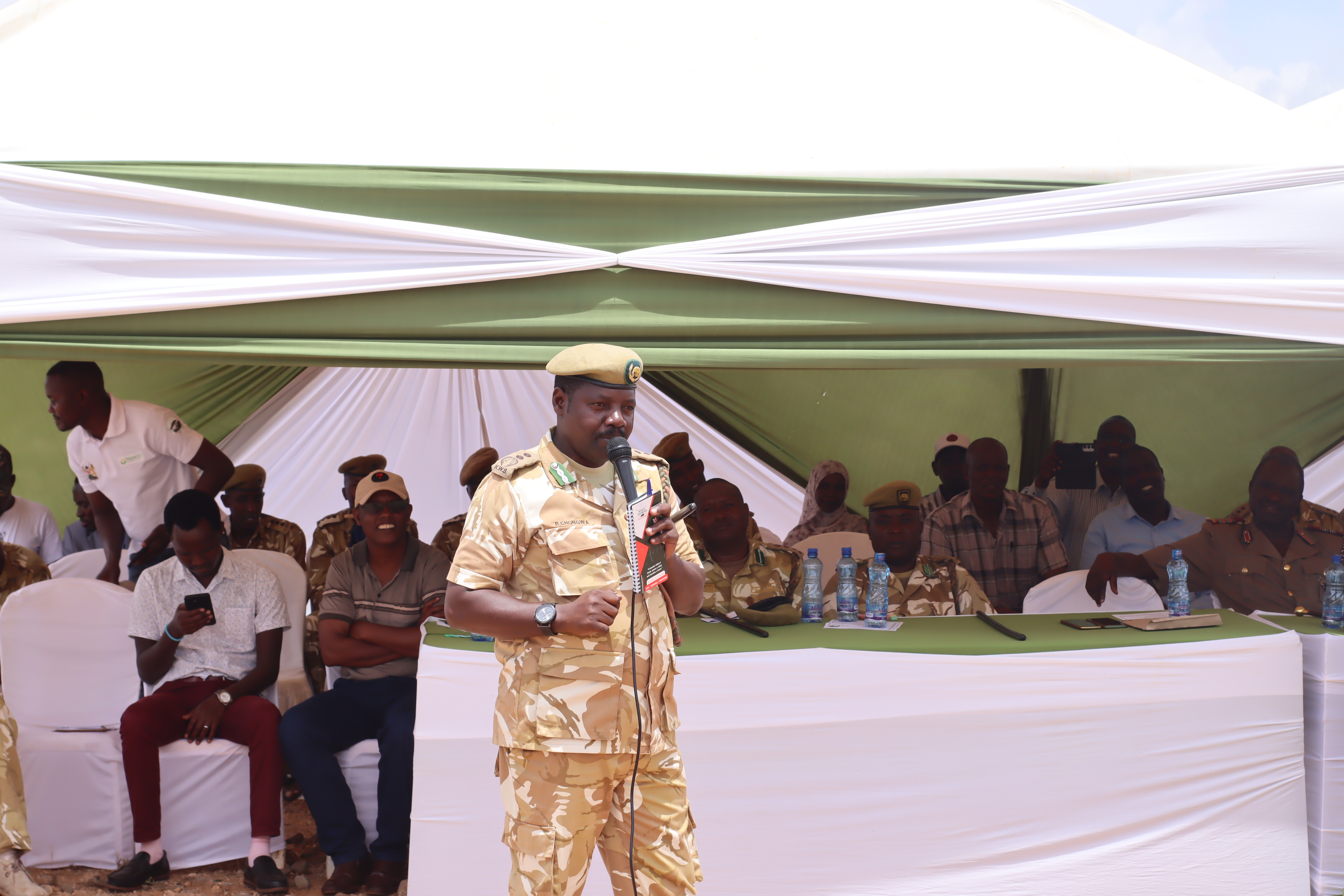
 Senior Director. Northern Area Conservation for KWS Bakari
Chongwa speaking. He warmed that leaving unscrupulous people to poach wildlife was
tantamount to losing. /STEPHEN ASTARIKO
Senior Director. Northern Area Conservation for KWS Bakari
Chongwa speaking. He warmed that leaving unscrupulous people to poach wildlife was
tantamount to losing. /STEPHEN ASTARIKO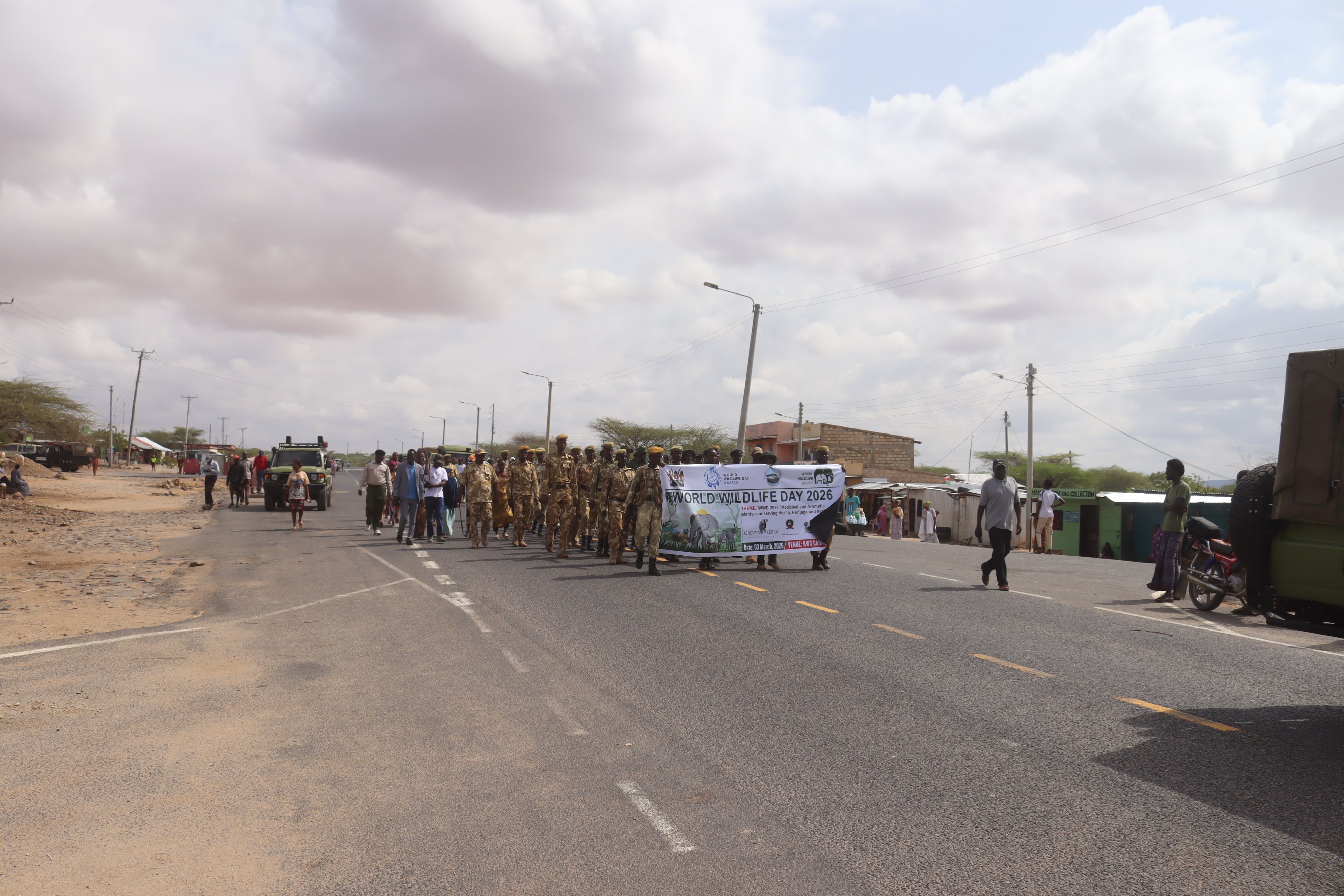 KWS officials lead Laisamis community members and other
Conservation agencies in a procession in Laisamis town to create awareness
against the over-harvesting of the medicinal
plant species in the region. /STEPHEN ASTARIKO
KWS officials lead Laisamis community members and other
Conservation agencies in a procession in Laisamis town to create awareness
against the over-harvesting of the medicinal
plant species in the region. /STEPHEN ASTARIKO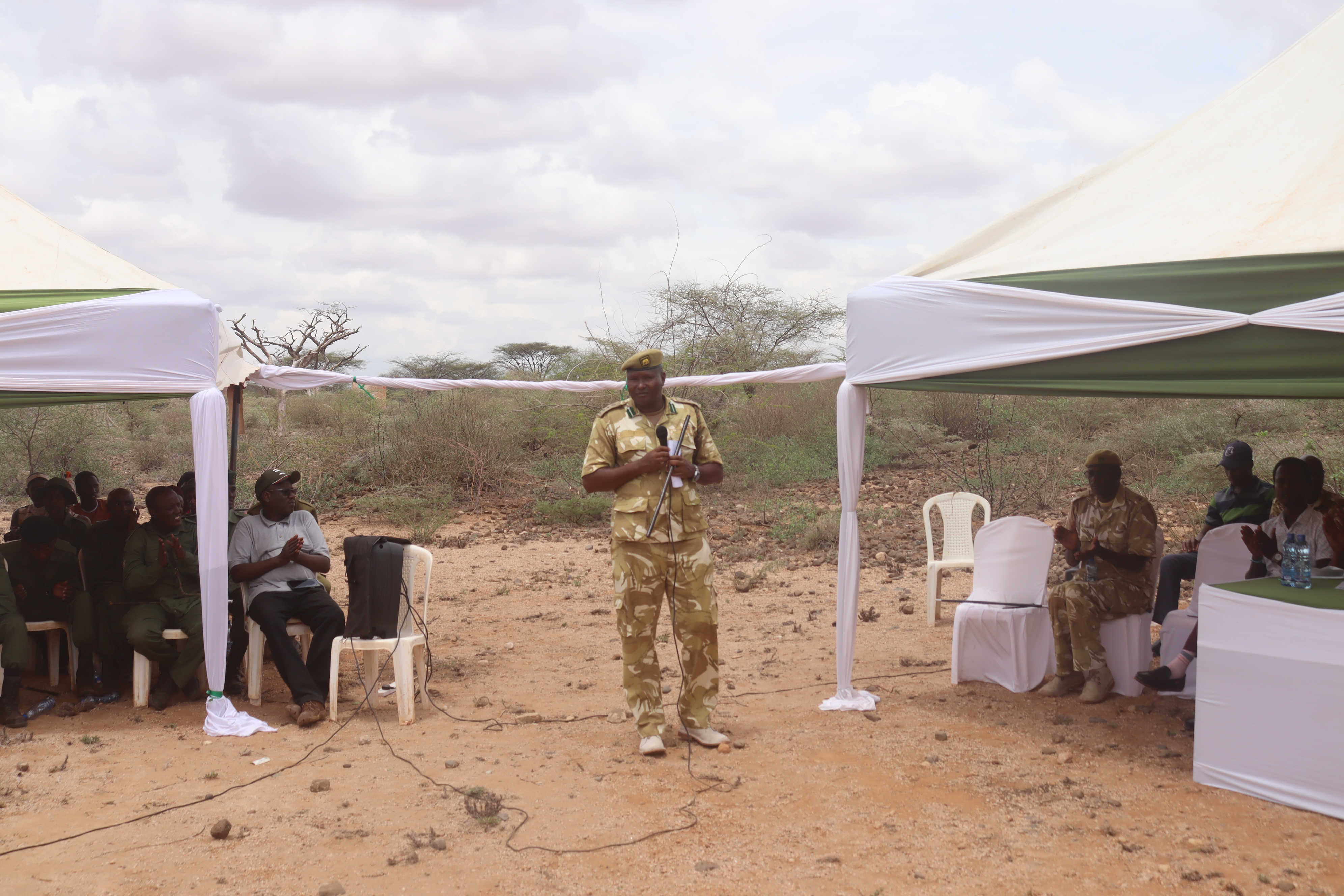 KWS Officer In-charge of Staff Operations, Nelson Lepiyapui, warned that plant poaching is now rampant./STEPHEN ASTARIKO
Kenya has stepped up efforts to protect wildlife and forests across the northern region.
The move is part of a global target to conserve 30 per cent of the planet by 2030.
The Kenya Wildlife Service says the plan could safeguard nearly a quarter of the country’s landmass.
However, officials noted that success will depend on cooperation with local communities and other government agencies.
Speaking in Marsabit, KWS senior director for Northern Area Conservation Areas Bakari Chongwa said conservation can no longer be limited to national parks and reserves.
He said the future of conservation lies in the corridors that connect these parks. He warned that if those corridors are blocked, both the animals and the ecosystem will be lost.
One of the most critical areas is the Marsabit–Ngurnit elephant corridor, which elephants have used for years to move between water sources.
The corridor is increasingly threatened by farms and settlements.
This has led to more cases of human-wildlife conflict as elephants stray into community land.
To address the problem, KWS is working with community conservancies such as Subuli in Wajir and Songa, Jaldesa and Melako in Marsabit.
The aim is to create areas where wildlife can move freely while communities continue grazing their livestock.
While wildlife conflicts are visible, KWS officers warned that the illegal harvesting of trees and plants is another growing threat.
KWS staff officer in charge of operations Nelson Lepuyapui said valuable trees such as red cedar and East African sandalwood are being illegally cut in forests around Mt Kulal and the Mathew Ranges.
He said these trees are important because they protect water sources and when cut, the springs dry up.
The forests also host rare aloe species with medicinal value that are found nowhere else in the world.
Local leaders said economic pressure is also driving the overexploitation of natural resources.
In parts of Wajir and Marsabit, the rising international demand for gum arabic has led to heavy harvesting of the trees that produce the resin.
Rev Joseph Losieloi, a community leader in Laisamis, said the trade provides income but also risks damaging the environment.
He noted that while people have realised these products bring good money, overharvesting is now becoming a problem.
To protect plant resources, the government has tightened rules on exporting seeds and plant materials.
Any exports must now be approved by the Kenya Plant Health Inspectorate Service and verified as legally sourced and disease-free.
Parts of the northern landscape have long been recognised for their ecological importance.
Mount Kulal was declared a UNESCO Man and Biosphere Reserve in 1979 because its forests capture moisture from Lake Turkana and release it as springs that support nearby communities.
However, conservation activities slowed after earlier projects ended in the mid-2000s, leaving forests vulnerable to logging, drought, grazing and land ownership disputes.
KWS now plans to revive community forest associations to help protect the area.
With the 2030 biodiversity deadline approaching, conservation officials said community involvement will be key.
Chongwa said while policies and laws exist, the effort will not succeed if the community does not take ownership of conservation.