Human rights activists in Garissa County have called on the national government to fast-track the construction of mega dams in the region.
The dams are expected to address the persistent drought that continues to devastate livelihoods.
Garissa Human Rights Defenders Network head Muktar Dahir and Garissa MUHURI coordinator Abdihakim Shurie urged the government to move beyond political rhetoric and take concrete steps toward implementing water infrastructure projects.
Advertisement
Advertisement
Dahir said much of the rainwater currently being received in the region goes to waste, yet residents often face severe drought shortly after the rainy season.
He said the government should move with speed to ensure the construction of the dams begins, noting that talking about implementation and actually delivering the projects are two very different things.
“Personally, I feel sad seeing rainwater going to waste. Where is the rainwater harvesting? Where are our water reservoirs?” he asked.
“My plea to the Kenya Kwanza government is to prioritise the construction of mega and medium-sized dams because they will be a game changer in this region as far as sorting out the issue of water shortage is concerned,” he added.
Dahir criticised local leaders, accusing them of focusing more on national political campaigns than on pressing development issues affecting residents.
He claimed much of the local leadership has been preoccupied with pushing for President William Ruto’s second-term re-election bid instead of lobbying the government to prioritise the dam projects.
Shurie noted that residents largely depend on livestock keeping as their main economic activity, making them particularly vulnerable to prolonged dry spells.
He said the construction of mega dams would provide a sustainable solution to the recurring droughts that frequently lead to massive livestock losses and leave many families destitute.
“The government should stop political rhetoric and walk the talk by prioritising the construction of mega dams in this region,” he added.
“Investing in large-scale water infrastructure would not only secure water for livestock and domestic use but also support irrigation and boost the local economy.”
He urged both the national and county governments to work together to accelerate the planning and construction of the dams.
The projects are critical to building resilience against climate-induced drought in the arid region, he said.
During his visit to Garissa last month, Ruto said his administration intends to construct 50 mega dams and more than 1,000 smaller dams across the country.
“The government will construct 50 mega dams and more than 1,000 smaller dams across the country to support irrigation, food production, and climate resilience,” he had said then.
“These dams are for harvesting water, storing water and turning northern Kenya from a low-potential area to a high-potential area,” said the president.
The High Grand Falls Dam, set to be built in Ijara subcounty, will become the largest dam in Kenya once completed.
The government is targeting between 300 and 400 acres of land in Ijara for irrigation supported by the new water infrastructure.
President Ruto reiterated that Kenya must fully utilise its land resources to secure its food future, noting that only 15 per cent of the country has been used for food production for decades.
“For a very long time, we have only used 15 per cent of Kenya to drive our food security,” he said.
“It is time to expand that to the rest of the 80 per cent of Kenya that has no rainfall so that we can store and harvest water and use it for irrigation.”
Abdihakim Shurie, Garissa County MUHUR coordinator speaking
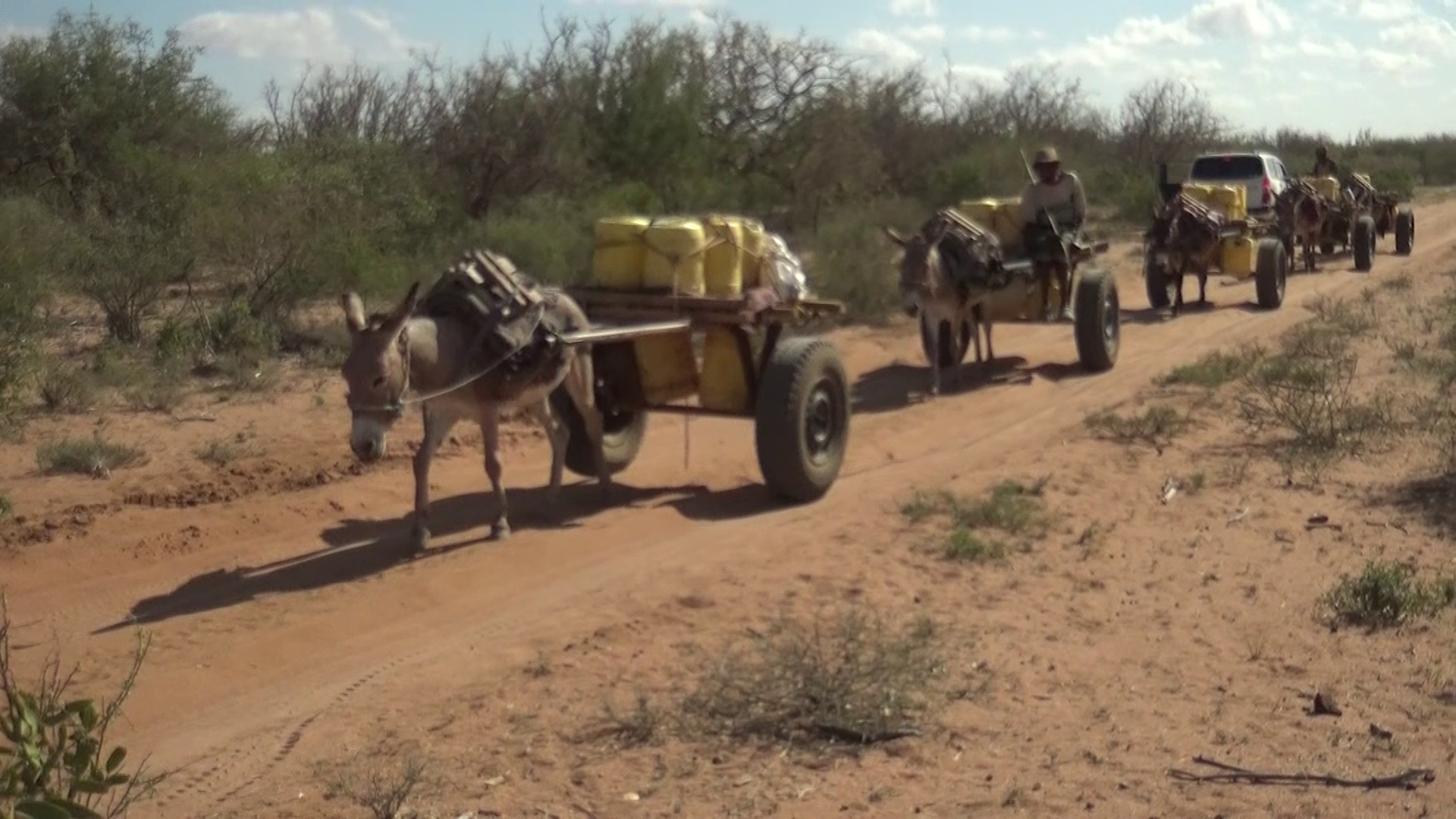
to the press in Garissa town. /STEPHEN ASTARIKO.Donkeys transporting water in Fafi sub county, Garissa.
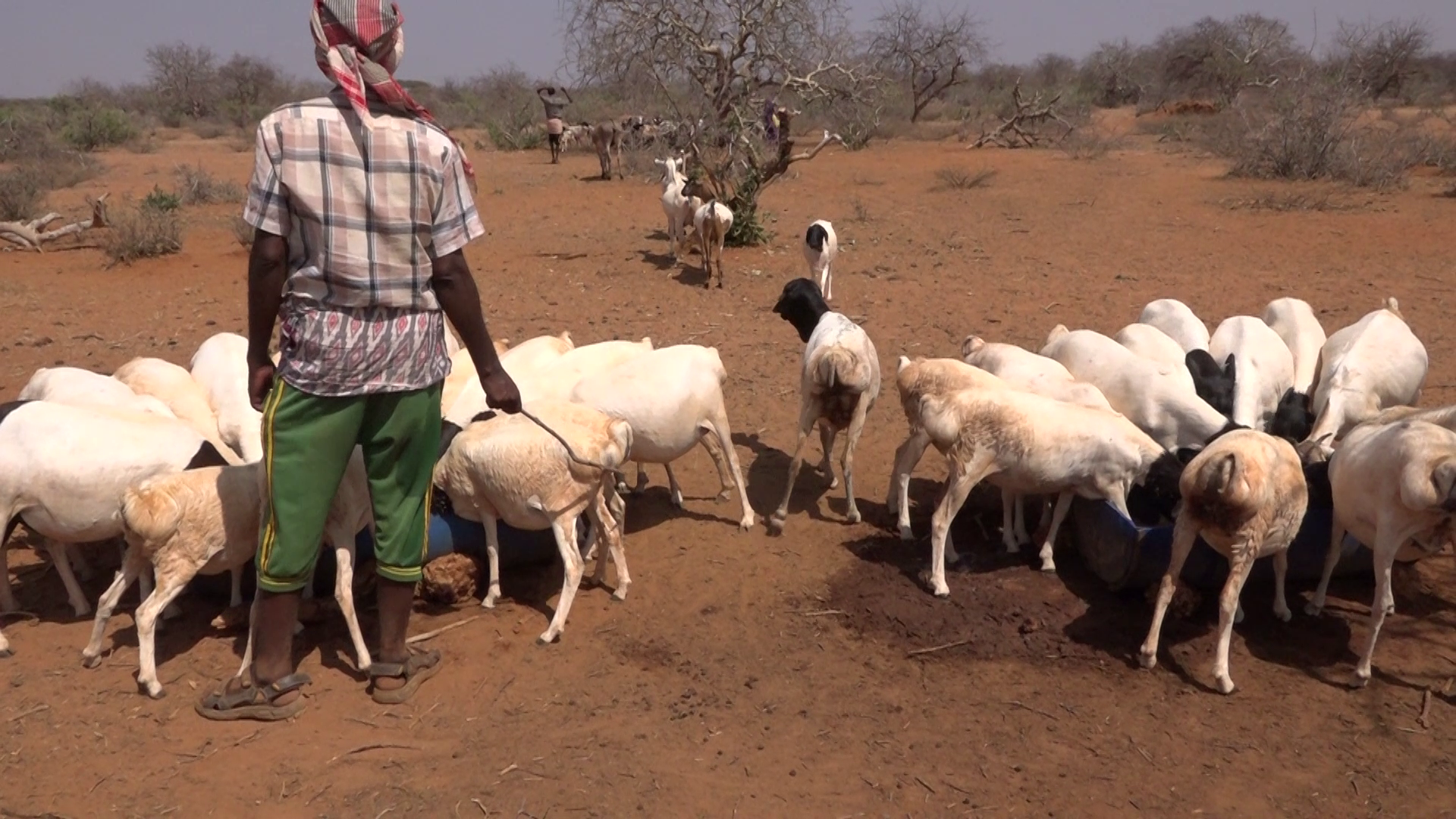
Water remains the biggest challenge in the region. /STEPHEN ASTARIKO.Goats and sheep drinking water from a trough in Saka, Balambala
sub-county. /STEPHEN ASTARIKO.

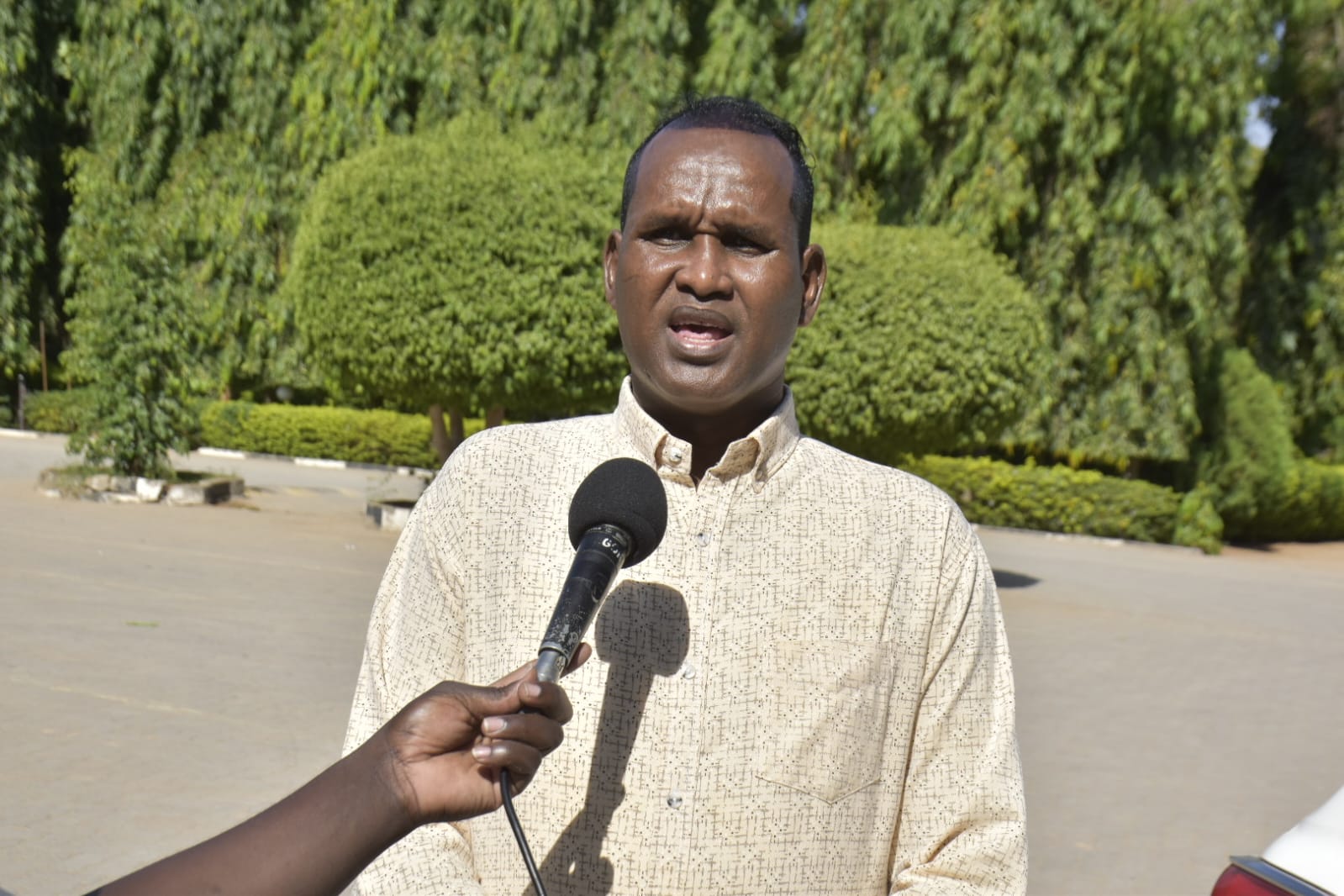 Muktar Dahir, the head of Garissa Human Rights Defenders
Network, speaking to the press in Garissa town./STEPHEN ASTARIKO.
Muktar Dahir, the head of Garissa Human Rights Defenders
Network, speaking to the press in Garissa town./STEPHEN ASTARIKO.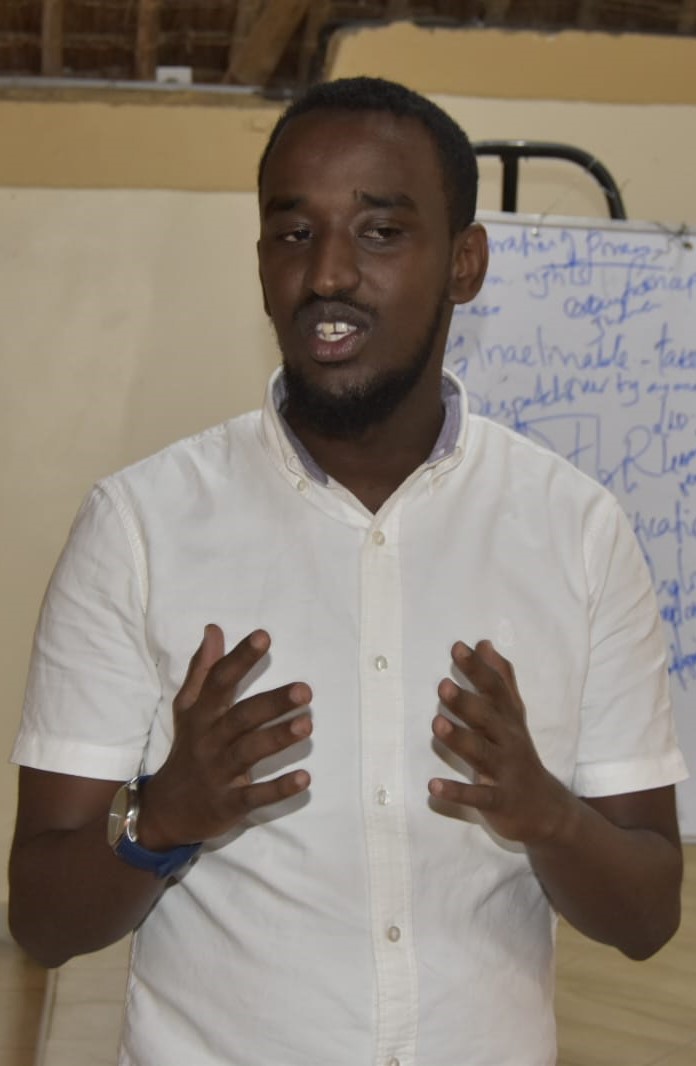
 Goats and sheep drinking water from a trough in Saka, Balambala
sub-county. /STEPHEN ASTARIKO.
Goats and sheep drinking water from a trough in Saka, Balambala
sub-county. /STEPHEN ASTARIKO.