Indeed the 10-point agenda captures the ODM values and ideals and through their implementation the party has found a solid ground to implement their objectives.
This explains why the issue of the 10 points was so dear to the former party leader Raila.
Now that it is well implemented perhaps the UDA and ODM coalition building is at the most critical stage.
In this critical juncture of the formation of this coalition the final endorsement shall also follow in this month's ODM National Delegates Conference on March 27.
Coalition building is usually a messy and discrete process in Kenya. However we have observed enough patterns, trends and history to understand when one is born.
The latest coalition was the one between ODM and Jubilee, we saw the long route through the BBI but eventually former President Uhuru Kenyatta formed the Azimio coalition with Raila as the candidate and Uhuru as the patron.
Therefore for those who have been waiting with bated breath on the 2027 coalitions they can be sure that there will be a UDA and ODM coalition.
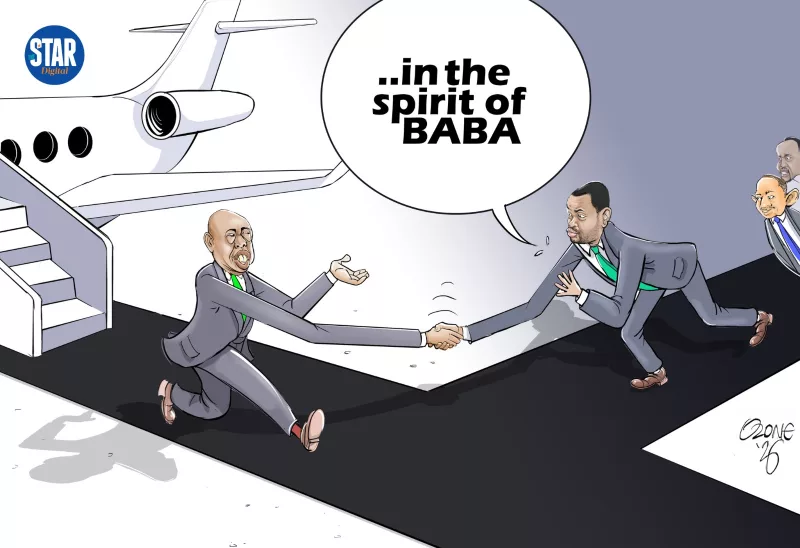
This is important because it appears that there were generally two views on the ODM future – that is whether to join the opposition or the government.
There have been one sided who have argued that the ODM ideals and values cannot work with UDA.
This moralist have argued based on one line in Raila’s old speech that goes, “for those saying two terms , who have told you!"
However, there are the majority of ODM who insisted that the pragmatic thing to do is for ODM to remain in the broad-based government and form a political coalition with the UDA party.
They have pointed to the need of the ODM to be practical and realise that they can easily influence the government's strategic direction and priorities by joining UDA for the prosperity of all Kenyans.
They have successfully argued that this is consistent with the ODM values of seeking opportunities and human, social development for the people in concrete terms.
It now appears that within this month the final step towards the coalition building with UDA will take place at the ODM NDC.
It is also reported that the Sifuna Team has dismissed the report, saying there is nothing meaningful implemented under the 10-point agenda.
They have argued that it is a sham and the disappointing implementation should lay the basis for ODM divorce with UDA.
Clearly from the arguments, the 10-point agenda has become the signal of whether there is mutual understanding between the two parties.
That is why the narrative of its failure even against clear implementation including Sh2 billion to compensate the victims of protest must be denied and a counter narrative formed.
Narrative is an important means of structuring and giving meaning to experience.
Just like stereotypes, with narrative people generally look only for that information that strengthens the position they already hold.
This position is well articulated by ODM secretary general Edwin Sifuna that the 10-point agenda has failed and the President William Ruto was not serious in the first place.
If critical information is left out then the conclusion on the implementation of the memorandum agreement will be faulty.
As a result this narrative has been repeated with leaders who are generally unhappy with the close working relationship between Ruta and Raila and the current ODM leadership.
This feeling entrenches perceptions that there is no value in ODM working under broad-based and therefore constrains the relationship between them and the government.
This is meant to justify their political behaviour and fall-out with the larger ODM as they work with a few leaders in silos. It provides answers to the reason Sifuna dismissed the 10-point agenda a few months after its signing. For him they were not meant to work otherwise how would one justify delinking with UDA.
But one cannot entirely blame Sifuna and his team for being pessimistic with political agreements. Kenya is known for numerous political agreements that are broken.
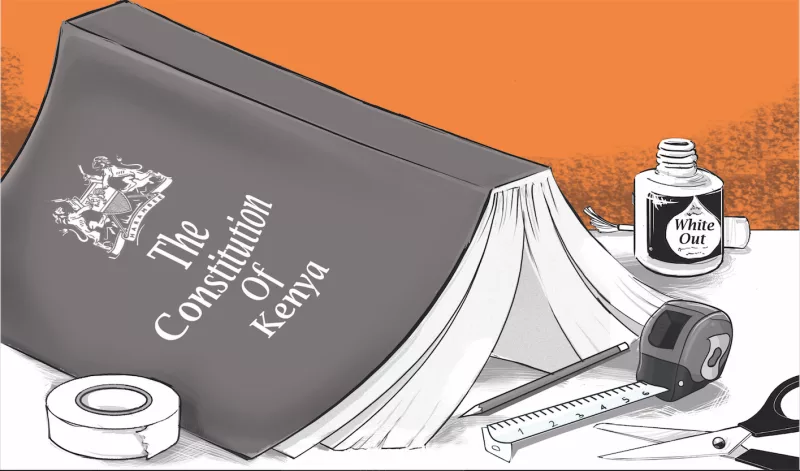
In fact some equate the country to a valley of broken political agreements and therefore that explains the suspicion and cynicism that marked the signing of the 10 points agenda between Ruto and Raila. The innovation of this agreement in my opinion has been the clear communication and engagement of the stakeholders that is attributable to the buy-in of both UDA and ODM members generally.
That is why receiving the annual report on implementation of the 10-point agenda and Nadco yesterday set the strategic direction of the prioritised solutions and the future of the partnership, implementation and validation on results achieved on the 10-point agenda.
The data presented by the joint team on the outcome of the 10 points enabled the more than 200 parliamentarians to obtain buy-in and show the great measurable outcomes.
I believe that March 10 is a critical juncture where the UDA and ODM came up with clear sustainable priorities of moving towards an o political party coalition for those who avoid celebrating coalitions too soon.
There are different views on whether March 10 is the end of the 10-point agenda or a rebirth of the agenda.
The central issue with this debate is whether ODM will move to the deeper connection with the UDA or move towards the opposition alliance.
The reality of the day was that the joint parliamentary meeting was critical in setting the true North.
This date was important in determining whether the 10-point agenda has gone the ODM way within the time of one year or it is only to be evaluated within a wider time frame.
Even values like courage are critical to the history of the party and must be defined in a way.
Maxwell defines courage in leadership as the ability to abandon what worked yesterday and to see things and do things differently.
That indeed takes courage. It is brave to coexist with people you don't agree with. The 10-point agenda and Nadco was bold because it gave a forum for both sides to have serious discussions on issues they don't agree with but also to fall back on what they agree on.
ODM can no longer be a custodian of the old world where they exist in silos and refuse to work with the government.
The old way of assuming that their interest can only be protected through opposition politics and instead have a framework of cooperating with the government.
This really resonated with me having worked as part of the Nadco negotiations secretariat. I was able to see first hand how the issue of equality of opportunities became one of the key issues in the negotiations. That the rest of the country no longer has the luxury to ignore economic issues and development equity between various regions in the country.
For long the focus of ODM has been equality before the law. Equality before the law has not guaranteed equality of opportunity for all except only to provide personal liberty.
Great leaders sometimes must abandon what worked yesterday and embrace new thinking and models.
ODM is abandoning the old model that simply played the opposition politics. It was politics marked by much of opposition identity politics and attributing all that is bad to the government and all that.
Great leaders according to Maxwell must be able to abandon what worked yesterday and learn new ways of seeing and doing differently.
Orengo and Sifuna have been extremely useful in leading us through the fight for second liberation.
They learnt to fight for democratic space at a great expense of their life that had blocked the greatest enemy of Kenya, which was disease, poverty and ignorance.
One can be a very strong athlete but not necessarily a good swimmer and if you throw them in water they might not swim.
That is why power does not lie in the activism button being the executor.
Kenya owes a lot to Orengo and Nyongo for carrying the weight along with other fighters like Raila but it is now time to build on this foundation to enable those regions that have been historically left behind for fear of their politics to also develop. I am convinced that the various ideals that the two have dearly articulated are not an end by themselves but offer a solid ground to build a prosperous country where there are more resources to all Kenyans regardless of their political affiliations.
Indeed each generation has its generational mission to either honour or to betray and the current fight is a fight of equal economic opportunities and development as clearly articulated by the 2010 constitution.
The philosophy and values of ODM that the two leaders say they should not betray has been a dream like Martin Luther's dream but today they have a chance to sit alongside Oburu and influence the dream so that they can vote for the dream in 2027.
The end game of the ODM ideals and values has been a fight for people's rights by being in government including forming that government. That ideal has been well captured by the adage of Canaan which represents a place of plenty, equal opportunity, shared prosperity and advancement of Kenya.
So if today ODM works with the government to develop infrastructure, compensate victims, achieve universal health and other social economic rights then how can that be neutral to the ODM values?
The issues that have preoccupied the ODM mind and captured their attention is attaining human, social and infrastructural development for all Kenyans.
These ideals can easily be traced to the 10-point agenda that has the potential to dismantle systematic and structural inequality embedded in the series of unfortunate legal and policy events that has relegated development to only those who are directly affiliated to the Presidency.
Why go for protest when already there is someone representing the ODM ideals.
Let us not romanticise ODM ideals because they have their share of struggles and disappointments like any other political party.
Orengo and Sifuna have been pragmatic in order to survive politically. Their political journeys have equally been pragmatic and made of compromises. A good example is when Orengo had to make a u-turn and join the ODM Party after failing to get elective seats against the ODM.