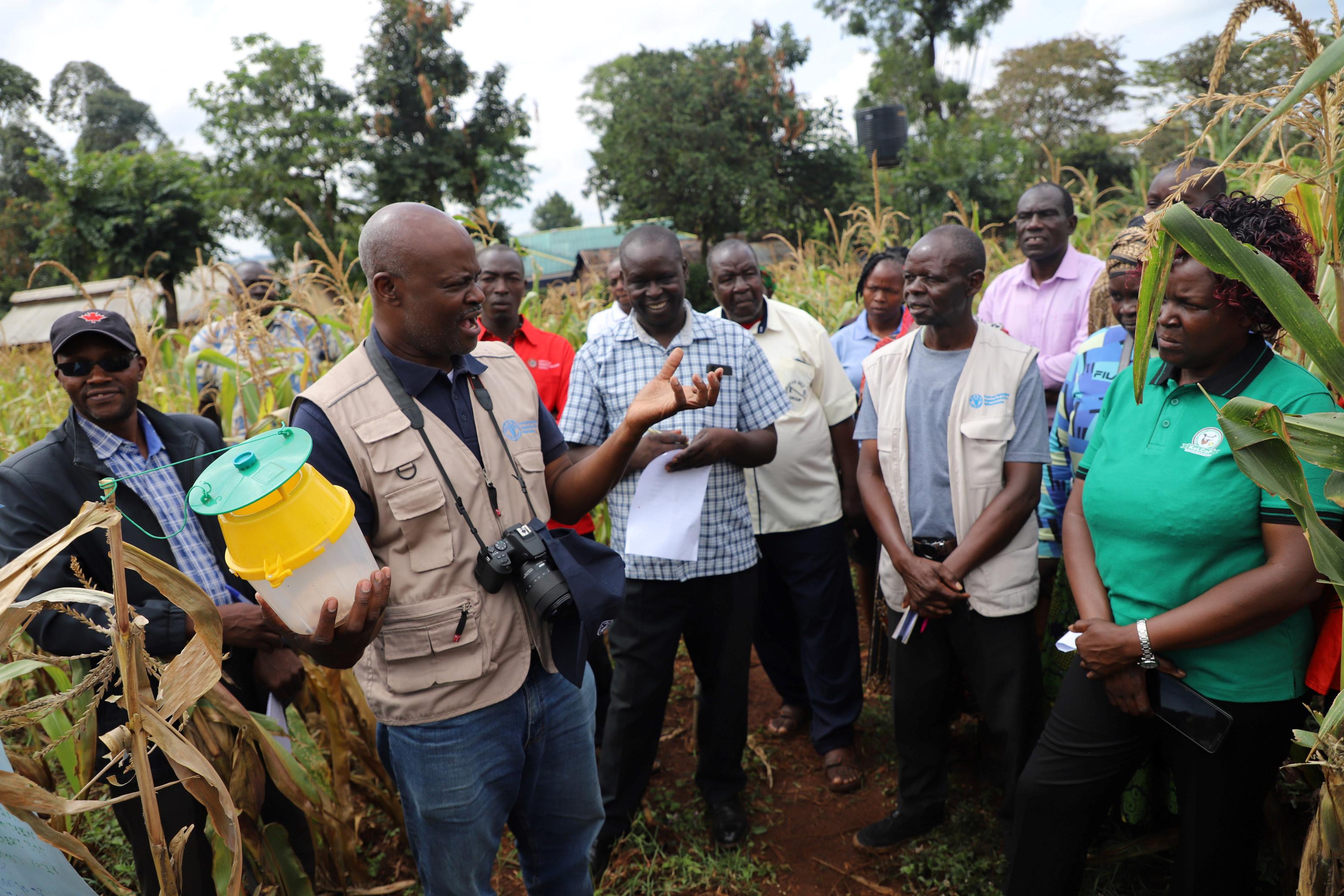
 George Ong'amo from FAO explains to farmers how an insect trap works./HANDOUT
In Kabuchai, Bungoma county, farmers are cultivating more than just crops; they are growing confidence, knowledge, and income.
Through Farmer Field Schools (FFS), growers are "learning by doing" and testing solutions together, turning their farms into open-air classrooms where the benefits are already evident.
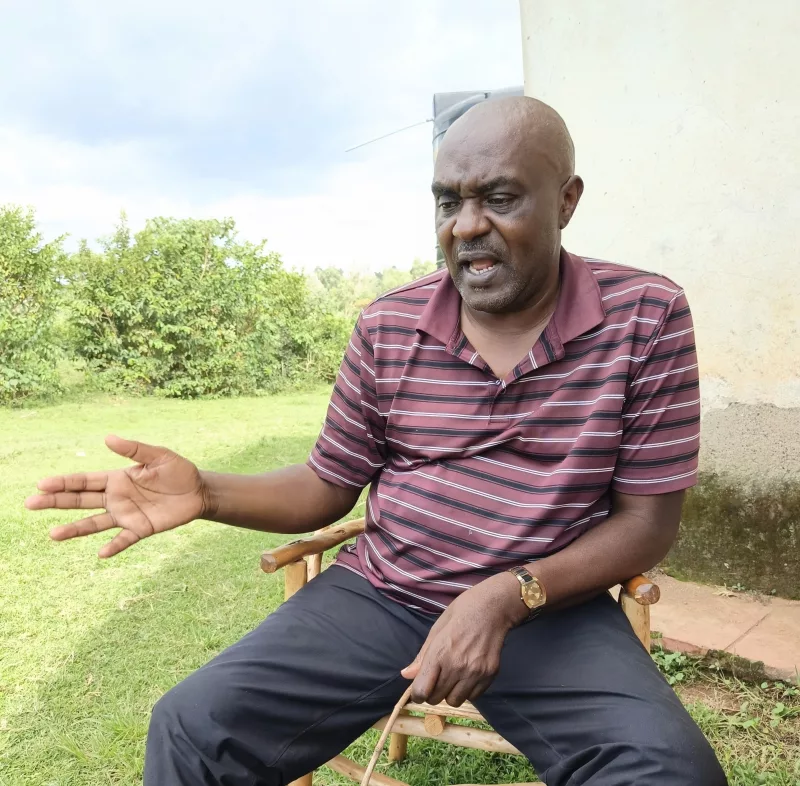
“My family always has enough food all year round. I am grateful to the Farmer Field School because it gave me the skills to grow vegetables, cereals and keep livestock for both subsistence and income,” Gladys Sikuku says.
A former Early Childhood Development teacher, Sikuku now facilitates learning at Kisiwa Farmer Field School in Kabuchai.
Trained as a facilitator ten years ago, she proudly demonstrates push–pull technology to farmers.
Push-pull is an intercropping method that repels pests from maize while attracting them to trap crops. It helps farmers to reduce losses and increase yields.
For many farmers in Bungoma, these schools have become lifelines, especially in the fight against armyworm, a destructive pest that has ravaged maize fields across Kenya since it was first reported in 2017.
According to the Food and Agriculture Organization (FAO), armyworm has the potential to cause maize yield losses of between 20 and 50 per cent if not properly managed.
In Kenya alone, early assessments by FAO and the Ministry of Agriculture estimated that hundreds of thousands of acres of maize were affected in the first years of infestation, threatening food security for millions of households.
FAO has been using the Farmer Field Schools as a response to engage farmers with hands-on knowledge to identify, monitor and manage armyworms using sustainable methods.
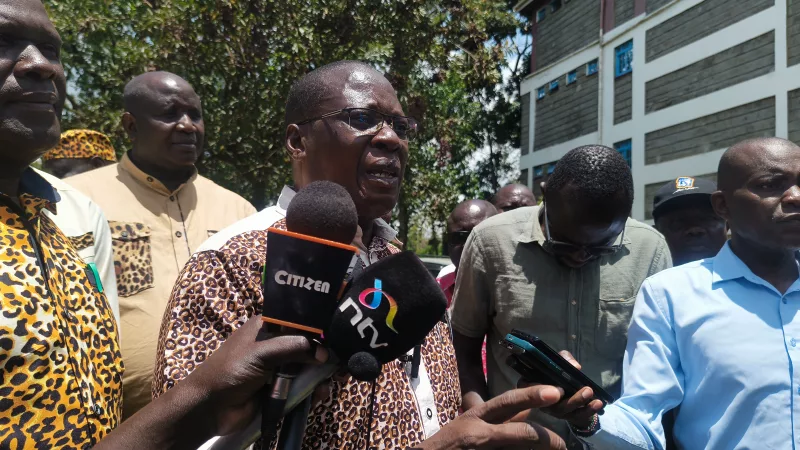
According to George Ong’amo, FAO’s focal point for the project in Kenya, Farmer Field Schools (FFS) are simple but powerful in design.
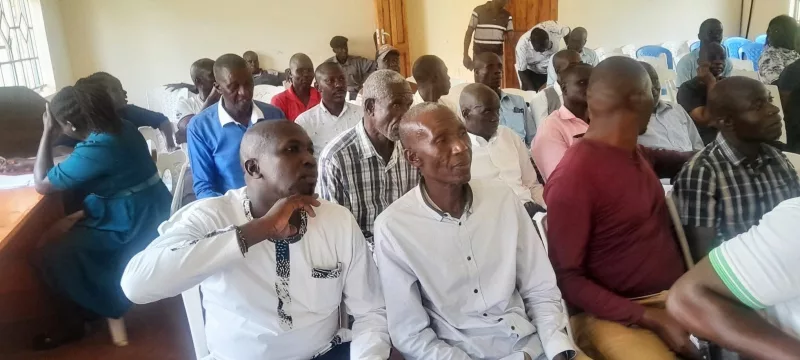
They are open-air learning platforms where farmers, usually in groups of 20 to 30 meet regularly throughout a cropping season.
“The only requirement is being 18 years or older and actively involved in farming. There are no formal classrooms, no exams and no certificates. Instead, farmers learn by observing, experimenting and analysing what happens in their own fields,” Ong’amo says.
“These groups are special learning centres. Farmers learn by doing; they see practically what needs to be done.”
At each session, farmers conduct what is known as an Agro-Ecosystem Analysis (AESA).
They observe crop growth, identify pests and beneficial insects, assess soil conditions and decide collectively on the best course of action.
He adds that this approach builds critical thinking and reduces overreliance on chemical pesticides.
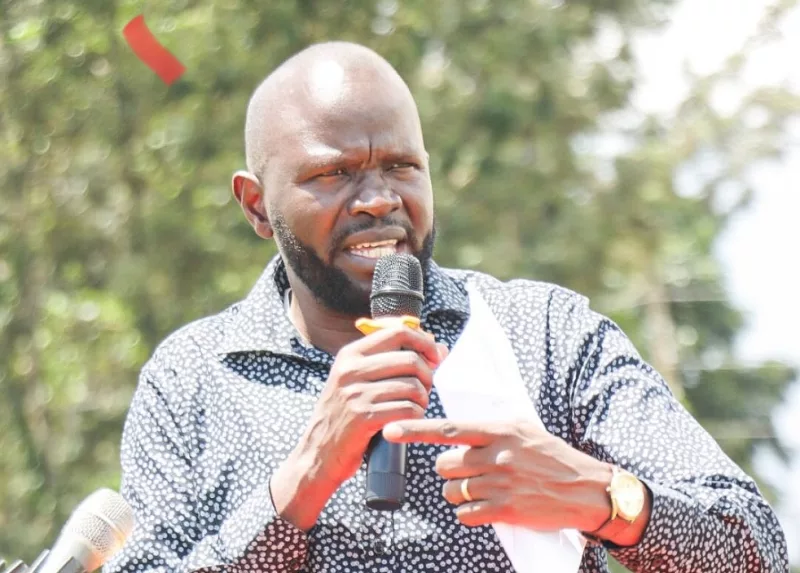
Peter Waboya, the national chairman of Farmer Field Schools in Kenya, says the model works because it respects farmers’ knowledge.
“This is one of the most effective ways of making farming practical, easing adult learning and improving adoption of innovations,” he says.
The FFS approach was first introduced by FAO in Indonesia in 1989 to help rice farmers reduce pesticide use. Since then, it has spread to more than 90 countries.
According to FAO, millions of smallholder farmers globally have been trained through FFS programmes, leading to reduced pesticide use, improved yields and higher incomes.
In Kenya, the model has been adopted across counties to address challenges ranging from pest management to soil health, nutrition and climate-smart agriculture.
In Bungoma alone, FAO has supported the establishment of over 25 Farmer Field Schools under the South–South Cooperation project titled “Strengthening Inter-regional Cooperation for Sustainable Management of Fall Armyworm.”
Through this initiative, Ong’amo said farmers are testing integrated pest management techniques, including biological control agents, fly attractants, parasitoids and minimal, targeted chemical use.
FAO notes that FFS under its Integrated Pest Management programmes has been shown to reduce pesticide use by up to 50 per cent while maintaining or increasing yields.
“This not only cuts production costs but also protects farmers’ health and the environment,” he says.
Under FAO’s South–South Cooperation framework, countries facing similar pest threats share knowledge, technologies and field experiences.
For transboundary pests such as armyworm and desert locust, this collaboration strengthens early warning systems, promotes biological control and reduces dependence on hazardous pesticides.
In Kabuchai, the results are clear. Devastated fields are green again, and households report improved harvests. As Sikuku notes, the school has restored dignity: “With knowledge, you are never poor on your farm.”