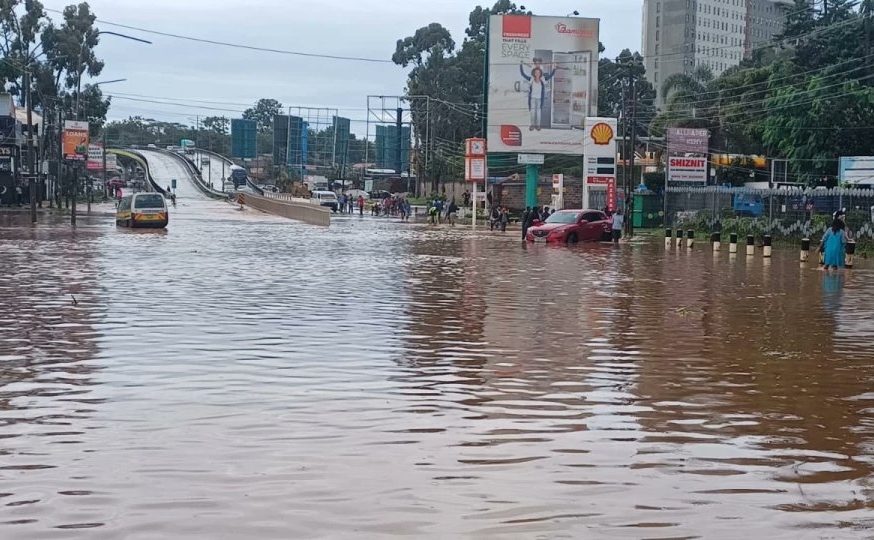
The government has rolled out a series of emergency measures to support communities affected by floods following heavy rains recorded on March 6 and 7 across several parts of the country.
In a joint statement issued on Tuesday by Government Spokesman Isaac Mwaura, authorities said the response is being coordinated through a multi-agency emergency team involving both national and county government agencies.
Mwaura announced several interventions aimed at cushioning affected families and strengthening rescue operations.
Among the measures, the government will cover mortuary and funeral expenses for families who lost loved ones in the floods.
He added that the Kenya Coast Guard Service has deployed 100 personnel to assist in rescue operations in flood-prone areas, including Naivasha, Kisumu, Homa Bay, Port Victoria, Turkana, Baringo, Lamu, and Mombasa.
The government has also stationed rescue boats in flood-prone regions and placed a mobile rescue team of eight specialised officers on standby for rapid deployment.
According to Mwaura, the National Youth Service has activated disaster response teams equipped with cranes to assist with evacuations and other emergency operations.
Rescue teams have already evacuated residents marooned by floodwaters in parts of Kisumu County and Nyakach, including villages such as Nyang’onga, Abur, Gul, Nyakware, Nyamalo, Kongou, and Sango Rota.
Mwaura said the Ministry of Energy is inspecting fuel storage facilities to prevent contamination, while a technical committee is assessing damage to electricity infrastructure.
At the same time, the Ministry of Health has deployed surveillance teams to monitor potential disease outbreaks in flood-affected areas.
Health authorities have reported 38 cases of Mpox, 199 cases of measles in Baringo, and four cases of anthrax in Nairobi, with response teams already dispatched to contain the outbreaks.
According to the Kenya Meteorological Department, the weather outlook for March 10–16 indicates that isolated heavy rainfall may continue in parts of the Highlands East and West of the Rift Valley, the Lake Victoria Basin, the Rift Valley, the South-Eastern Lowlands, and the South Coast.
The floods have so far claimed 49 lives, with four people still missing and four others injured and receiving treatment in hospital.
Nairobi City County recorded the highest number of deaths at 27, followed by the Eastern region with 11, Rift Valley with five, while the Coast and Nyanza regions recorded one death each.
More than 9,033 households have been displaced by the floods, with Nairobi again recording the highest number at 5,260 households, followed by the Rift Valley with 2,538.
Other affected regions include Central, Nyanza, Coast, Eastern, and Western. Counties experiencing significant impacts include Tana River, Kilifi, Kwale, Narok, Baringo, Kiambu, Kisumu, Migori, and Wajir, among others.
The government has urged residents in flood-prone areas to remain vigilant, follow official advisories, and move to higher ground if water levels rise.
Kenyans have also been advised to avoid flooded roads and rivers, treat drinking water, and report emergencies through official channels as response efforts continue across the country.