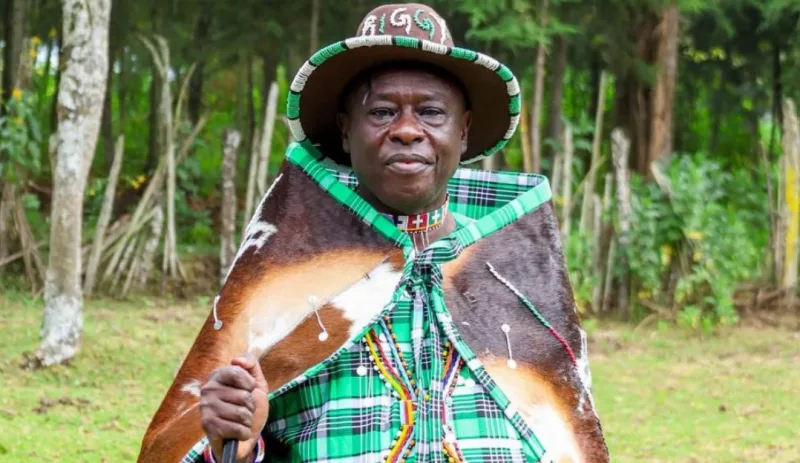
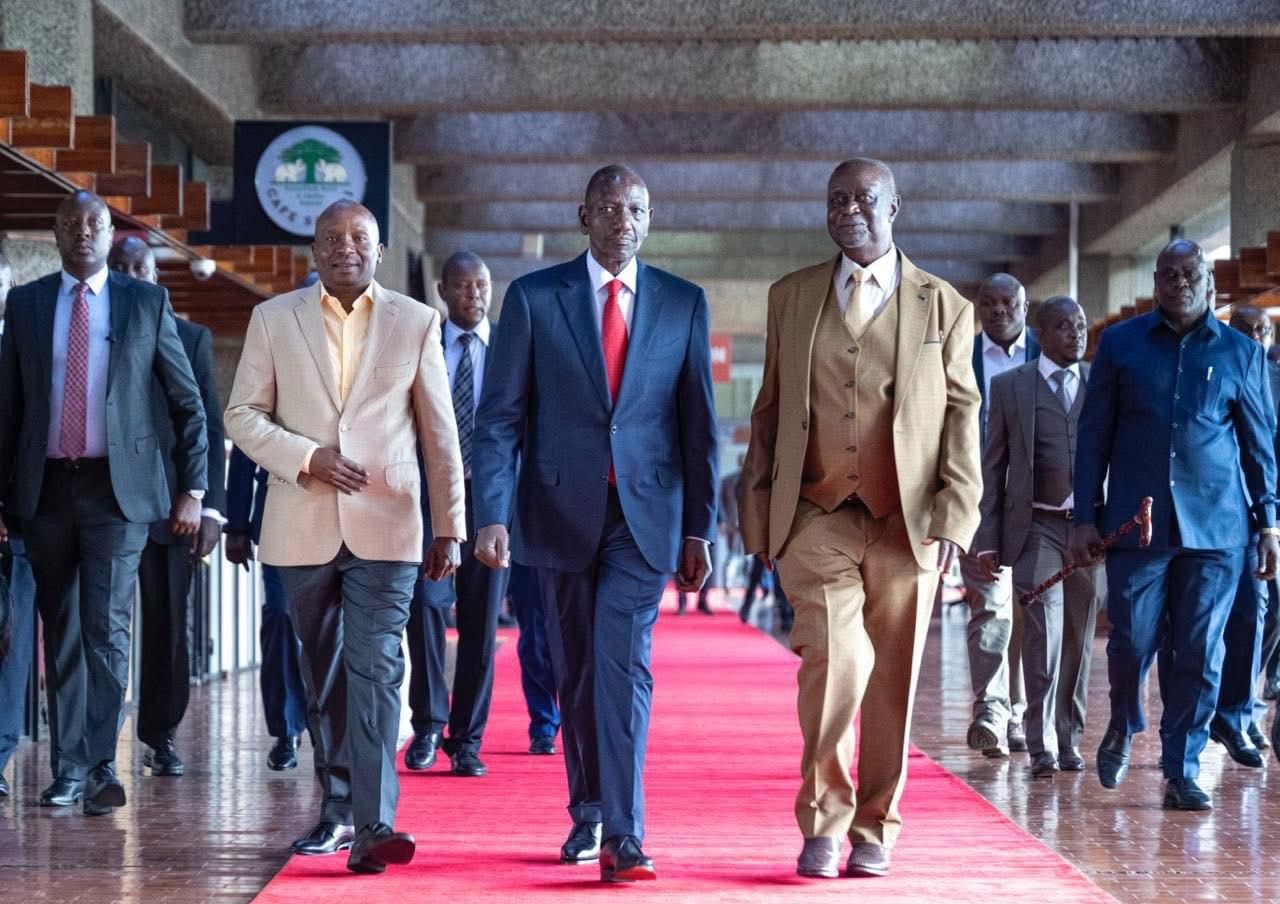
 Deputy President Kithure Kindiki, President William Ruto and ODM Party Leader Oburu Oginga during a joint Parliamentary Group meeting on March 10, 2026 / PCS
Kenya’s political history has often been marked by recurrent crises that disrupt economic growth, threaten national cohesion, and occasionally trigger civil unrest, resulting in loss of life and destruction of property.
In an effort to stabilise the country and address long-standing governance challenges, President William Ruto and former Prime Minister the late Raila Odinga agreed on a framework for collaboration aimed at promoting national unity and institutional reforms.
The agreement led to the formation of the National Dialogue Committee (NADCO), established by Parliament in August 2023.
The committee’s report, adopted in February 2024, identified governance and constitutional issues affecting national cohesion and proposed reforms to strengthen inclusivity, accountability, and economic stability.
Two years later, the government says several commitments under the 10-point agenda have begun to take shape, with initiatives targeting inclusion, youth empowerment, devolution, public accountability, and economic recovery.
Promoting inclusion and equity
Among the key milestones is the launch of the National Policy on Ethnic Minorities and Marginalised Communities (2025–2035).
The policy is intended to guide government interventions aimed at addressing historical inequalities and improving access to opportunities for marginalised groups.
To support education access, the government has introduced a Sh500 million scholarship programme for children from marginalised communities and allocated Sh200 million annually for education infrastructure in such areas.
A Directorate for Minorities and Marginalised Communities has been established within the Executive Office of the President to coordinate related programmes.
The Equalisation Fund, which finances development projects in historically underserved regions, has also been increased from Sh5 billion to Sh9.6 billion.
Economic relief and youth empowerment
The government says several economic interventions have been implemented to cushion households from the high cost of living.
Among them is the fertiliser subsidy programme, which has reduced the price of a 50-kilogramme bag from about Sh7,000 to Sh2,500.
Fuel prices have also dropped by about 14 per cent, while exchange rate stability has lowered production and transportation costs.
Youth-focused programmes have been expanded to encourage entrepreneurship and employment.
Initiatives such as the National Youth Opportunities Towards Advancement (NYOTA) programme and the Hustler Fund are providing skills training, mentorship, and access to affordable credit for small businesses.
Under the NYOTA programme alone, more than 820,000 young entrepreneurs across all 1,450 wards have benefited through training, start-up capital, and mentorship opportunities.
The programme maintains a 50:50 gender parity, with five per cent participation from persons with disabilities, as well as refugee and host communities.
More than 20,000 youth have also received nationally recognised certificates through the Recognition of Prior Learning programme, improving their employability.
Other job creation initiatives include the Affordable Housing Programme, which has generated 640,000 jobs, and the ClimateWorX programme, which has created 200,000 employment opportunities.
In addition, 547,000 Kenyans have secured employment abroad through the government’s labour mobility initiative over the past three years.
Health and social protection
Progress has also been reported in healthcare reforms, particularly through the transition to the Social Health Authority (SHA) under the Universal Health Coverage programme.
According to government data, healthcare insurance coverage has increased from seven million to 29.8 million beneficiaries under the new system.
More than 107,000 Community Health Promoters have been deployed nationwide to strengthen primary healthcare delivery.
The government is also paying SHA premiums for 1.5 million indigent households enrolled in the social protection programme.
To improve efficiency and reduce fraud, social protection stipends are now paid through mobile money platforms, while about 550,000 beneficiaries have been integrated into the SHA system.
Education reforms
In the education sector, the government has recruited 100,000 teachers since 2022, improving the teacher-to-student ratio from 1:45 to 1:29.
Construction is underway for 23,000 classrooms and 1,600 laboratories across the country, while funding for universities has risen from Sh45 billion to Sh82 billion.
The Higher Education Loans Board and scholarship funding has also increased to Sh41 billion, supporting the implementation of a student-centred university funding model that provides up to 95 per cent scholarships and loans for students from disadvantaged backgrounds.
According to the NADCO report, the Competency Based Curriculum (CBC) has been streamlined and transitioned to Competency-Based Education and Training (CBET).
Infrastructure and rural development
Infrastructure development has also been highlighted as a key component of inclusive growth.
Currently, 260,000 affordable housing units are under construction across the country, with 4,888 completed houses already advertised for sale. Student hostels with a capacity of 177,686 beds are also being built.
The government is constructing 450 modern markets nationwide and 6,000 kilometres of roads, projects aimed at connecting rural communities to markets and economic opportunities.
The expansion of the Last Mile electricity connectivity programme has also continued to extend power to more households in rural areas.
Strengthening devolution
The government has increased the equitable share of revenue to counties from Sh385 billion in the 2024/2025 financial year to Sh415 billion in 2025/2026, with projections showing it could rise to Sh450 billion in 2026/2027.
Counties are now receiving timely monthly disbursements, with no pending carry-overs reported by June 30, 2025.
The report stated that the County Public Finance Laws (Amendment) Act, 2025, granted county assemblies financial autonomy, enhancing their independence in oversight and legislative functions.
Governance, accountability, and the rule of law
Several legislative and administrative reforms have been introduced to strengthen leadership and accountability in public service.
The Conflict-of-Interest Act, 2025, now regulates potential conflicts between public officials’ private interests and official duties.
Digitisation has also expanded across government, with over 23,000 services now available on the e-Citizen platform, up from 353 in 2022. The shift has reduced opportunities for corruption by eliminating cash payments and middlemen.
Anti-corruption efforts have also intensified. Since the 2023/2024 financial year, the Ethics and Anti-Corruption Commission has filed 143 asset recovery cases worth Sh22.9 billion, recovered Sh9.8 billion in assets, and secured 86 convictions.
Managing public debt and fiscal stability
The government has also prioritised debt management through liability restructuring and reduced reliance on external borrowing.
Several Eurobond buyback transactions between 2024 and 2026 helped smooth Kenya’s debt repayment profile and reduce the risk of default.
In January 2026, Moody’s upgraded Kenya’s sovereign credit rating from CAA1 to B3 with a stable outlook, citing improved external liquidity and stronger foreign exchange reserves.
The government has also established the National Infrastructure Fund to mobilise financing from capital markets, pension funds, and private investors for major development projects.
Protecting civil rights and justice
Measures have also been taken to safeguard the constitutional right to peaceful assembly while addressing violations that occurred during protests.
The government has allocated Sh2 billion in the 2025/2026 supplementary budget to compensate victims of protests and riots. Investigations conducted by oversight institutions identified victims and reviewed allegations of police misconduct.
Between 2023 and 2025, the Independent Policing Oversight Authority handled 820 misconduct cases, resulting in 35 convictions involving 49 police officers and disciplinary recommendations for additional officers.
The Demonstration Bill, which had proposed restrictions on protests, was withdrawn.
Expanding access to justice
The justice sector has also received additional support to improve efficiency.
The Judiciary has recruited 11 Court of Appeal judges, 20 High Court judges, and additional magistrates, while new appellate court benches have been established in Nakuru, Mombasa, and Eldoret.
The nationwide e-filing system is now operational, enabling paperless court processes and virtual hearings. Mobile courts have also been introduced to expand access to justice in remote areas.
As the implementation of the 10-point agenda continues, the government says the reforms are aimed at strengthening governance, promoting economic stability, and fostering national cohesion.