A joint government committee has unveiled timelines for the rollout of a sweeping programme aimed at transforming Nairobi, outlining a multi-year plan to upgrade critical infrastructure and modernise urban services across the city.
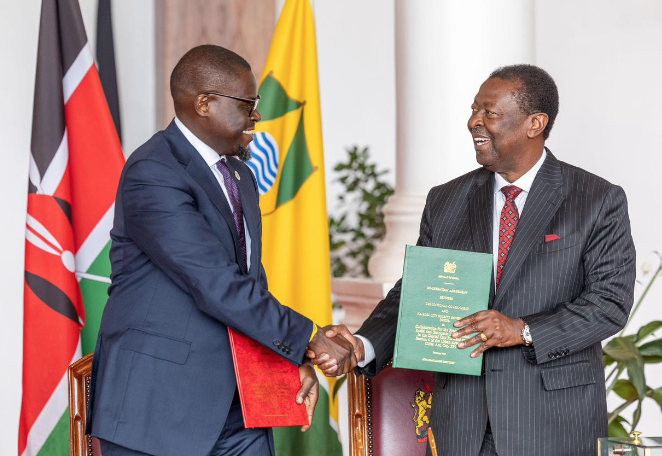
The Joint Steering Committee (JSC) released the implementation timelines under the Nairobi Rising Programme, a landmark cooperation initiative between the national government and the Nairobi government that was formalised on February 27.
The agreement commits Sh80 billion towards what officials describe as the most comprehensive urban transformation programme in the history of Nairobi, recognising the city’s strategic role as Kenya’s capital and the economic hub of East and Central Africa.
According to the JSC, the programme seeks to transform Nairobi into a modern, functional and globally competitive capital city through co-ordinated investments in infrastructure, public services, economic development, environmental sustainability and governance reforms.
Among the immediate investments scheduled for implementation in 2026 is the Enhancement of the Ngethu–Gigiri Water Transmission Pipeline and Ngethu Water Treatment Plant Recycling Project, a Sh2.1 billion initiative expected to increase water supply capacity by 50,000 cubic metres per day.
The project has been given a 12-month implementation timeline and will be overseen by the Athi Water Works Development Agency.
Another major short-term project is the Nairobi City Water and Sewerage Last Mile Connectivity Works, a Sh3 billion investment aimed at expanding water and sewer connections to underserved areas of the city. The works are expected to take 18 months to complete.
In addition, the Twin 27-kilometre trunk sewer along the Nairobi River Corridor is already underway as part of the broader plan to modernise the city’s sewer system and reduce pollution in waterways.
Under the second phase of the programme, scheduled between 2026 and 2028, several major projects are planned to strengthen the city’s water and sanitation infrastructure.
These include the Gigiri–Shauri Moyo Water Evacuation Corridor, a Sh3 billion project expected to take 12 months to implement once funding approvals are secured.
Another key project is the construction of a new sewer treatment plant in Kariobangi, estimated to cost Sh6 billion and expected to be completed within 18 months.
Authorities also plan to implement institutional reforms within the Nairobi City Water and Sewerage Company to strengthen operational efficiency and service delivery.
Additional interventions include a series of phased reforms to stabilise the utility’s operations, introduce performance contracting frameworks and establish a pathway toward long-term commercial viability.
The final phase of the programme, running from 2027 to 2030, will focus on expanding sewer infrastructure across the capital to meet the needs of a rapidly growing urban population.
A long-term sewer network expansion project valued at about Sh15 billion is currently at the feasibility study stage and will be financed through a combination of government resources and development partner support.
Beyond water and sanitation, the programme also prioritises safer and better-connected streets through investments totalling Sh23.1 billion.
Projects include major road upgrades, construction of bridges, improved pedestrian infrastructure and the installation of 40,000 streetlights to enhance safety and connectivity across the city.
The initiative also includes the development of the JKIA–CBD gateway corridor, linking Jomo Kenyatta International Airport with the central business district to ease movement and strengthen Nairobi’s position as a regional transport hub.
Security improvements will also be supported through enhanced coordination with the Nairobi Metropolitan Policing Service.
Another key pillar of the programme is the transformation of Nairobi’s urban economy through the formalisation and modernisation of informal trade.
Officials plan to relocate and organise approximately 300,000 street vendors into serviced market nodes designed to protect livelihoods while improving order and accessibility within the city.
Environmental sustainability is also central to the programme, with Sh4 billion allocated towards river corridor regeneration, green infrastructure and waste-to-energy investments aimed at supporting sustainable urban growth.
The initiative also includes the launch of a civic campaign known as “Nairobi Rising,” intended to build public ownership of the transformation agenda and strengthen the city’s global brand.
To ensure the programme is implemented effectively, officials have established a three-tier governance framework.
Strategic oversight will be provided by the Joint Steering Committee, while technical coordination will be handled by an Implementation Committee.
A dedicated operational unit, the National Government Coordination Secretariat, will serve as the programme’s secretariat and will be responsible for ensuring timely and accountable delivery of projects.