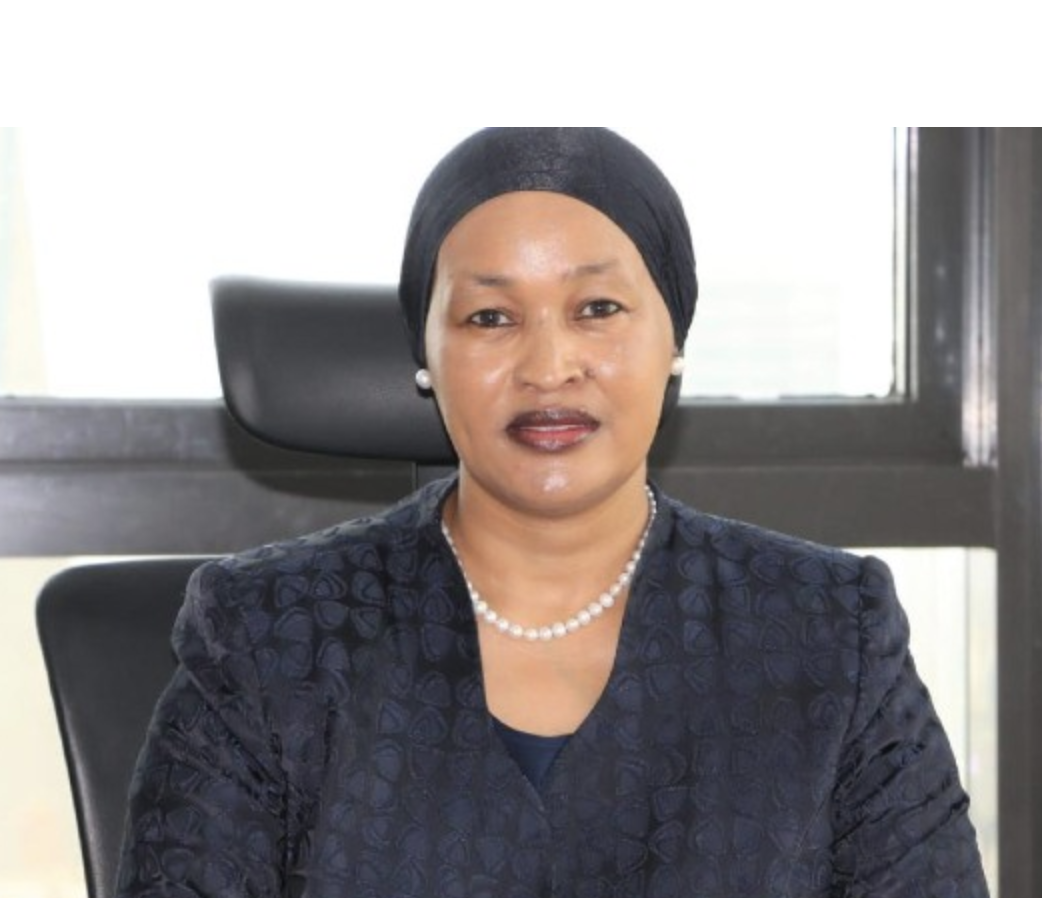
 NLC Chief Executive Officer Kabale Tache./HANDOUT
The Secretariat of the National Land Commission is ready to support incoming commissioners with strong technical capacity and established institutional structures as Parliament vets nominees to fill vacant positions at the commission.
Members of the National Assembly of Kenya began vetting nominees on March 9.
The process is being conducted by the Departmental Committee on Lands following the nomination of a chairperson and six members by President William Ruto.
The vetting aims to fill vacant positions at the commission and restore its full leadership.
Those nominated for membership to the commission are Susan Khakasa Oyatsi, Daniel Murithi Muriungi, Kigen Vincent Cheruiyot, Julie Ouma Oseko, Mohamed Abdi Haji Mohamed and Mary Yiane Seneta.
The committee is expected to review their suitability before forwarding recommendations to the House for approval. As the vetting continues, attention has also turned to the institutional structures that support the commission’s work.
At the centre of these operations is the Secretariat led by Chief Executive Officer Kabale Tache.
According to insiders, the Secretariat is prepared to work with the incoming commissioners and provide the technical expertise required to execute the commission’s constitutional mandate.
Tache has led the Secretariat since 2018, when she first assumed office as Acting Chief Executive Officer. She was confirmed to the position in June 2023 and is currently serving her first term as the substantive CEO. Her role includes overseeing the day-to-day management of the commission and coordinating technical operations within the institution.
The Secretariat is composed of a multidisciplinary team drawn from key land sector disciplines. These include surveyors, land administrators, valuers, land use planners, natural resource experts and legal practitioners among other professionals.
The team provides technical advice, research support, policy analysis and administrative coordination to enable the commission to effectively carry out its work. The commission’s mandate is anchored in the Constitution of Kenya 2010.
It includes managing public land on behalf of national and county governments, overseeing land use planning, processing compulsory land acquisition for public projects, renewing and extending land leases and addressing historical land injustice claims.
These functions require strong technical input from professionals within the Secretariat. Over the years, the commission has also developed internal structures and operational frameworks to guide its work. These include directorates, technical committees, standard operating procedures and policy guidelines designed to support decision-making and ensure consistency in the implementation of the commission’s mandate.
Such institutional systems are expected to help incoming commissioners quickly settle into their roles once approved by Parliament. Governance experts note that the effectiveness of independent commissions often depends on the strength of their secretariats.
While commissioners provide strategic direction and policy oversight, the Secretariat provides the technical and administrative support required for the institution to function effectively. With Parliament now vetting the nominees, the existing institutional capacity within the commission is expected to provide continuity and stability.
The technical team led by the CEO will therefore play a key role in supporting the new commissioners as they take up office and begin executing the commission’s constitutional responsibilities in the land sector.