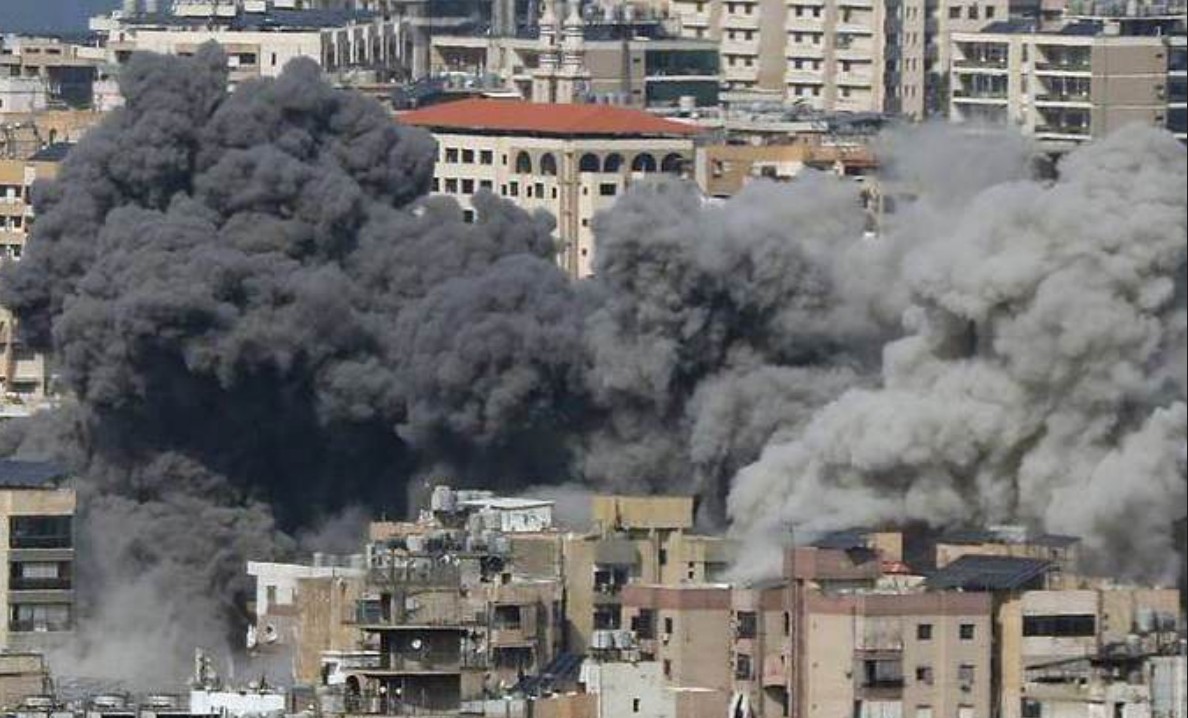
Kenyan households are set for economic tremors as the escalating conflict in the Middle East threatens to disrupt global oil supplies, trade routes and labour markets that the country depends on.
Economists and industry players warn that the fallout from the crisis could quickly translate into higher fuel prices, rising food costs and supply shortages within days, piling fresh pressure on already stretched household budgets.
At the centre of the unfolding economic storm is the closure of the Strait of Hormuz — a strategic maritime chokepoint through which about 20 per cent of global oil shipments pass. This is after Iran’s Islamic Revolutionary Guard Corps (IRGC) declared that any vessel attempting to cross the strait would be targeted and destroyed.
The escalation has already unsettled global energy markets, with benchmark Brent crude rising above Sh11600 per barrel, sparking fears of another worldwide oil price spike.
Kenya, which imports all its petroleum products, is particularly vulnerable to disruptions in the Middle East.
The situation worsened last week after Saudi Aramco shut operations at its Ras Tanura refinery, one of the largest crude processing and export complexes in the Middle East, following a drone strike linked to the conflict.
The refinery, located on Saudi Arabia’s Gulf coast, has a processing capacity of about 550,000 barrels per day and serves as a critical export terminal for Saudi crude — including supplies destined for Asian and African markets.
The shutdown directly affects Kenya’s Government-to-Government (G2G) oil import arrangement, under which Saudi Aramco, the Abu Dhabi National Oil Company and Emirates National Oil Company supply petroleum products to Kenya.
Any prolonged disruption to production or shipping routes could therefore significantly increase the cost of importing fuel.
Currently, pump prices in Nairobi stand at: Sh178.28 per litre of petrol,Sh166.54 for diesel and Sh152.78 for kerosene
Although Kenya typically bases pump prices on shipments ordered about a month earlier, analysts say supply disruptions and higher freight costs could quickly push prices upward.
“Once global oil prices surge and shipping routes are disrupted, the landing cost of fuel inevitably rises,” said an energy sector analyst in Nairobi. “That cost ultimately passes down the value chain to consumers.”
The International Trade Centre (ITC) estimates Kenya’s imports of oil and petroleum products at $18.3 billion in 2024, underscoring how deeply the country’s economy is tied to global fuel markets.
The Ministry of Energy and Petroleum has sought to calm fears of an immediate shortage.
Energy Cabinet Secretary, Opiyo Wandayi, said Kenya currently has sufficient stocks of petroleum products to cover domestic demand and supply to neighbouring countries.
“We have scheduled imports for delivery up to end of April 2026 and, therefore, as it stands, we are assured of security of supply,” Wandayi said.
“We are closely monitoring the fluid situation as it evolves whilst engaging with our G-G suppliers for contingency planning.”
Despite the reassurance, market players warn that the real impact could emerge once new shipments are ordered under the higher global price environment. National Treasury CS, John Mbadi, has warned that the crisis could push fuel prices to Covid-19 levels.
Beyond the oil shock, the conflict is also disrupting global shipping routes that supply Kenya with food, machinery and consumer goods.
Major international shipping lines have begun suspending routes through the Middle East and the Suez Canal — a key corridor linking Asia, Europe and Africa.
French shipping giant CMA CGM, which operates major container services to the Port of Mombasa, has introduced what it calls an “Emergency Conflict Surcharge” on cargo.
According to the firm, $2,000 (Sh258,100)is charged on a 20-foot container, $3,000 (Sh387,150) on a 40-foot container and $4,000 (Sh516,200) on refrigerated containers
The company has also instructed vessels bound for the Gulf to seek shelter and suspended passage through the Suez Canal, instead rerouting ships around the Cape of Good Hope.
Mediterranean Shipping Company (MSC), the world’s largest container line and a dominant operator at the Port of Mombasa, has suspended bookings for cargo destined for the Middle East “until further notice”.
Danish shipping giant Maersk has also begun diverting vessels around Africa rather than using the Suez Canal.
The detours could significantly increase shipping times and freight costs.
According to the Shippers Council of Eastern Africa (SCEA), cargo shipments from Mombasa to Europe normally take 18 to 20 days via the Red Sea route.
However, rerouting vessels around southern Africa could push delivery times to 40 to 45 days.
SCEA chief executive Agayo Ogambi described the situation as a potential “disaster” for Kenya’s trade sector.
“Freight time will increase as vessels re-route via the Cape of Good Hope. That delay could disrupt supply chains and severely affect exporters,” he said.
Kenya’s export industries are particularly exposed to the shipping disruption.
The avocado export season — one of Kenya’s largest horticultural export earners — begins in about a week, meaning delays in shipping could affect delivery timelines to European markets.
Longer shipping routes also raise the risk of spoilage for perishable goods such as fresh fruits, flowers and vegetables.
Manufacturers warn that supply disruptions could also affect industrial production.
The Kenya Association of Manufacturers (KAM) says the Middle East supplies roughly 23 per cent of Kenya’s imports, including key industrial inputs and raw materials.
KAM chief executive Tobias Alando warned that continued instability could significantly undermine Kenya’s economic stability.
“The distortion of supply chains by the crisis will have immense effects on the country’s economic stability. As an Association, we join the global community in supporting calls for de-escalation of the ongoing crisis and urge the use of peaceful and diplomatic means to resolve conflicts in the Middle East.”
Importers say the impact will extend beyond fuel and manufacturing to consumer markets.
Peter Otieno, chief executive of the Car Importers Association of Kenya, said the re-routing of shipping vessels will inevitably increase vehicle import costs.
“As much as we import low volumes from the UAE, the re-routing of vessels to the Cape of Good Hope — now that the Suez Canal is also impassable — will impact costs, meaning dealers will have to pass the extra costs to buyers,” Otieno said.
The higher shipping charges are also likely to raise prices for electronics, clothing and other consumer goods imported from Asia and the Middle East.
Threat to jobs and remittances
The conflict could also deal a blow to Kenya’s labour migration sector, which has increasingly relied on employment opportunities in the Gulf.
Official estimates indicate that more than 416,000 Kenyans work in Gulf countries, including about310,000 in Saudi Arabia, 66,000 in Qatar, and around 30,000 in the United Arab Emirates.
These workers form a crucial pillar of Kenya’s economy by sending money home to support families, pay school fees and fund investments.
In 2025 alone, Kenyans in Saudi Arabia sent about $302 million (Sh39 billion) in remittances, while workers in the UAE and Qatar remitted$125.6 million and $69.7 million, respectively.
For roughly 400,000 Kenyans living and working in the Middle East, the conflict now threatens both job security and personal safety.
The Gulf has emerged as one of the fastest-growing sources of diaspora remittances to Kenya — second only to major Western destinations — making the region economically vital for the country.
Any slowdown in employment or disruptions to economic activity in the Gulf could therefore reduce remittance inflows, which are one of Kenya’s largest sources of foreign exchange.
Economists warn that the combination of rising fuel costs, expensive shipping and potential remittance disruptions could fuel inflation across the Kenyan economy.
Fuel prices directly influence the cost of transportation, electricity generation and industrial production — meaning increases quickly cascade into the prices of food, housing materials and other essentials.
For households already grappling with high living costs, the conflict thousands of kilometres away could soon translate into higher transport charges, more expensive groceries and rising commodity prices.