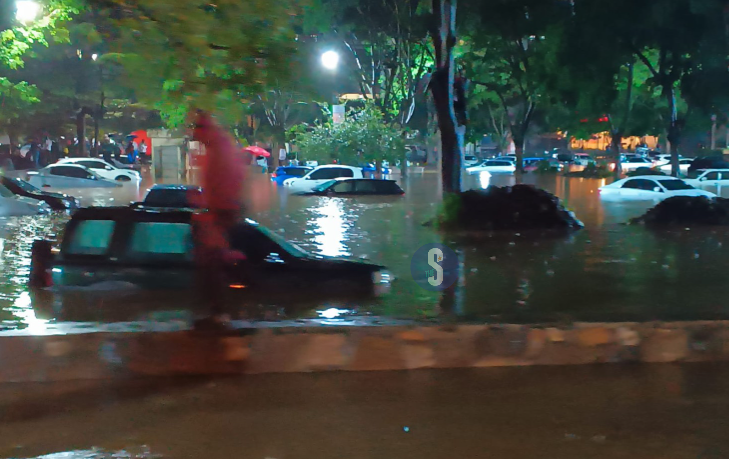
 Vehicles marooned by floodwaters at Sunken Car Park along Aga Khan Walk in Nairobi CBD on Friday, March 5 /EMMANUEL WANJALA
As Kenya reels from devastating floods that wreaked havoc over the weekend, causing at least 43 deaths, authorities are urging residents to remain vigilant and follow basic safety measures to enhance survival.
The Kenya Red Cross Society says early evacuation to elevated areas remains the most important safety step for residents living in regions predicted to receive moderate to heavy rainfall.
Moving to higher ground can significantly reduce the risk of being caught in rapidly rising floodwaters.
The humanitarian agency warns that floodwaters are far more dangerous than they appear.
Just six inches of moving water can sweep a person off their feet, while one foot of moving water can wash away a vehicle, making attempts to walk or drive through floodwaters extremely risky.
“In a flooded area, use a stick to test the depth. You are advised to watch out for flash floods,” the agency says.
Unlike general flooding, which typically develops slowly over several days following sustained rainfall and therefore allows more time for preparation, flash floods can occur within minutes to hours with little or no warning.
They are classified among the deadliest weather-related hazards because of the rapid, violent and high-velocity nature of the water flow.
In Nairobi, where 26 deaths were recorded following Friday’s flooding, several victims were found dead inside vehicles or washed downstream, suggesting they were caught unawares by fast-moving floodwaters.
Flash floods are driven by rapid runoff and surging water flows and can occur even in areas where there has been little or no rainfall.
This means communities located downstream from heavy rainfall zones remain at risk, often doubling the level of devastation.
“Avoid parking or undertaking activities along streams and rivers during heavy rainfall,” the Red Cross warns.
The emergency response agency also cautions motorists against attempting to drive across flooded bridges or muddy water, especially in areas where electricity poles may have fallen, as this poses a risk of electrocution.
Residents are also advised to switch off electricity at the main supply point if floodwaters enter their homes to reduce the risk of electrical accidents.
Health risks can also arise after the water recedes. The Red Cross warns that if residents cannot return to dry their homes within 24 to 48 hours, they should assume mould growth has started.
When it is safe to return, homes should be thoroughly dried and checked to ensure there is no lingering moisture problem.
The agency further emphasises the need for quick action if a vehicle becomes trapped in rising floodwaters, noting that occupants often have only a short window to escape before a car becomes submerged.
Safety tips when floods strike
- Evacuate early to higher ground if heavy rainfall or flooding is forecast in your area.
- Never walk or drive through moving floodwater; even shallow water can knock you down or sweep away a vehicle.
- Use a stick to test the depth of floodwater if you must pass through a flooded area.
- Watch out for flash floods, which can occur suddenly and without warning.
- Avoid parking or carrying out activities near rivers, streams and drainage channels during heavy rain.
- Do not drive across flooded bridges or muddy water where power poles may have fallen due to the risk of electrocution.
- If floodwaters enter your home, switch off electricity at the mains immediately.
If your car is flooding or stalls in water
- If your car is flooding, stay calm and act quickly as you may have only 30–120 seconds before it submerges.
- Unbuckle your seatbelt immediately and attempt to open the door.
- If the door cannot open due to water pressure, roll down the windows or break a side window using a heavy object or emergency tool.
- Help all passengers exit through the window and move quickly to higher ground.
- Leave behind belongings such as phones or bags and prioritise your life.
- If escape is impossible and water continues rising, call for help and try to climb onto the roof of the vehicle. The Kenya Red Cross emergency hotline during disasters is 1199.
- If your vehicle stalls in water, do not attempt to restart the engine as it may cause severe damage.
- Abandon a stalled vehicle immediately if water levels are rising and move to higher ground if it is safe.
- Do not enter fast-moving water on foot, as even shallow currents can sweep you away.