Investors in Kenya’s banking sector are expected to reap a double dividend in the coming week as strong end-of-year earnings trigger a surge in share prices at the Nairobi Securities Exchange (NSE).
Market analysts say the anticipated gains will come in two forms—capital appreciation from rising share prices and dividend payouts backed by robust profitability across top lenders.
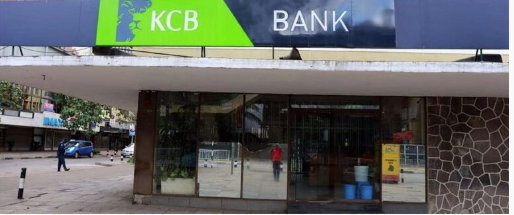
Leading the expected rally is KCB Group, whose stock closed Friday among the top five gainers at Sh77.50 after rising 4.38 per cent in the session. The performance reinforces growing investor confidence in the region’s largest lender by asset value.
The bank began the year trading at Sh65.75 and has since gained 17.9 per cent on that valuation.
Despite the rally, the stock currently ranks 20th on the NSE in terms of year-to-date performance, suggesting a further upside as earning momentum strengthens.
Financial results for the nine months to November last year show KCB Group maintained strong profitability and balance-sheet growth, underpinning investor optimism.
The lender posted net earnings of Sh47.3 billion, supported by growth in interest income and expansion across its regional operations.
Total assets also continued to expand, reflecting the group’s aggressive lending and investment strategy across East Africa. The bank’s asset base climbed to over Sh1.9 trillion.
Customer deposits grew steadily as well, reaching Sh1.4 trillion, indicating sustained confidence among retail and corporate clients despite tight liquidity conditions earlier in the year.
The growth in deposits and assets has strengthened KCB’s funding position while supporting increased lending activity across its core markets.
Improved macroeconomic conditions and a more favourable international credit outlook have also bolstered investor sentiment toward Kenyan banks.
Early last month, global ratings agency Moody’s Investors Service upgraded its credit outlook on key Kenyan banks, citing improving economic stability.
The agency pointed to several supportive factors, including a more stable Kenyan shilling, easing lending rates and declining default risks, allof which are expected to strengthen banks’ balance sheets and profitability.
The decision followed Moody’s sovereign credit upgrade of Kenya to B3 from Caa1, the highest level the country has attained since July 2023. The upgrade reflected improved external liquidity and a reduced risk of near-term sovereign default.
Moody’s noted that the country’s leading lenders posted strong earnings in the first nine months of the year, generating a combined Sh120 billion in net profit.
Among the biggest contributors were; Equity Group Holdings – Sh51.1 billion, Co‑operative Bank of Kenya, Sh21.6 billion and KCB Group atSh47.3 billion
Analysts say the steady profitability across these institutions signals resilience in Kenya’s financial sector despite recent macroeconomic pressures.
Outside the banking sector, airline stocks also grabbed investor attention during the week.
Shares of Kenya Airways surged by nearly 10 per cent following an abrupt board shake-up announced on Thursday.
The changes saw Kiprono Kittony, chairman of the NSE, take over as board chairman of the airline from Michael Joseph. Market data shows the airline’s stock closed the week at Sh4.91, representing a 9.8 per cent jump from its previous close of Sh4.47.
Despite isolated gains, the broader market recorded lower activity during the week under review.
According to data from the Nairobi Securities Exchange, the NASI declined 3.69 per cent, the NSE 25index fell 2.84 per cent, while the NSE 20 index dropped 2.96 per cent.
Market capitalisation also slipped by 3.69 per cent, while total shares tradedand equity turnover decreased by 29.06 per cent and 19.57 per cent, respectively.
In the fixed-income segment, bond turnover in the domestic secondary market fell 36.1 per cent toSh90 billion, reflecting reduced trading activity among institutional investors.
Activity in the government securities market remained strong despite declining yields.
In the money market, the government raised Sh100.4 billion from Treasury bills against an advertised amount of Sh24 billion, translating to an oversubscription rate of 418.4 per cent.
Yields on the 91-day and 364-day Treasury bills declined, while the interest rate on the 182-day Treasury bill remained relatively stable, indicating sustained demand from investors seeking safe-haven assets amid shifting market conditions.