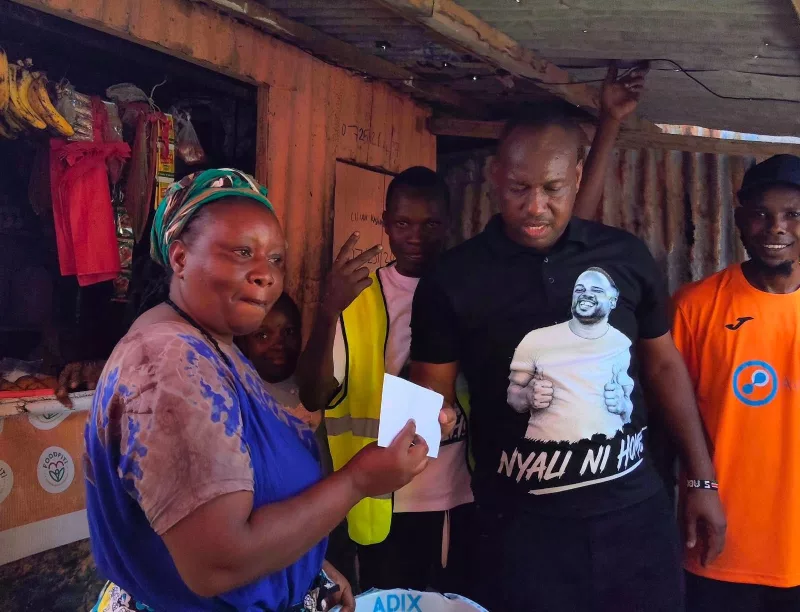
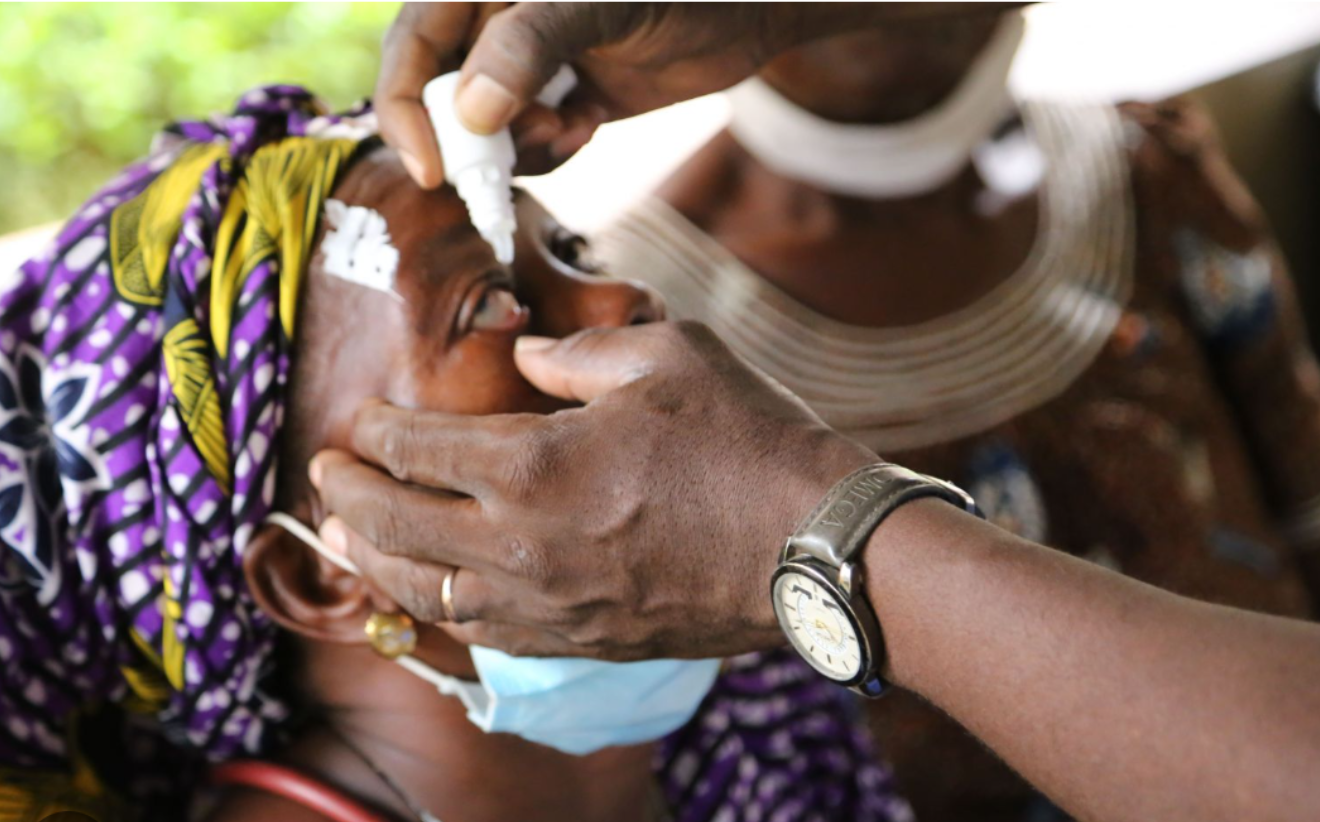
 A woman receives eye drops.
Hundreds of residents turned up for free eye screenings, with more than 100 women receiving comprehensive eye checks, health education and on-site treatment. Four patients were referred to Kilifi County Referral Hospital for cataract surgery.
Kilifi County faces a significant burden of eye disease. An estimated 250,000 residents are living with eye-related conditions, while more than 7,000 people are blind from preventable causes such as cataract.
Kilifi Governor Gideon Maitha Mung’aro visited the screening tents during the event and commended health workers involved in the outreach.
“I commend The Fred Hollows Foundation and the Kilifi eye department for the great work they are doing. I will soon visit the eye unit. I also need my eyes checked,” the Governor said.
Across Kenya, blindness often pushes families deeper into poverty by limiting a person’s ability to work, study or live independently. Women are disproportionately affected, while young girls frequently become caregivers, sometimes sacrificing school and social opportunities to support affected relatives.
Although about 88 per cent of blindness in Kenya is preventable, many rural communities struggle to access treatment. With nearly three-quarters of Kenyans living in rural areas, distance, cost and limited health facilities remain major barriers to care.
The Fred Hollows Foundation says gender inequality remains a key driver of avoidable blindness and has committed to integrating gender equity, equality and social inclusion across its eye-health programmes.
According to Kilifi-based cataract surgeon Nancy Neema, reaching remote communities remains a challenge.
“Kilifi County is vast. We have areas that are very hard to reach, and although we conduct regular eye-health services, we cannot visit some communities as frequently as we would wish. With seven sub-counties, accessibility is a major challenge,” she said.
Despite these challenges, the county’s eye-health workforce is largely women-led.
“Most eye-care workers here in Kilifi are women. We have one ophthalmologist, four cataract surgeons, and several ophthalmic nurses, all playing a crucial role in bringing services closer to the community,” Neema added.