President William Ruto has proposed a Sh4.7 trillion budget for 2026-27, prioritising education and security, signalling a dual focus on building human capital and safeguarding national stability in the politically charged election period.
The current budget is Sh4.29 trillion meaning the proposed Sh4.7 trillion budget has a deficit of about Sh400 billion to be closed by levies and borrowing.
A report by the National Assembly’s Budget Committee reviewing the Budget Policy Statement (BPS) says the education sector will again receive the largest allocation amongst government functions, rising to Sh765 billion from Sh748 billion in the current financial year.
This represents a Sh17 billion increase, reinforcing the government’s commitment to schooling reforms, teacher recruitment, and the rollout of the Competency-Based Education (CBE).
A substantial portion of the budget, Sh422 billion, is earmarked for the Teachers Service Commission (TSC), supporting plans to recruit 24,000 teachers for both senior and junior secondary schools.
The allocation for basic education, covering lower primary and junior secondary levels, will increase by Sh4 billion to Sh134 billion, ensuring that infrastructure improvements, learning materials, and capitation grants continue uninterrupted.
Higher education funding will remain at Sh160 billion, while funding for Technical and Vocational Education and Training (TVET) institutions will be reduced by Sh3 billion from Sh50 billion.
“The education sector remains the single largest consumer of government resources because of personnel emoluments and expansion of learning programmes,” the Budget Committee report reads.
“Investing in education builds the human capital required for economic growth and equips the youth with the skills needed to compete in the job market.”
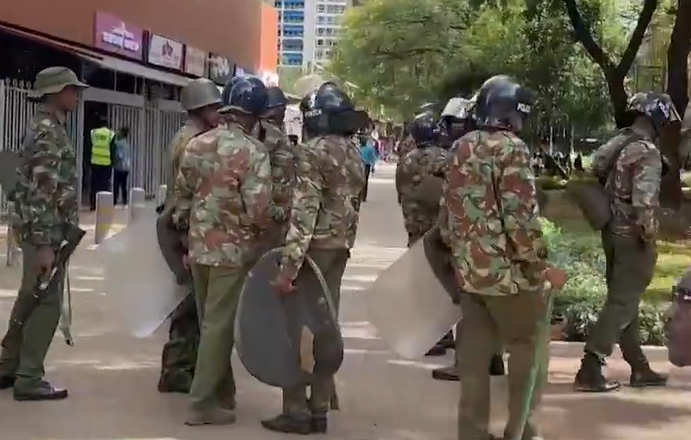
Beyond education, the budget prioritises security, with allocations for defence, policing, internal administration, and national intelligence rising to Sh528 billion from Sh504 billion.
The Defence Ministry’s ceiling has been set at Sh241 billion, reflecting plans to modernise equipment, enhance operational capacity and safeguard Kenya’s borders.
The National Intelligence Service will receive Sh58 billion, slightly down from the current year’s Sh61 billion, while the Interior Department’s allocation will decline marginally by Sh1 billion to Sh43 billion.
Correctional Services funding, on the other hand, will increase by Sh4 billion. More spending will go to recruiting 3,000 warders and improving the welfare of prison officers.
The Independent Electoral and Boundaries Commission (IEBC) is to receive Sh24 billion to begin preparations for the 2027 General Elections in the first instalment of the commission’s election budget.
Other key institutions also benefit from increases: Parliament’s allocation rises to Sh50 billion, with the National Assembly receiving Sh30 billion, the Senate Sh8.5 billion and the Parliamentary Service Commission Sh2 billion.
The Judiciary’s budget increases by Sh3 billion to Sh30 billion, reinforcing the government’s commitment to upholding justice and rule of law.
County governments will collectively receive Sh420 billion, an increase of Sh5 billion from the current financial year, to fund devolved services, including infrastructure, healthcare and social protection programmes.
The Executive Office of the President, however, will receive lower funding, a reduction from Sh7.7 billion to Sh6.9 billion, while the Deputy President’s office will receive Sh3.5 billion, down from Sh4.9 billion. State House’s budget declines from Sh17 billion to Sh11 billion, while the Prime Cabinet Secretary’s office funding will rise marginally to Sh828 million.
Lawmakers emphasised that the spending priorities reflect government intentions to sustain education reforms, strengthen security operations, and ensure fiscal prudence at a time of rising public debt.
Education, they said is critical not only for immediate learning outcomes but also for building a skilled workforce capable of driving long-term economic growth.
Security, meanwhile, remains essential for protecting citizens, stabilising the country, and maintaining Kenya’s regional role in peacekeeping and counter-terrorism efforts.
“The education sector remains vital for the nation’s future, and investments in schools, teachers, and learning materials are necessary,” the Budget Committee report says.
“Simultaneously, security agencies require substantial funding to safeguard national interests and protect citizens from emerging threats.”
The government’s prioritisation of education and security also reflects growing demand in both sectors.
Enrolment in secondary schools and universities has risen sharply, straining infrastructure and human resources.
At the same time, the country continues to confront domestic and regional security challenges, including cross-border incursions, sporadic terrorist attacks and urban insecurity in key towns.
Infrastructure development and healthcare also feature prominently in the proposed budget.
The government plans to allocate Sh444 billion to infrastructure, focusing on roads, energy projects, and transport networks to improve connectivity and economic competitiveness.
Health services are set to receive Sh147 billion, supporting universal health coverage, expansion of public health facilities, and healthcare worker recruitment. Social protection programmes aimed at vulnerable groups, including the elderly, persons with disabilities, and orphans, will continue to receive funding.
Economists observing the budget note that the dominance of education and security reflects structural realities within Kenya’s public sector, where salaries, personnel costs, and operational needs consume a significant portion of government resources.
Nonetheless, they stress the importance of accountability to ensure that allocations translate into tangible outcomes.
“Investing in education builds human capital, while funding security ensures the stability necessary for businesses and citizens to thrive,” the Budget Committee observes. “It is critical that funds are deployed efficiently, with oversight mechanisms in place to safeguard taxpayer money.”
President Ruto’s administration is also balancing the need to fund essential services with broader fiscal responsibility.
The Treasury has been pursuing measures to reduce the budget deficit while maintaining allocations for key sectors.
Lawmakers have emphasised prudent utilisation of resources, cautioning that mismanagement could undermine public trust and reduce the impact of government programmes.
In sum, the 2026-27 budget signals a clear political and economic strategy.
By prioritising education and security, the government is simultaneously addressing structural deficiencies, preparing the country for a politically sensitive election year, and reinforcing Kenya’s regional security commitments.
The allocations also demonstrate an effort to balance growth with fiscal discipline, even as pressures mount to expand services and improve living standardsUltimately, how effectively these funds are deployed will determine whether the country achieves its twin objectives of a skilled, competitive workforce and a secure, stable environment for citizens and businesses alike.
The 2026-27 budget, with its heavy emphasis on education and security, sets the stage for Kenya’s development trajectory as the nation approaches the next general elections, where both governance and political strategy will be under intense public scrutiny.
INSTANT ANALYSIS
As the budget-making process gathers pace in Parliament, the allocations are expected to trigger debate among lawmakers seeking more resources for their constituencies and priority programmes. With the 2027 General Election approaching, the budget is also likely to attract political attention as leaders push for projects that could shape their re-election campaigns. For now, however, the government’s message is clear: education and security will remain at the heart of the country’s spending priorities in the coming financial year.