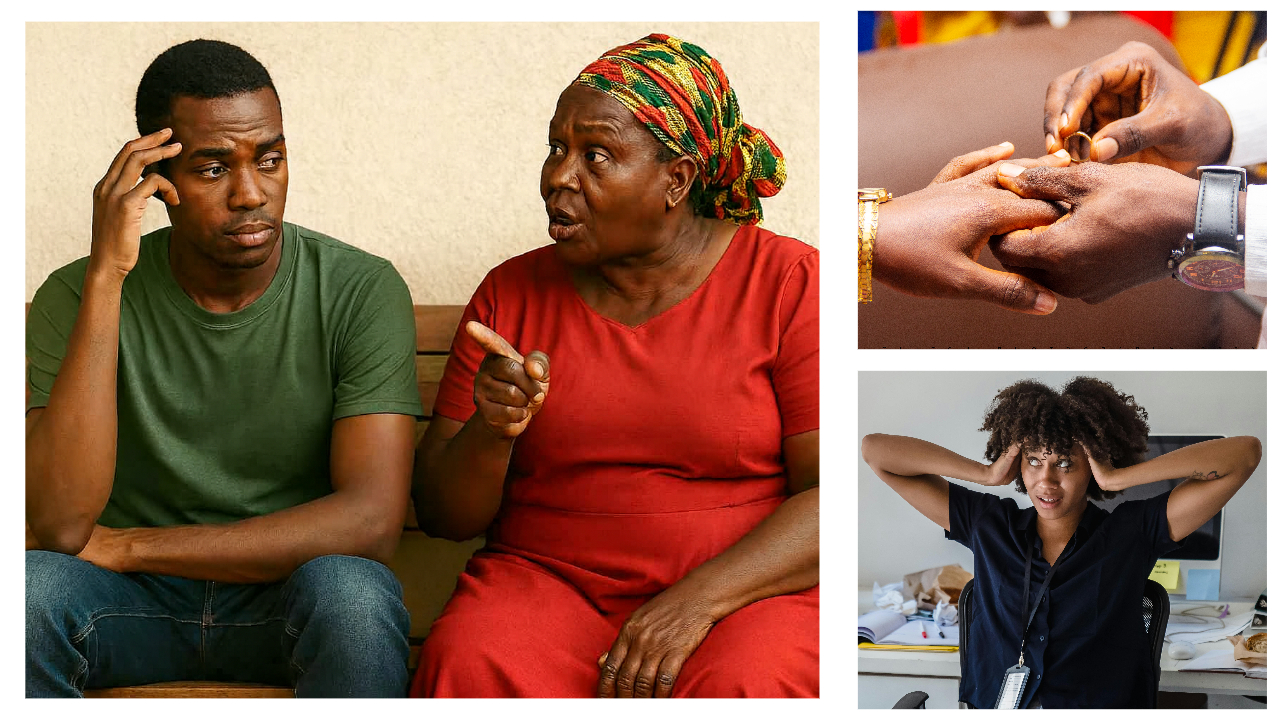
“Why are you not married yet?”
Marriage has long been celebrated as one of life’s greatest achievements. It is considered sacred, stabilising and essential. It is a rite of passage, a sign of adulthood and a marker of success. It promises companionship, family and continuity. For many parents, it represents completion, proof that life is moving as it should.
Yet for Generation Z and Millennials, the approach to marriage has changed. They move more deliberately, they ask questions and they hesitate. Older generations often perceive this hesitation as confusion, indecision or even quiet defiance.
However, this hesitation should not be mistaken for rebellion. It is evolution.
For decades, marriage served both emotional and economic purposes. Women relied on it for financial security, social legitimacy and sometimes survival. Men were expected to provide, lead and make key decisions. Women were expected to nurture, endure and adapt. It was a system that appeared to work, at least on paper.
Today’s young adults did not grow up with instruction manuals about how marriage ought to function. They grew up watching how it actually functioned. They witnessed unions maintained for appearances rather than happiness. They saw parents sacrifice personal dreams to preserve stability. They saw homes that were intact but emotionally distant, relationships that survived but did not necessarily thrive.
As a result, they are asking questions that previous generations rarely felt permitted to ask. If both partners now contribute financially and emotionally, why should one carry most of the domestic burden? If life offers more opportunities than mere survival, why must marriage remain the ultimate milestone? If personal fulfillment and mental well-being are important, why should endurance alone be romanticised?
Marriage is no longer automatic. It now competes with careers, travel, education, entrepreneurship and personal development. The social expectations surrounding it are shifting. Where weddings once served as proof of success and social respect, they are now evaluated against life goals, values and compatibility. Marriage has moved from being a matter of social approval to a matter of personal readiness.
This shift has naturally created tension. Parents may feel frustrated because marriage has traditionally symbolised continuity, family legacy and community standing. When their children delay or decline it, it can feel as though tradition itself is being challenged. Yet hesitation is better understood as discernment rather than defiance.
Generation Z and Millennials are not avoiding commitment; they are approaching it differently. They prioritise emotional readiness over ceremonial timing, compatibility over community pressure, and personal growth over societal expectation. They seek partnerships that are equal, supportive and emotionally intelligent. Marriage is no longer merely about survival; it is an investment of time, energy and identity.
This generation has also witnessed the consequences of rushed or unstable marriages, including rising divorce rates, emotional exhaustion and the quiet inheritance of family dysfunction. They are motivated by experience and awareness, not by tradition alone. Gender roles are more flexible, financial independence is more common, and career timelines have extended. The old urgency to marry “before 30” has lost much of its relevance. Marriage must now earn its place through compatibility, equality and shared vision.
And yet, in all this reflection and delay, there is something deeply personal at play. Many young adults still desire partnership. They still believe in love. They still imagine building a life with someone. But they also know that the quality of their lives will not decrease otherwise. Marriage is not a condition for life, and that is the point. Some people are meant for it, and others are not. Some will find joy within it, and others will find joy beyond it.
It is also possible to love a life that other people do not fully understand. To choose a path that does not follow familiar timelines. To measure fulfillment differently.
Marriage is not disappearing. It is evolving. For those who approach it with intention, equality and maturity, it can be more rewarding than ever before. But it is no longer a compulsory chapter in everyone’s story.
Perhaps the better question is no longer, “Why are you not married yet?” but rather, “Are you building a life that feels whole to you?”
When marriage is entered freely, as a partnership between two complete individuals, it remains one of life’s most profound endeavours. And when it is not chosen, life can still be full, meaningful and deeply complete.