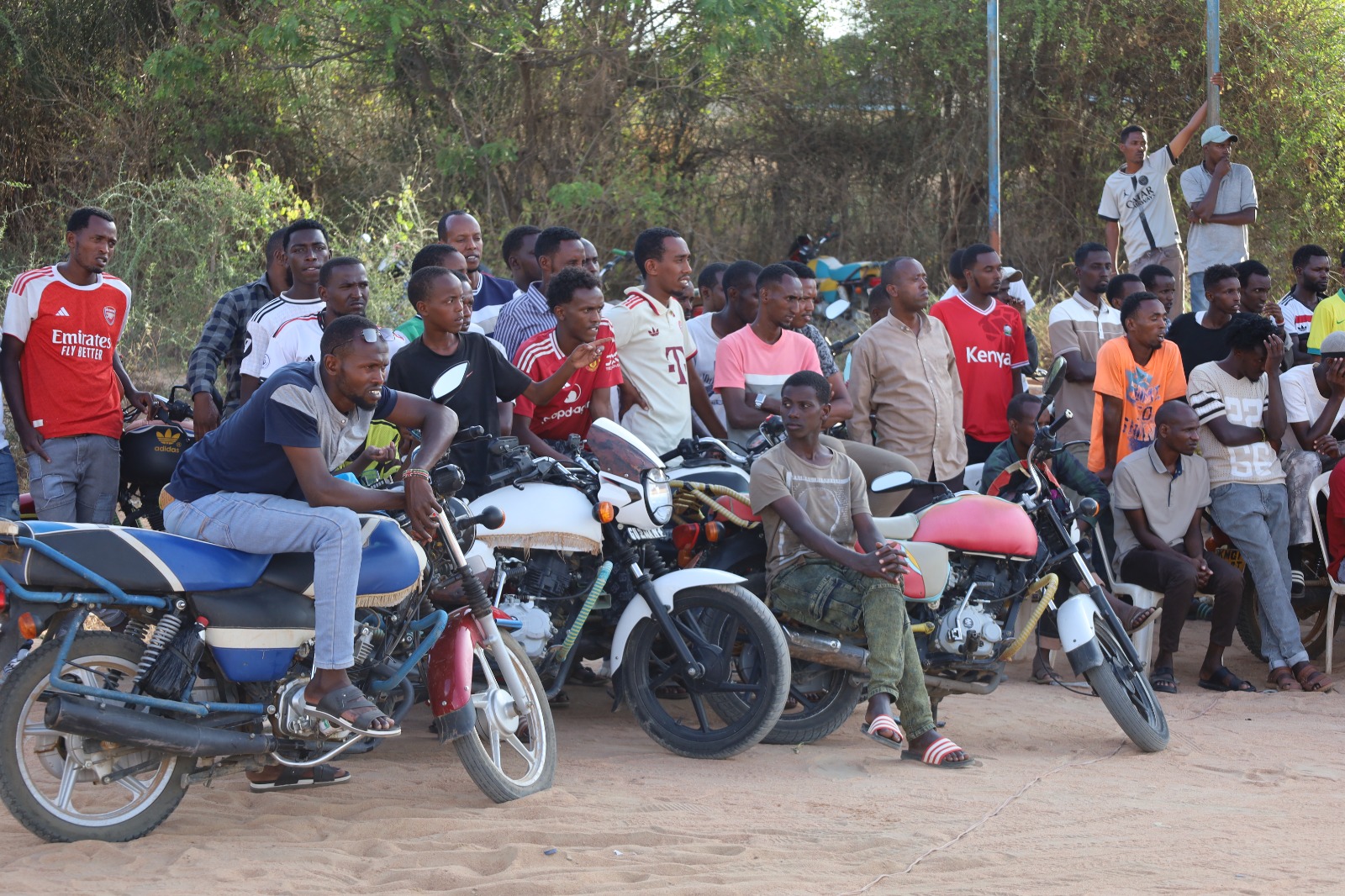
 Residents of Moyale town during a football match /STEPHEN
ASTARIKO.
Residents of Moyale town during a football match /STEPHEN
ASTARIKO.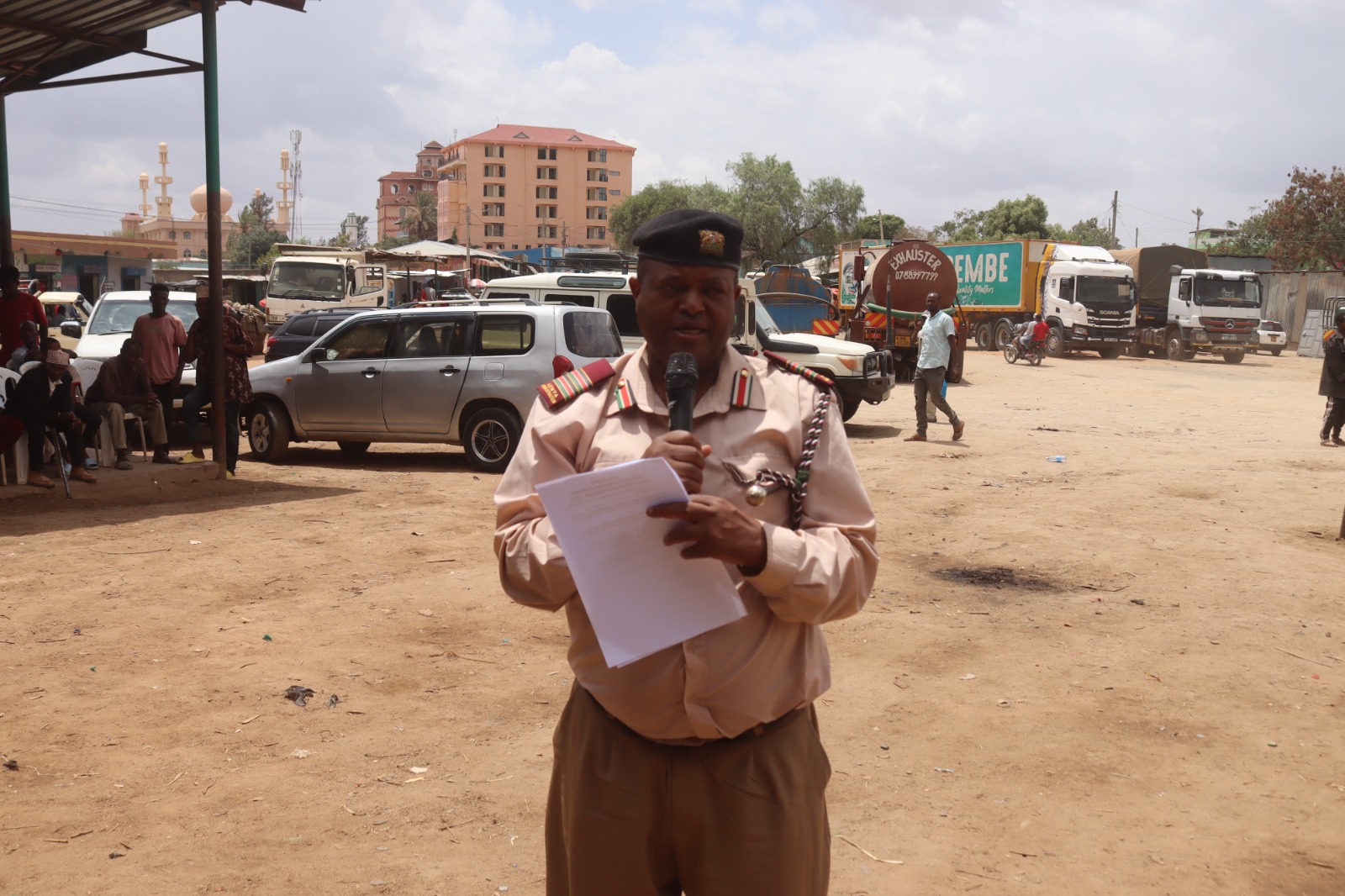
Residents of Moyale town during a football match /STEPHEN ASTARIKO.
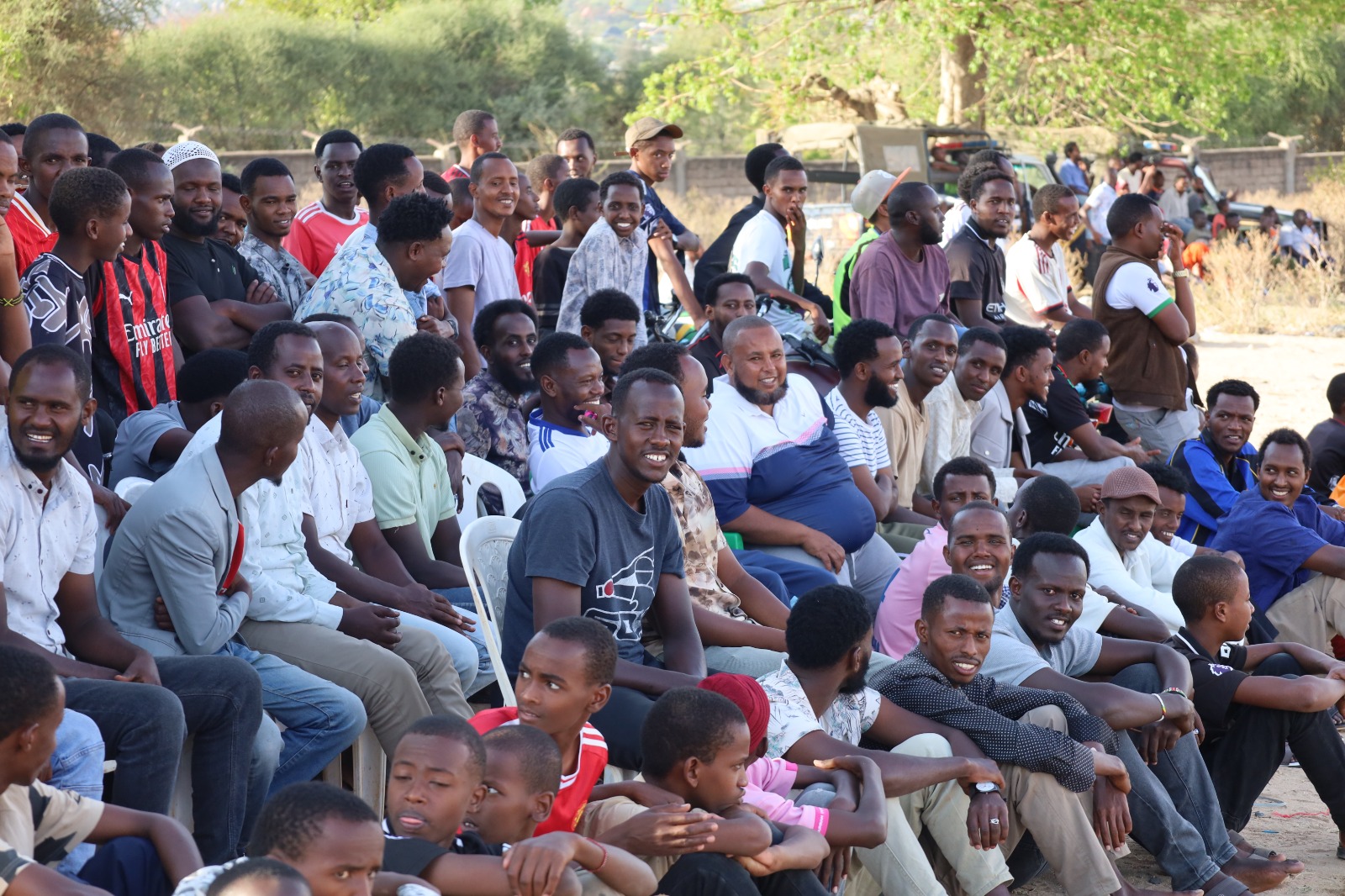 Members of the public during the anti-human trafficking
awareness campaign in Moyale town /STEPHEN ASTARIKO.
Members of the public during the anti-human trafficking
awareness campaign in Moyale town /STEPHEN ASTARIKO.
In Kenya’s northern frontier, where the border with Ethiopia is little more than a line on a map, a teenage boy hands a broker a crumpled stack of notes.
He believes he is paying for transport to Nairobi, where a cousin has promised him work as a mechanic.
Instead, he is entering a transcontinental supply chain — a human logistics network run not through whispers in alleyways, but through smartphones, encrypted chats and targeted ads.
“We see them every day. The girl sweeping that hotel floor, the boy carrying sacks at the market. They are minors. They are from across the border. And we pretend not to see,” says Mzee Abdi Aila, a Burji elder in Moyale, gesturing towards children washing cars under the sun.
For decades, trafficking in East Africa followed a familiar script: poverty, false promises and domestic servitude.
That trade has now been rewired.
Poverty remains a driver, but trafficking is increasingly powered by social media, encrypted messaging and digital finance.
Victims are moved from northern Kenya’s arid plains to fortified scam compounds in Southeast Asia.
Today, exploitation often begins with a notification ping.
In refugee camps and Ethiopia’s highlands, young men scroll past Facebook ads offering “IT support roles” in Thailand or “customer care jobs” in Dubai. The salaries — between $800 (Sh103,200) and $1,500 (Sh193,500) a month — promise transformation. Contracts appear legitimate. Airline tickets are arranged.
“Traffickers are adapting faster than the law. They are targeting diploma holders and graduates — young people who know how to use a laptop,” Omar Bakari of Kenya’s Transnational Organised Police Unit says.
In 2017, authorities documented 233 Ethiopians trafficked through unofficial crossings. By 2024, the number had nearly doubled to 469. Many pass through Eastleigh in Nairobi before entering two main pipelines.
The “Southern Route” channels migrants through Tanzania and South Africa towards Europe or the Middle East.
The other — what officers call the “Eastern Hell” — sends educated young men into forced criminality.
“We are seeing Kenyans trafficked to Myanmar and Laos. They are forced to run online romance scams and cryptocurrency fraud. If they miss their quotas, they are electrocuted or starved.”
A recent report by the Freedom Collaborative, based on nearly 400 route submissions from more than 50 civil society groups, confirms the shift: Southeast Asia has emerged as a major destination for East African victims.
Survivors describe 16-hour days running scams under threat of violence. Similar patterns have been documented by Human Rights Watch in Cambodia and Myanmar, where trafficked workers are held in guarded compounds and subjected to abuse.
For traffickers, the model is efficient: recruit online, move victims through commercial airlines, confiscate passports and extract profits in cryptocurrency.
Yet while attention focuses on digital scam compounds, exploitation persists in plain sight.
In Moyale’s markets, Ethiopian migrants — many of them minors — work as porters, domestic workers and street vendors.
“It is a syndicate. Recruiters in Ethiopia. Transporters who know every goat trail. Rogue officers who look away for a fee,” community leader Mzee Hussein Omar says.
"Migrants fleeing unemployment pay about Sh15,000 for a two- to three-week trek through the bush. They walk at night and hide during the day. Some die of disease. Their bodies are left for the hyenas."
Those who survive often work 100-hour weeks as hawkers or house helps, unable to report abuse for fear of deportation.
Hasna Aila, a business leader, points to teenage girls employed in Nairobi neighbourhoods like Karen and Eastleigh.
“Complicity has taken root. Many employers hire them because they are cheap. They rarely report abuse because they see survival, not crime. Even poorly paid jobs here can earn them more than they would make back home,” she says.
Technology has made trafficking networks more agile. Encrypted apps enable cross-border coordination. Digital payments obscure money trails. Social media algorithms amplify fraudulent job ads to precisely the young, educated and unemployed.
There are efforts to respond. The International Organisation for Migration (IOM) is pushing for a harmonised regional database and a child emergency hotline. Civil society networks now share trafficking route data in real time.
During a recent anti-human trafficking campaign organised by IOM and the Kenyan Ministry of Interior in Moyale town, Bakari said trafficking must be understood as more than just crime.
“We treat this as a crime issue, but it is also about climate, employment, corruption and gender. Until we treat it as all of those, we will keep building shelters for victims of a problem we refuse to prevent.”
“In East Africa today, the trafficker no longer needs to carry a gun. He may run WhatsApp groups from a café, purchase Facebook ads and never cross a border himself.
Yet the system crosses many — geographic, legal and moral.”
Instant analysis
Kenya’s human trafficking networks are rapidly evolving from traditional labour exploitation into a sophisticated transnational system powered by digital technology. Social media recruitment, encrypted messaging and digital payments now allow traffickers to target educated youth and move victims across continents with relative ease. The shift toward forced criminality in Southeast Asian scam compounds marks a troubling new phase, where victims are exploited not only for labour but for cybercrime. At the same time, local exploitation of Ethiopian migrants persists in plain sight along the northern border. The trend exposes gaps in regional law enforcement, migration management and digital regulation, demanding a coordinated response that addresses poverty, corruption and online recruitment.