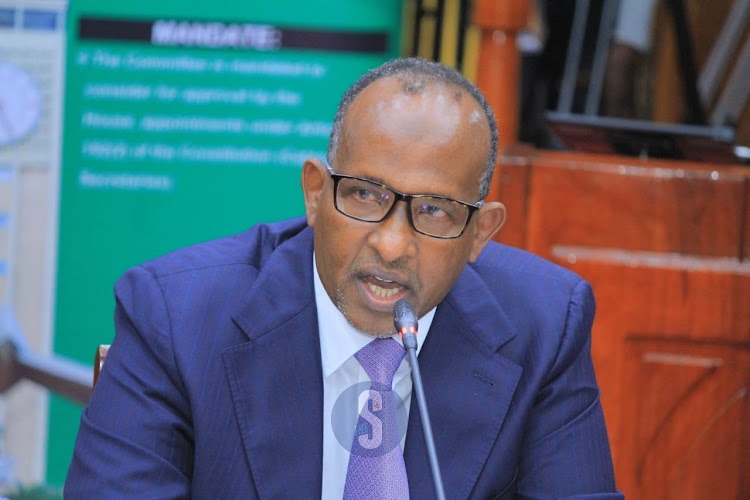
Health Cabinet Secretary Aden Duale has warned that Kenya is experiencing a short-term disruption in the supply of the rotavirus vaccine, which is routinely administered to infants at six, ten, and fourteen weeks of age.
In a statement on Thursday, the CS confirmed that the global supply of the Rotavac frozen vaccine, manufactured by Bharat Biotech, has been affected by production delays.
"Gavi, the vaccine alliance, notified Kenya that the manufacturer, Bharat Biotech, is experiencing production delays due to facility upgrades, affecting vaccine deliveries in 2026-2027," reads the statement.
Speaking on the issue, Duale said as of March 2, 2026, Kenya has 4,000 doses at the national level. This, however, represents less than one month’s stock.
A shipment initially expected in January 2026 has been delayed, with the earliest anticipated arrival now at the end of April 2026.
"The ministry of health is working closely with UNICEF and partners to fast-track shipments, redistribute available doses equitably across counties, and closely monitor stock levels to minimise service disruption," he added.
The CS also reassured parents and caregivers that routine immunisation services remain critical and should continue despite the temporary shortage.
“Parents and caregivers are encouraged to continue attending routine immunisation visits and to strengthen diarrhea prevention measures, including hand washing with soap, safe water treatment, proper food handling, and maintaining clean household environments," he stated.
According to the ministry, the disruption stems from production delays at the manufacturer, and the government is actively monitoring stock levels to minimise service interruptions.
“The Ministry of Health assures the public that it is working with global partners to restore normal vaccine supply and will continue to provide regular updates. Protecting the health of all children remains our highest priority,” Duale emphasised.
Rotavirus is the most common cause of severe diarrhoeal disease in infants and young children globally, the World Health Organisation (WHO) notes.
According to WHO, it is transmitted through the oral-faecal route, directly from person to person, or indirectly through contaminated objects.
"People who are infected experience an abrupt onset of fever and vomiting followed by explosive, watery diarrhoea," the agency says.
Rotavirus diarrhoea is profuse, often leading to dehydration, which can be severe, requiring hospitalisation. The cornerstones of treatment of severe rotavirus diarrhoea are fluid replacement and zinc supplementation.
Vaccines against rotavirus are available, and vaccination is an important measure to reduce severe rotavirus-associated diarrhoea and mortality.
They are all live, oral vaccines.
RotaTeq, Rotavac, and ROTASIIL should be administered in a 3-dose schedule, while a 2-dose schedule should be used for Rotarix.
A minimum interval of 4 weeks should be maintained between doses.
WHO recommends that rotavirus vaccines should be included in all national immunisation programmes and considered a priority, particularly in countries with high rotavirus gastroenteritis-associated fatality rates, such as in South and South-eastern Asia and sub-Saharan Africa.
Additional measures to prevent diarrhoea include access to safe drinking water, improved sanitation, regular handwashing with soap, exclusive breastfeeding for the first six months, good personal and food hygiene, and health education on how infections spread.