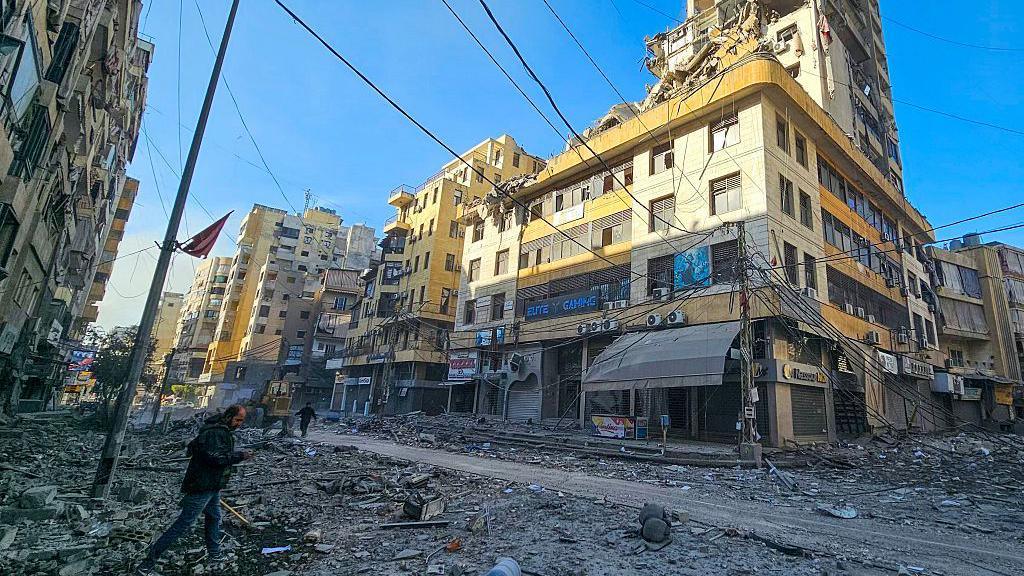
Israel's military says it has launched a new wave of strikes – its 15th – on Iranian "regime infrastructure"
The Israel Defense Forces (IDF) also says it has destroyed a military command bunker in Tehran – that the supreme leader had planned to use – with 50 fighter jets
Tehran residents tell BBC Persian "last night was the worst night" so far – here's the latest on the conflict
Meanwhile, Iran has launched further strikes on Israel, the IDF says, while Saudi Arabia, Qatar and Bahrain say they intercepted attacks overnight
UK Deputy PM David Lammy says there will be more attempts to get repatriation flights out of Oman, after the first UK-chartered plane from the Middle East landed at Stansted Airport
We're now into the seventh day of the war – here's a brief look back at the week
UK has not changed its position on strikes against Iran, Downing Street says
The UK prime minister’s spokesperson insisted the government had not changed its position after the deputy prime minister said it would be legal for RAF jets to strike Iranian missile sites which could target Britons.
Downing Street said it would not "speculate on every hypothetical scenario", with the spokesperson saying: "It wouldn’t be responsible to rule out everything in a fast moving conflict.
"I’m not going to get into hypotheticals on it. Our position has been set out throughout the week. We’ve been very clear that our response has been to allow the US limited, specific and defensive use of our bases to protect British lives, British interests and our allies in the region."
He added the UK military was focused on shooting down drones in the air, while the US targets missile launch sites in Iran.
"We have consistently said that we’ll take the necessary steps to prevent future strikes which, as we’ve set out over the course of the week, is allowing the US to take out those missiles at source whilst we are defending the skies."
"That is a consistent position that we have conveyed throughout the week," they added.
Asked if this was a U-turn, they responded: "No."
Wider Middle East feels impact of the US-Israel war with Iran
One week into a widening war, even parts of the Middle East that have not come under direct attack are feeling the impact.
Here’s a quick breakdown of some areas affected:
Egypt: The war is hitting Egypt’s beleaguered economy. Global shipping companies are now rerouting some vessels away from the Suez Canal – a major source of foreign currency. This is also a big blow to tourism and affects millions of Egyptians who work in Arab Gulf states.
Although Egypt is a close US ally, and major recipient of its military aid, it has a national security policy of hosting no foreign military bases. That’s a relief to Egyptians right now.
Syria: The country has sent more troops to its borders with Lebanon and Iraq to block infiltration by Iran-backed armed groups, particularly Hezbollah. This week, several people, including children, have been hurt by debris from Iranian missiles, according to Syria’s state news agency.
Occupied West Bank: At the start of the Iran war, Israel closed many checkpoints and military gates for Palestinians in the West Bank, citing security concerns.
While Iranian missile fragments have fallen in Palestinian villages, Palestinians must rely on warning sirens from Israeli settlements or download apps for Israeli civilians to alert them to incoming rocket fire.
Gaza Strip: In war-torn Gaza, aid is now re-entering through the Kerem Shalom crossing, which Israel had closed for three days saying it could be targeted by Iran.
The Rafah crossing with Egypt – the main exit point for medical evacuations – remains shut. Talks for Donald Trump's Gaza Board of Peace are said to be on hold, with many members caught up in the new regional conflict.