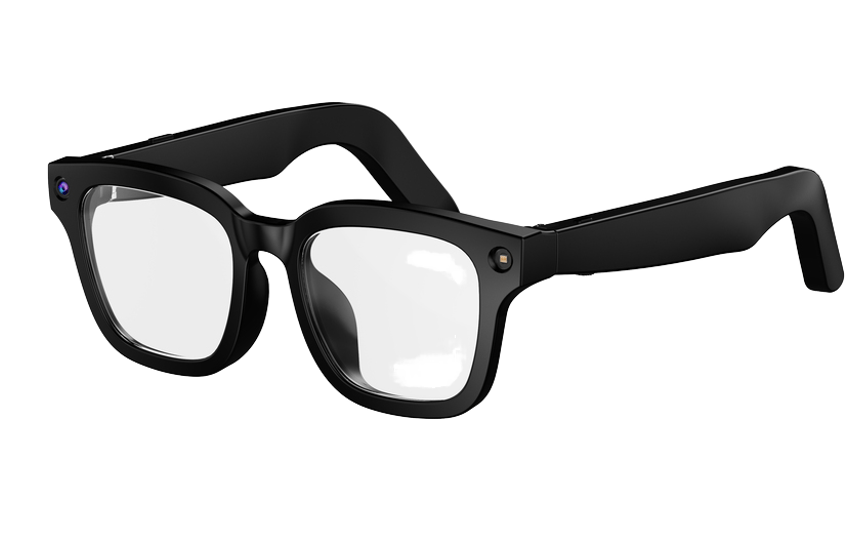
 AI glasses/COURTESY
Meta Platforms is now facing a lawsuit in the United States over privacy concerns linked to its AI-powered smart glasses.
The legal action follows reports suggesting that footage captured by the devices may have been reviewed by human workers without some users’ full awareness.
The complaint claims that employees at a subcontractor in Kenya were reportedly involved in reviewing certain material, including personal or intimate moments, as part of a process described as intended to improve the performance of the glasses’ artificial intelligence features.
The claims have raised further questions about how user data may be handled and whether consumers were sufficiently informed that recordings made on their devices could potentially be viewed by others.
The devices at the centre of the dispute are the AI smart glasses marketed under the Ray-Ban Meta brand, a collaboration between Meta Platforms and EssilorLuxottica, the parent company of Ray-Ban.
Meta (then Facebook) and EssilorLuxottica first released Ray-Ban Stories in 2019, which allowed users to capture photos and short videos and share them on social media.
These glasses did not include AI-powered features and were primarily designed for wearable cameras and connectivity.
By 2023, Meta announced the development of a more advanced generation of smart glasses that would integrate artificial intelligence capabilities, including voice-activated assistants and real-time environment recognition.
These were marketed under the Ray-Ban Meta brand.
The glasses officially launched in late 2025 in the United States, Canada, and select European markets, with AI features integrated and connected to Meta’s ecosystem.
The glasses are designed to function as both fashionable eyewear and wearable computing devices.
According to Meta Platforms, its Ray-Ban Meta smart glasses are designed with built-in cameras, microphones, and AI capabilities that allow users to capture photos and videos hands-free.
They also provide access to real-time artificial intelligence features and allow interaction with a voice-activated assistant through voice commands.
“From music festivals and birthday parties to first steps, graduations, and beyond, RayBan Meta smart glasses free you from the constraints of a hand-held camera,” the company states on its website.
Meta Platforms says the Ray-Ban Meta smart glasses are intended to combine everyday practical use with advanced AI capabilities, enabling wearers to ask questions about their surroundings, translate languages, recognise objects and scenes, and interact with Meta’s AI ecosystem.
This can be done without needing to use a phone or other device.
The development of these glasses forms part of Meta’s broader strategy to expand beyond traditional screens and integrate artificial intelligence into everyday experiences.
Earlier versions of connected eyewear from Meta, such as the Ray-Ban Stories, mainly focused on capturing content for social media.
Those earlier models did not include advanced AI capabilities.
By 2025, Meta had expanded its smart eyewear to include closer AI integration, positioning the glasses as a potential entry point for hands-free, voice-driven computing.
Reports cited by Forbes suggest that more than seven million of these devices were sold in 2025 alone, making them among the most widely adopted wearable AI products on the market.
According to Meta’s official platforms, the way the glasses operate involves a combination of on-device hardware and cloud-based processing.
When a user activates an AI feature — for example, by asking a question or capturing an image — the device records the relevant audio or visual input and sends it to Meta’s servers for processing.
The AI system then analyses the data and provides contextual information back to the user.
It is this transfer of information from the device to Meta’s servers that has become a focal point in the wider debate over privacy.
Once data leaves the glasses and enters cloud systems, it may form part of Meta’s internal review processes, which reports indicate can include automated systems and, in some instances, human reviewers.
The lawsuit was filed by two individuals — Gina Bartone of New Jersey and Mateo Canu of California — and is being pursued by the public-interest-focused Clarkson Law Firm, which has previously brought legal action involving major technology companies.
In their complaint, the plaintiffs argue that Meta’s marketing of the smart glasses included privacy-focused messaging such as “designed for privacy” and “controlled by you,” wording they say may have led some consumers to believe their recordings would remain entirely private.
They further state that users may not have been fully informed that their content could potentially be accessed and reviewed by individuals working for overseas contractors, including those in Kenya, where some data review is reported to have taken place.
Meta has defended its practices, saying that media captured by the smart glasses typically remains on the user’s device unless it is deliberately shared with Meta’s AI systems, which is required for any review.
A company spokesperson told the BBC that contractors may review data only when it has been shared with Meta AI in order to improve the user experience, a practice the company says is outlined in its privacy policy and supplemental terms of service.
In its policy documents, Meta states that interactions with AI products may be reviewed automatically or manually, meaning that both automated systems and human reviewers could potentially be involved in analysing user content.
Despite these explanations, the lawsuit underscores the ongoing tension between product marketing and consumer expectations.
As wearable technology becomes more advanced, the boundaries between convenience, innovation, and privacy continue to be debated, drawing closer scrutiny from regulators, journalists, and technology users.
Ultimately, while Meta’s AI smart glasses represent a notable step in the development of wearable computing — allowing users to interact with artificial intelligence in increasingly natural ways — the privacy debate surrounding them highlights the importance of transparency and clear communication as technology evolves.