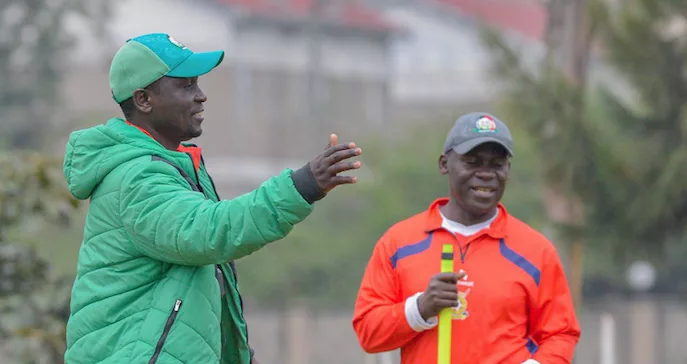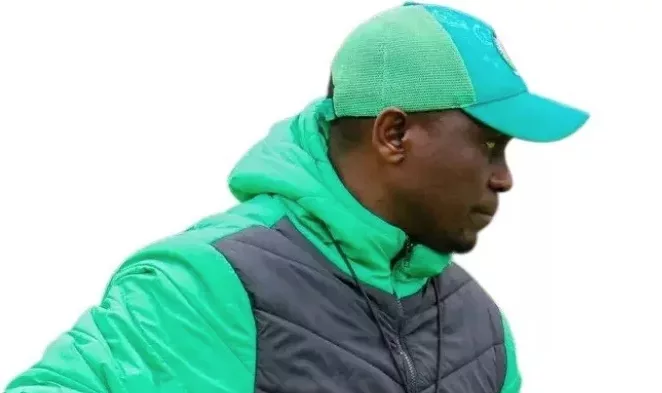
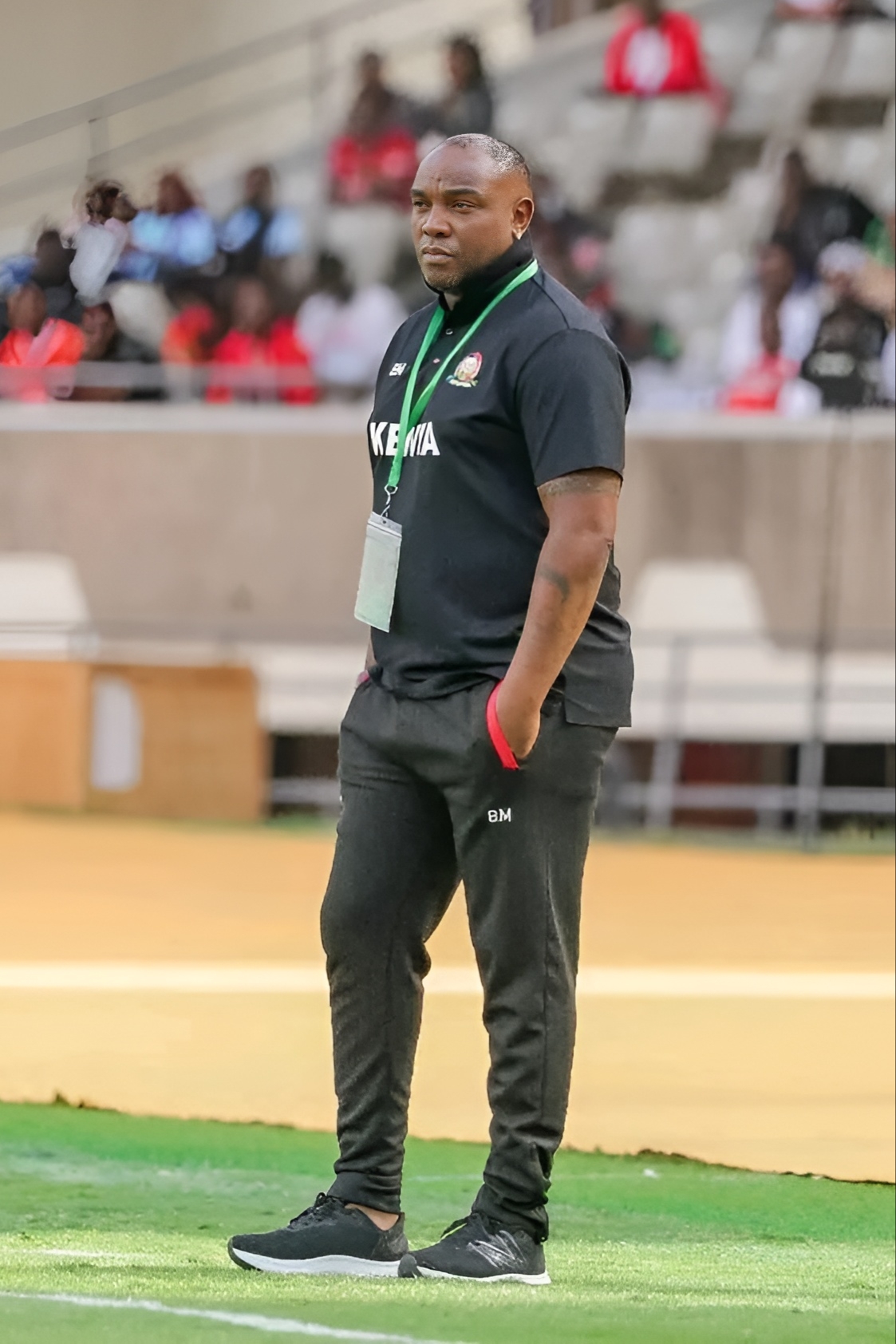
 Harambee Stars head coach Benny McCarthy during a past assignment/HANDOUT
 Harambee Stars head coach Benni McCarthy has revealed that he feels underutilised in his role, citing the sporadic nature of international football as a source of professional frustration.
The South African, a UEFA Champions League winner with FC Porto and a former coach at Manchester United, told South Africa’s TV 947 Joburg that he thrives on daily engagement with players, a rhythm that national team management rarely provides.
“This experience in Kenya has been unbelievable, it’s been remarkable, it’s been nice, but I think I’m still too young to go so long without being active,” McCarthy said. “I want to be every day on the training pitch, smell the grass. I want to improve players.”
Read Also
McCarthy took over the Harambee Stars in March 2025, a landmark appointment that raised expectations across Kenyan football. Here was a coach with top-level European experience stepping into a national team seeking transformation.
In his debut major tournament, the team reached the quarterfinals of the African Nations Championship (CHAN), showing improved tactical organisation, defensive stability, and sharper attacking transitions.
Yet even with this progress, McCarthy is candid about the limits of international management. Players are spread across multiple leagues and continents, and the time available to implement his ideas is limited.
“You don’t have enough time with players. Like, I’ve not seen them for three months. When I see them, I’m only going to have a week to do what I can with them,” he said.
The contrast with club management is stark. At clubs, training is daily, tactical systems can be layered gradually, and mistakes can be corrected immediately.
International football offers only short bursts of preparation separated by long gaps, a structure that leaves McCarthy craving more consistent involvement.
Despite this, McCarthy has embraced the responsibility of shaping Kenya’s football identity. His tenure has brought structure and clarity to a squad that had previously lacked tactical cohesion, and the CHAN quarterfinal finish demonstrated that progress is tangible.
Players speak of confidence and clarity in their roles — evidence of a coach who leaves a mark even with limited time.
Still, McCarthy admits his professional ambitions lean toward club football. “After this experience with Kenya, I’m really looking to get back into managing a club,” he said.
At 48, he is in the prime of his coaching career, wired for daily engagement, constant development, and immediate tactical feedback — aspects that national team work can seldom provide.
The upcoming Fifa Series in Kigali, where Kenya will face Estonia and either Rwanda or Grenada, will offer him a brief taste of the daily involvement he craves. But once the tournament ends, the familiar pause of international football will return, leaving him in the same professional tension.
McCarthy’s reflections are strikingly honest. He does not criticise the federation or the players; he articulates a personal preference — the desire to be constantly immersed in the game. For a coach wired for the grind, international football’s silence is a challenge, even amid evident achievement.
For now, he remains committed to Harambee Stars, raising standards and instilling belief.
Yet his words underscore a wider truth: the prestige of national duty often comes with a personal trade-off. In McCarthy’s world, silence rarely satisfies ambition.