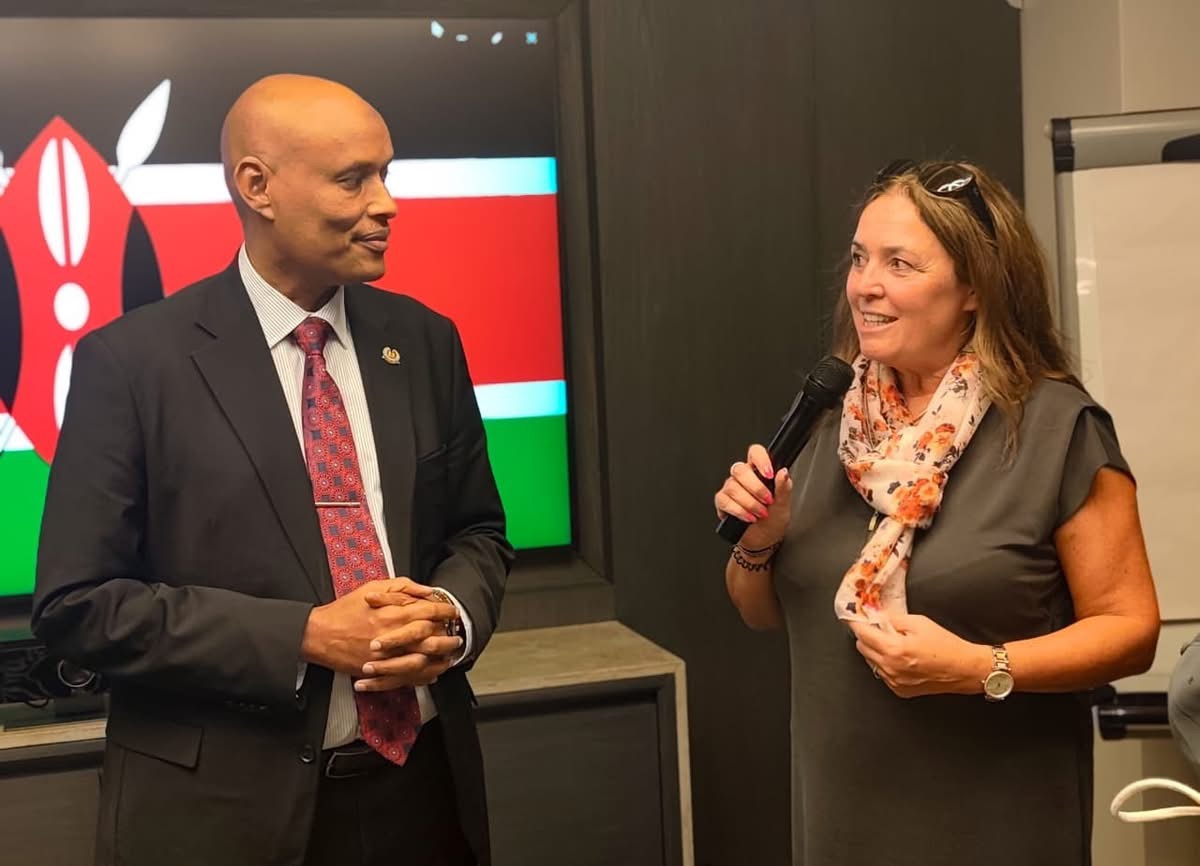
The Director of Criminal Investigations, Mohamed Amin, has called for stronger international collaboration among law enforcement agencies to combat transnational criminal networks increasingly exploiting global systems.
Speaking in Nairobi while presiding over the closing ceremony of the East and South Africa Regional Conference organised by the National Crime Agency, Amin said criminal enterprises are becoming more sophisticated, requiring coordinated responses across borders.
“The challenges posed by transnational criminal networks cannot be addressed in isolation,” Amin said.
“Criminal enterprises are evolving rapidly, taking advantage of emerging technologies, migration systems, and international financial channels. This requires joint action, intelligence sharing, and strong partnerships both regionally and globally.”
The conference, convened in collaboration with the British High Commission in Nairobi, brought together international liaison officers, senior law enforcement officials, policymakers and security experts from across East and Southern Africa.
Participants discussed ways to strengthen regional and international cooperation in tackling organised immigration crime and other transnational criminal activities that exploit vulnerable populations.
Amin warned that criminal groups are becoming increasingly sophisticated in evading detection.
He said effective responses require stronger intelligence-sharing mechanisms, joint investigations, enhanced digital forensic capabilities and seamless cross-border collaboration among security agencies.
He reaffirmed Kenya’s commitment to tackling organised immigration crime, human trafficking and related exploitation, noting that the Directorate of Criminal Investigations maintains a zero-tolerance policy against such offences.
“Protecting vulnerable migrants and dismantling criminal syndicates is a national priority,” Amin said.
“We will continue to intensify operations targeting organised crime and ensure that perpetrators are brought to justice within the bounds of the law.”
Amin highlighted the work of specialised DCI units, including the Anti-Human Trafficking and Child Protection Unit and the Transnational Organised Crime Unit, saying they play a central role in efforts to disrupt criminal networks and protect at-risk populations.
He also acknowledged the importance of international partnerships, particularly the technical and operational support provided by the United Kingdom’s National Crime Agency.
Such collaborations, he said, strengthen investigative capacity, training and coordinated enforcement operations across borders.
In his dual role as Director of Criminal Investigations and Africa’s delegate to the INTERPOL Executive Committee, Amin reiterated his commitment to promoting stronger intelligence-sharing mechanisms and coordinated action among African states and global partners in the fight against transnational crime.
“The fight against transnational crime is not limited to one country or region,” he said.
“It requires shared strategies, mutual trust, and operational synergy to ensure that criminal networks cannot exploit gaps in our systems.”
Meanwhile, the DCI launched a Continuous Professional Development course for officers drawn from the Anti-Terrorism Police Unit to strengthen operational readiness and enhance Kenya’s counter-terrorism capabilities.
Officials said the course reflects the Service’s commitment to professional excellence and preparedness in addressing evolving security threats.
Amin said the security environment is becoming increasingly complex, requiring investigators who are agile, intelligence-led and firmly grounded in the rule of law.
“Modern counter-terrorism policing demands more than operational readiness,” he said.
“It requires advanced analytical capabilities, sophisticated digital and financial forensic expertise, disciplined operational planning, and above all, adherence to constitutional safeguards.”
The course is designed to sharpen analytical tradecraft among investigators, deepen professional judgment and reinforce ethical standards in security operations. Participants will examine past successes and failures while testing their decision-making under pressure.
“Every officer trained under this programme will be expected to apply the highest standards of professionalism, legality, and integrity in all operations,” Amin said.
He reaffirmed the Directorate’s commitment to safeguarding Kenya’s sovereignty, institutional stability and public safety, stressing that operational effectiveness must align with legality and ethical service to the public.
“Our objective is to maintain a secure environment while upholding the principles of justice and human rights,” he said. “This balance is essential for public trust and for sustaining the rule of law in our nation.”
Amin said criminal networks are increasingly exploiting the interconnectedness of global systems, making international cooperation critical.
“The issues we face today are no longer confined to our borders,” he said. “Trafficking syndicates, organised immigration crime, and transnational financial crimes operate across continents. To counter them, our strategies must be equally transnational.”
He added that training, technology and intelligence remain central to modern law enforcement, noting that equipping officers with advanced investigative and digital forensic skills strengthens the Directorate’s ability to respond to emerging threats.
The DCI also emphasised the ethical dimension of security work, saying officers must exercise discretion, uphold human rights and operate within the law.
“Security operations must be conducted with transparency and accountability,” he said.
“Every action taken by our officers must reflect the legal and ethical standards that underpin our democracy.”
As INTERPOL’s African delegate, Amin also highlighted the importance of continental cooperation in strengthening intelligence sharing and operational coordination.
“The fight against crime is a collective responsibility,” he said.
“No single nation can tackle these challenges alone. By working together, sharing intelligence, and harmonising our responses, we can protect our citizens and uphold the rule of law.”
During the ceremony, Amin also underlined the importance of continuous professional development in law enforcement, describing the new course for the Anti-Terrorism Police Unit as a model for strengthening analytical skills, operational planning and crisis response.
“The course is structured to test officers’ decision-making under pressure and to cultivate leadership within our ranks,” he said.
“Participants will emerge as agents of operational excellence, ready to address evolving security threats with skill, judgment, and integrity.”
Amin concluded by reiterating Kenya’s commitment to combating transnational crime, human trafficking and terrorism while upholding constitutional safeguards.
“The threats we face are complex and multifaceted,” he said.
“Our response must be equally sophisticated, coordinated, and principled. We remain committed to protecting Kenya, supporting our partners, and serving our citizens with integrity and professionalism.”
“The work of law enforcement must be grounded in law, guided by ethics, and informed by intelligence,” Amin said.
“Only then can we protect our citizens, uphold justice, and ensure that Kenya remains secure and sovereign in an increasingly interconnected world.”