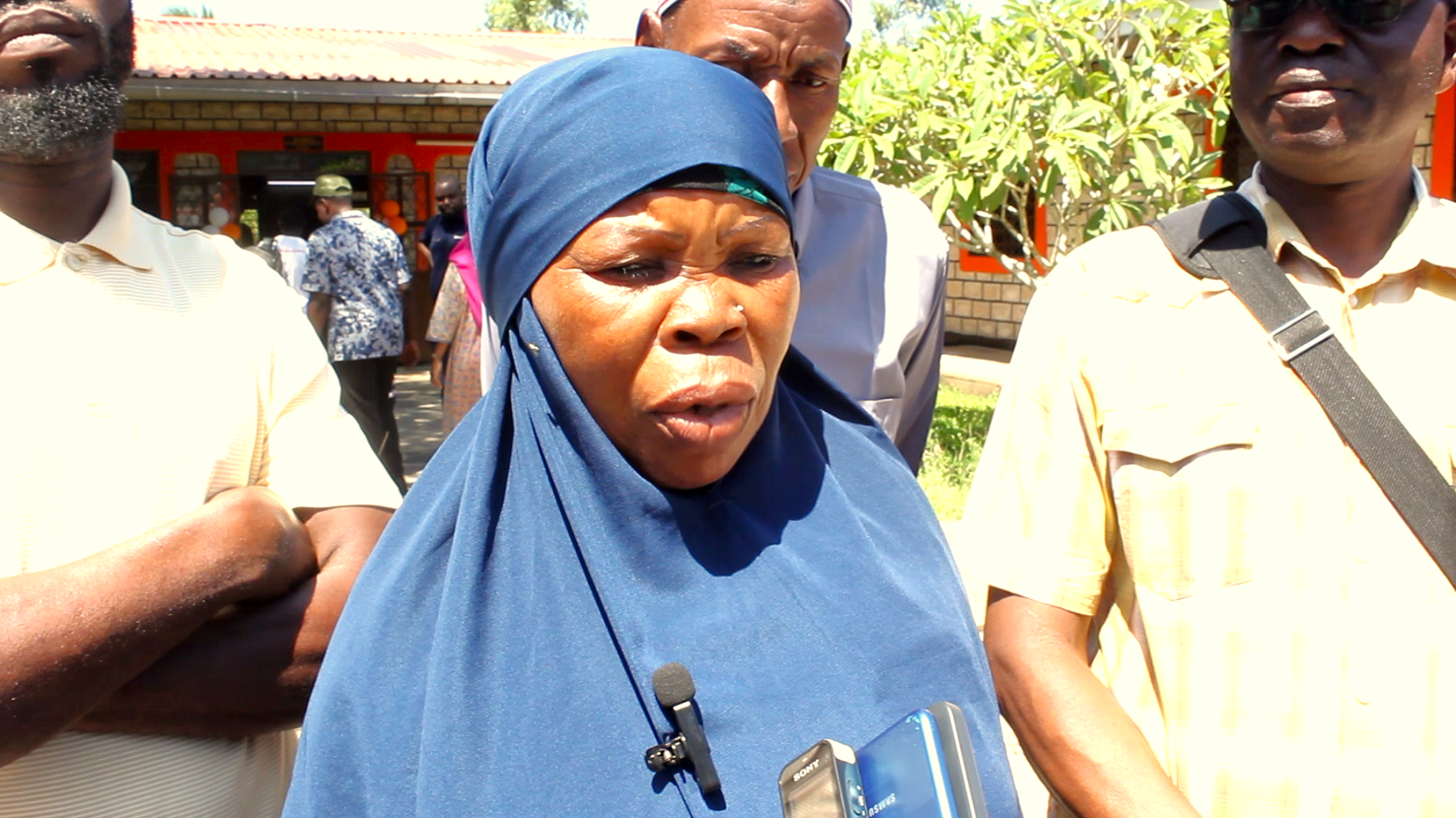
 Community member Khadija Hassan speaks in an interview at Kidscare Kenya in Lunga-Lunga./FILE
A community-driven beekeeping initiative in Kwale County is transforming the lives of families raising children with disabilities.
The initiative is offering them a sustainable source of income and renewed hope.
For years, many persons with disabilities (PWDs) and their families in the region struggled to access economic opportunities.
However, in villages across Lunga-Lunga, a quiet but impactful transformation is underway.
Through community-led beekeeping projects, vulnerable farmers — many caring for children living with disabilities — are now harvesting more than just honey.
The initiative has enabled them to regain financial independence, restore confidence, and challenge long-standing narratives linking disability with poverty.
The programme was launched in 2020 by Kids Care Kenya, a child support NGO based in Lunga-Lunga, in partnership with the Mombasa Rotary Club, as well as county and national government agencies.
The intervention came at a time when the Covid-19 pandemic had deepened economic hardships for many households, particularly those caring for children with disabilities.
Dubbed the Kenya Homecare and Beehive Project, the initiative began as a pilot focused on inclusive agriculture but has since grown into a vital support system for vulnerable families.
So far, about 200 farmers have been trained and equipped with beekeeping materials, while the programme has reached nearly 3,000 children with disabilities in the area.
Five years later, the results are evident. Families that once struggled to meet their basic needs are now reporting improved incomes, food security and a renewed sense of stability.
Hadija Hassan from Tingani village recalls the uncertainty that surrounded the project in its early stages.
“At first, we doubted the project and wondered how these small creatures could benefit us. But we were wrong. We are now harvesting a lot of honey,” she said.
For Hassan, beekeeping has become more than a farming activity — it is a lifeline that allows her to support her family with dignity.
She remembers when many households in the community lived in extreme poverty and putting food on the table was a daily struggle.
Today, she said, many families can afford three meals a day, keep their children in school, and plan for a more secure future.
“We used to face a lot of hardship. Our children sometimes stayed home because we could not afford school fees. But now those struggles are behind us,” she said.
The success of the beekeeping initiative has also inspired community members to diversify their livelihoods.
Hassan said some beneficiaries have started small enterprises such as soap-making, juice processing, and water vending businesses, further improving household incomes and living standards.
Hamadi Shoka from Mwambao village said the community embraced the project fully and the returns have surpassed their expectations.
“We are proud of this initiative. It is not easy, but once you commit to it, it is worth the effort,” he said.
According to Shoka, the income generated from honey sales has helped many families meet their daily needs while improving their living conditions.
He added that the training they received has enabled them to make their own beehives using locally available materials, significantly reducing production costs and increasing honey output.
George Baya said the programme initially targeted 24 villages, but the organisation is now considering expanding to 96 due to the positive impact already recorded.
Baya said the project not only trains farmers in honey production but also equips them with business and financial management skills while helping them form cooperatives to strengthen sustainability.
The programme by Kids Care Kenya was designed to enhance food security as a key pillar of child protection.
“For a child to be safe, many things must be in place. They must have access to education, healthcare and a decent life. But for communities to provide this, they need stable incomes and reliable sources of livelihood,” he said.
Baya said the second phase of the programme has already begun, with plans to reach more vulnerable communities across the county.
He added that the success of the first phase has generated strong demand for the project, making its expansion both necessary and urgent.
Mombasa Downtown Rotary Club Rotarian Nancy Wangila said the partnership with Kids Care Kenya is rooted in a shared commitment to uplift vulnerable communities.
She said the collaboration brings together different stakeholders with a common goal of serving, empowering and transforming the lives of those most in need.
INSTANT ANALYSIS
The beekeeping initiative in Kwale demonstrates how community-driven livelihood projects can effectively address both poverty and social exclusion. By targeting households raising children with disabilities, the programme links economic empowerment with child protection and social dignity. The project’s success lies in combining practical skills training, start-up support, and cooperative structures that allow farmers to scale production and access markets.