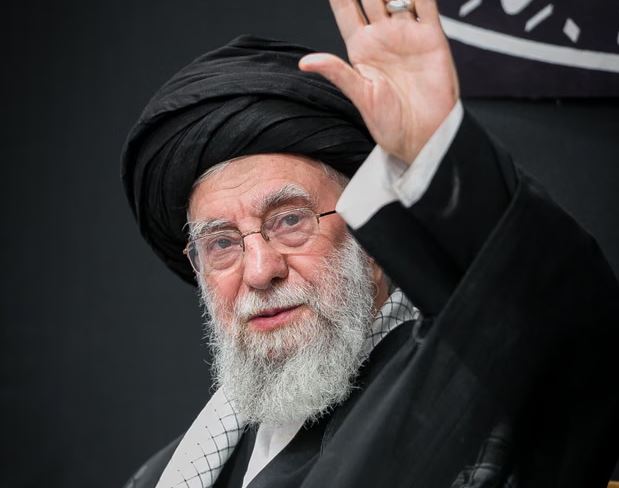
 Ayatollah Ali Khamenei
The death of Ayatollah Ali Khamenei in United States and Israeli airstrikes thrust the long-serving Iranian leader into the global spotlight.
For more than three decades, Khamenei stood at the apex of the political and religious system of the Iran, wielding immense influence over domestic policy, regional strategy and the ideological direction of the Islamic Republic.
His death marked the end of an era that began during the revolutionary upheaval of the late 20th century and leaves behind a deeply divided nation grappling with the legacy of one of its most consequential leaders.
Khamenei served as Iran’s Supreme Leader from 1989 until his death in 2026, making him one of the longest-serving heads of state in modern Middle Eastern history.
During those 36 years, he accumulated extraordinary authority over the political, military and religious institutions of the republic founded by his mentor, Ruhollah Khomeini.
While Khomeini is widely remembered as the architect of the Iranian Revolution that toppled the monarchy, many analysts argue that Khamenei ultimately became the most powerful leader the Islamic Republic ever had, consolidating control over the state in ways that transformed the country’s political structure.
Ali Khamenei was born on April 19, 1939, in the northeastern Iranian city of Mashhad, a major center of Shiʿa Islam and home to the shrine of the eighth imam. Raised in a clerical family of modest means, Khamenei grew up immersed in religious scholarship and the political tensions that surrounded Iran’s monarchy during the mid-20th century.
As a young man he pursued advanced religious studies in the seminaries of Qom, where he studied under prominent Shiʿi scholars.
Among them was the influential cleric Ruhollah Khomeini, whose opposition to the rule of Shah Mohammad Reza Shah Pahlavi would inspire a generation of activists.
Khamenei became politically active in the early 1960s, participating in protests against the Shah’s government. His activism brought him to the attention of the monarchy’s security apparatus, and he was arrested and imprisoned several times.
These experiences cemented his reputation as a committed revolutionary cleric aligned with Khomeini’s vision of an Islamic political order.
When the Iranian Revolution erupted in 1979 and Khomeini returned from exile to lead the new republic, Khamenei quickly rose within the emerging power structure. He served on the Revolutionary Council and later held several positions in the defense and security apparatus of the new state.
For a short period he even commanded the Islamic Revolutionary Guard Corps, the powerful military force established to defend the revolution and which would later become one of the most influential institutions in Iran.
In the early years of the Islamic Republic, political violence and factional struggles were common. Khamenei himself was nearly killed in 1981 when a bomb exploded during a public appearance, severely injuring his right arm. The attack occurred during a wave of assassinations targeting senior figures of the ruling establishment.
Later that year he emerged as a leading political figure when he was chosen as the candidate of the Islamic Republican Party for the presidency. Following the assassination of President Mohammad Ali Rajai in a bombing, Khamenei was elected president in October 1981.
He served two terms, from 1981 to 1989, during a turbulent period that included the devastating Iran–Iraq War. At the time the presidency was not the most powerful office in the Iranian system; significant executive authority was held by the prime minister and ultimately by Khomeini himself.
Nonetheless, Khamenei gained valuable political experience and strengthened his alliances within the clerical establishment and the Revolutionary Guard.
Khamenei’s greatest rise came in 1989 after the death of Ruhollah Khomeini. In a surprising decision, Iran’s Assembly of Experts selected Khamenei as the country’s new Supreme Leader. The choice was controversial because he did not hold the highest clerical rank traditionally associated with the position. Yet he soon consolidated his authority through institutional changes and alliances with key security institutions.
As Supreme Leader, Khamenei occupied the most powerful position in Iran’s political system. He oversaw the armed forces, influenced the judiciary and state broadcasting, and held decisive sway over the country’s foreign and security policies.
Over time he strengthened the role of the Revolutionary Guard, turning it into a central pillar of both domestic control and regional influence.
Under Khamenei’s leadership the IRGC expanded beyond its military role, becoming deeply involved in the economy and in Iran’s network of regional allies and proxy forces across the Middle East. This strategy enabled Iran to project power well beyond its borders while maintaining internal control at home.
Another defining feature of Khamenei’s rule was the central role of Iran’s nuclear programme in national security strategy. He viewed the program as both a symbol of technological independence and a deterrent against external threats.
At times, however, Khamenei showed pragmatic flexibility. During the presidency of Hassan Rouhani, Iran negotiated with world powers over its nuclear programme, culminating in the 2015 agreement known as the Joint Comprehensive Plan of Action. The deal placed limits on Iran’s nuclear activities in exchange for sanctions relief.
Relations with the West deteriorated sharply after Donald Trump withdrew the United States from the agreement in 2018 and re-imposed sweeping economic sanctions. Tensions escalated further with the 2020 killing of Qassem Soleimani, the influential commander of the IRGC’s Quds Force. Khamenei responded by hardening his rhetoric and reinforcing his anti-Western stance.
In his later years, Khamenei increasingly prioritized the survival of the Islamic Republic and his own authority. His government responded harshly to waves of domestic unrest, including nationwide protests demanding political reform and greater freedoms.
The most serious challenge came during the mass protests that erupted between December 2025 and January 2026.
Demonstrators across Iran expressed frustration with economic hardship, political repression and military setbacks abroad. Security forces cracked down brutally on the movement, and thousands were reportedly killed.
The unrest highlighted the widening gap between the state and much of the Iranian population. In contrast to the widespread reverence once shown toward Khomeini, some protesters openly called for Khamenei’s removal and even chanted for his death.
By the mid-2020s Iran’s geopolitical position had weakened significantly. After Donald Trump returned to the U.S. presidency in 2025, pressure on Iran intensified. That same year a brief but damaging conflict with Israel, sometimes referred to as the “12-day war”, further strained the regime’s legitimacy.
Khamenei’s death in airstrikes attributed to the United States and Israel has therefore come at a moment when Iran faces deep internal divisions and uncertain leadership succession. The circumstances of the strike have heightened tensions across the Middle East and raised questions about the future direction of the Islamic Republic.
Khamenei leaves behind a legacy that is both powerful and controversial. Supporters credit him with preserving the Islamic Republic through decades of external pressure and regional conflict. Critics argue that his rule entrenched authoritarianism, suppressed dissent and isolated Iran internationally.