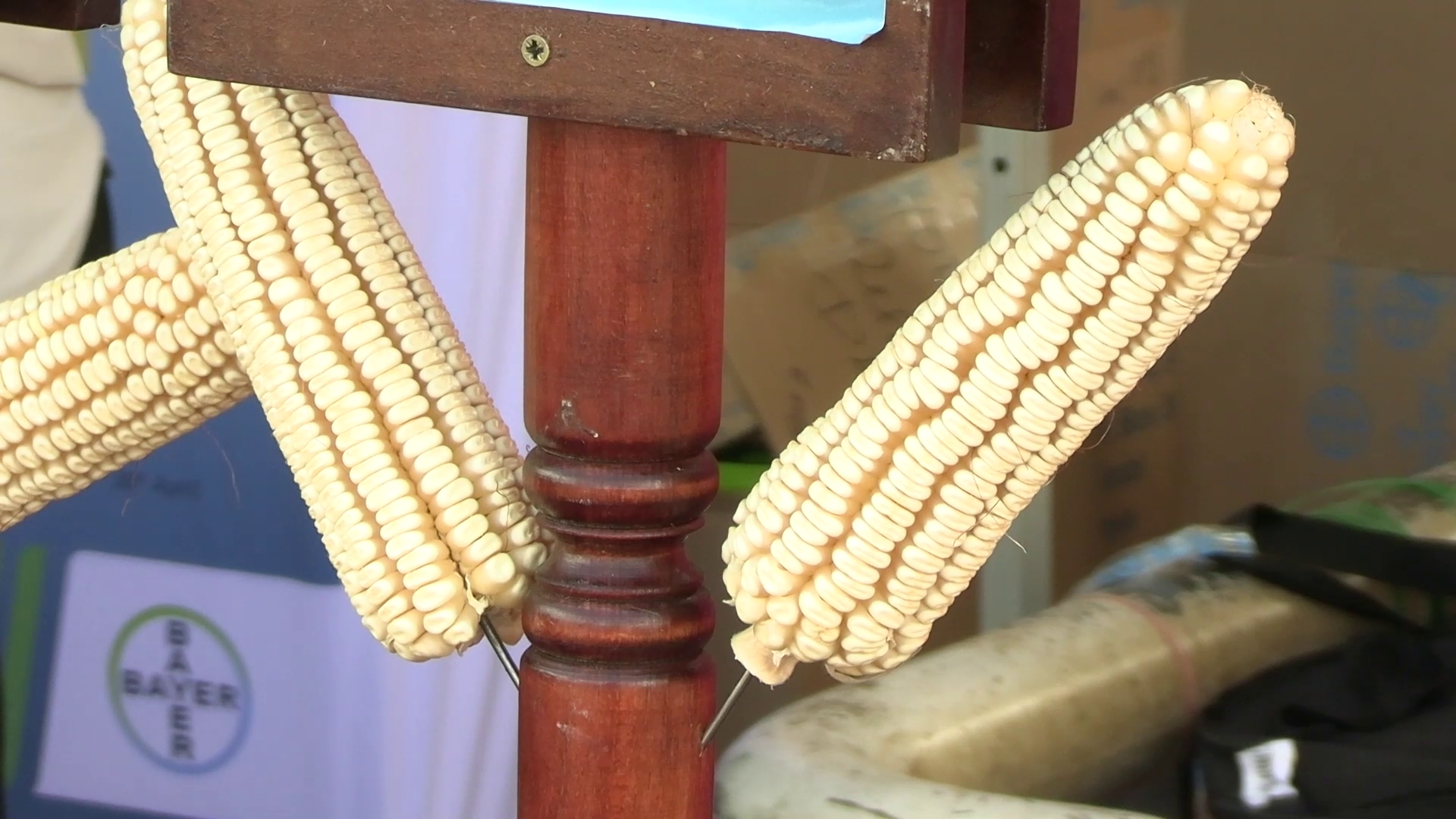
 Maize cobs produced from certified seeds that were displayed during a training forum held at Wang'uru in Kirinyaga county on March 4, 2026/ ALICE WAITHERA
Small-holder farmers have
been urged to plant certified seeds to improve harvests, strengthen food
security and protect themselves from losses associated with fake planting materials.
The use of uncertified seeds has been blamed for undermining crop productivity in Kenya, particularly among small-scale farmers who produce the bulk of the country’s staple foods.
Speaking during a sensitisation campaign at Wang’uru in Kirinyaga county, Bayer East Africa Managing Director John Kanyingi said farmers must prioritise certified seeds if the country is to guarantee stable maize production and national food security.
He noted that maize remains the country’s staple food and any disruption in its production directly affects the country’s food supply.
“Farmers’ job is to ensure food security in the country and we are very much at the core of driving that food security,” Kanyingi said.
He said planting uncertified seeds often results in poor yields, leaving farmers unable to achieve the projected harvest despite investing heavily in farm inputs.
He explained that certified seeds are developed and tested to guarantee performance under specific conditions, while uncertified seeds may not meet quality standards.
“When farmers do not plant certified seeds, they do not get the yields they are expecting. That becomes both an economic loss to them and a risk to national food security because the country ends up producing less food than expected,” he said.
Kanyingi said the company is working with farmers across the country to raise awareness about the importance of certified seeds and how they can help increase productivity.
Kenya’s seed certification process is overseen by the Kenya Plant Health Inspectorate Service (KEPHIS), which ensures seeds sold in the country meet required quality standards.
Certified seed packages are marked with a special KEPHIS label that allows farmers to verify authenticity through a mobile verification system that confirms if they are genuine.
He commended the government through KEPHIS for strengthening oversight in the seed sector to protect farmers from counterfeit products.
“Every certified seed sold in the country should have a KEPHIS sticker. That allows farmers to verify that the seed they are buying is authentic,” he said.
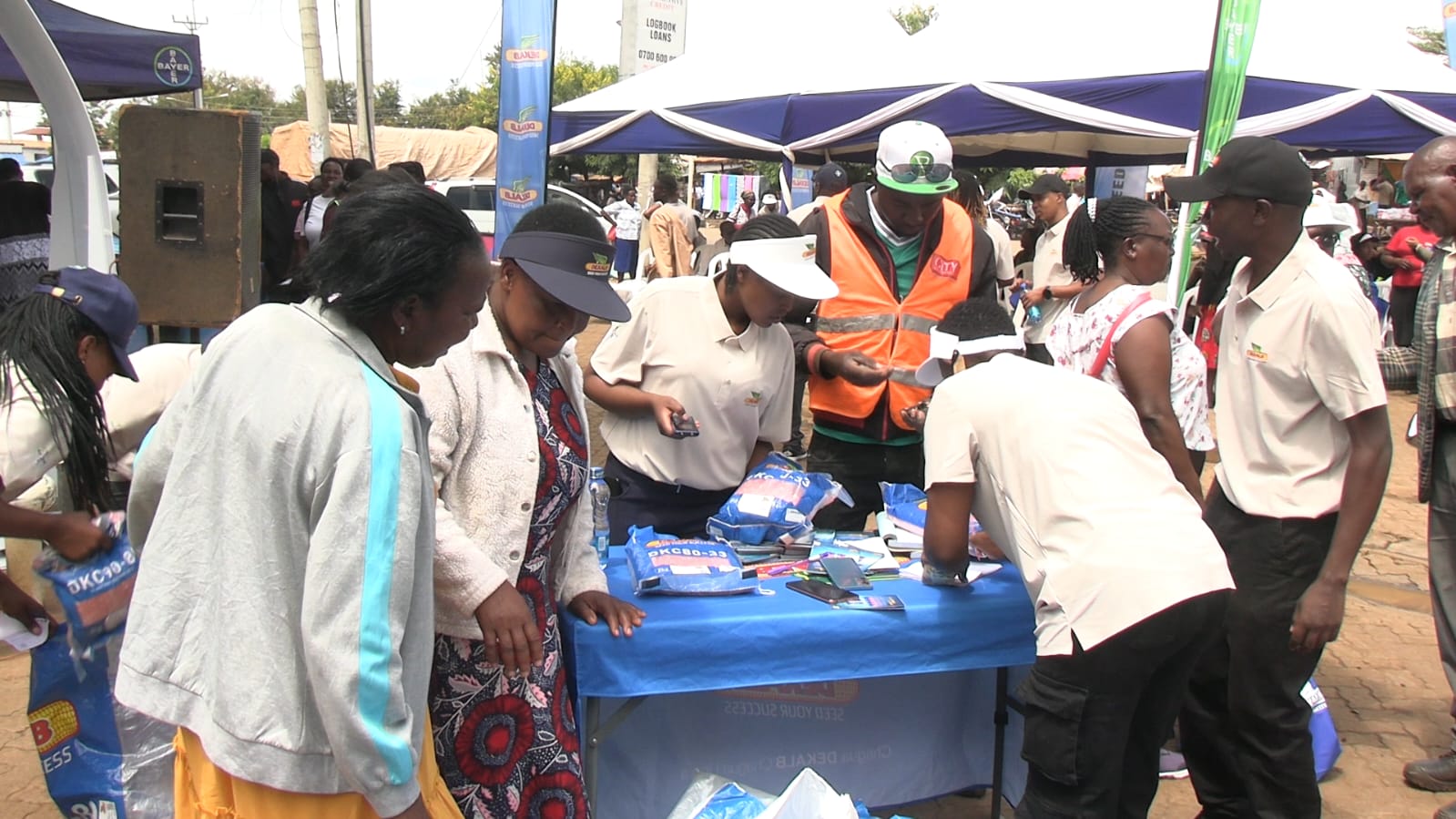 Agricultural experts training farmers on how to identify uncertified seeds during a sensitisation forum held at Wang'uru in Kirinyaga County on March 4, 2026/ ALICE WAITHERA
Certified seed companies are also investing heavily in research to develop crop varieties suited to Kenya’s diverse ecological zones.
Kenya experiences a wide range of climatic conditions, from the hot and dry areas of eastern Kenya to the cool highlands of Central and Rift Valley regions.
Because of these differences, seeds developed for one region may not perform well in another.
Kanyingi said seed developers have therefore created different maize hybrids suited for specific zones.
For instance, farmers in the lower eastern region, where rainfall is limited and temperatures are high, require fast-maturing maize varieties that can withstand heat and survive short rainy seasons.
In contrast, farmers in high-altitude regions such as parts of Mount Kenya and the Rift Valley require hybrids suited for cooler temperatures and longer growing seasons.
“These hybrids are specifically developed to perform in different ecological zones so that farmers can get the best possible yields depending on where they farm,” he said.
Erratic rainfall patterns, rising temperatures and droughts have increasingly disrupted traditional planting cycles, leaving farmers vulnerable to crop failures.
Using uncertified seeds under such conditions further increases the risk of poor harvests because such seeds may lack resilience to drought, pests and diseases.
Farmer Mary Munene said increased awareness campaigns are helping farmers understand the importance of certified seeds.
She said many farmers previously relied on uncertified seeds, which often resulted in poor harvests.
“Before, many farmers harvested very little because they used uncertified seeds. But now with more sensitisation on certified seeds, farmers are beginning to see better harvests,” she said.
Munene also called for expanded farmer education programmes across the country to ensure more farmers understand the importance of quality seeds and proper crop management.
She added that farmers are also being trained on better post-harvest storage practices to reduce losses after harvesting.
“Farmers are now more enlightened, including the elderly, but there is still a need to increase training in all parts of the country,” she said.