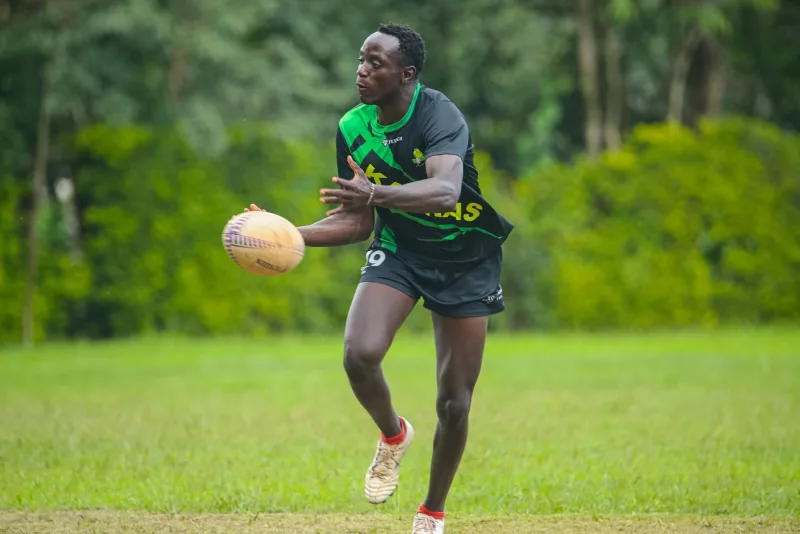
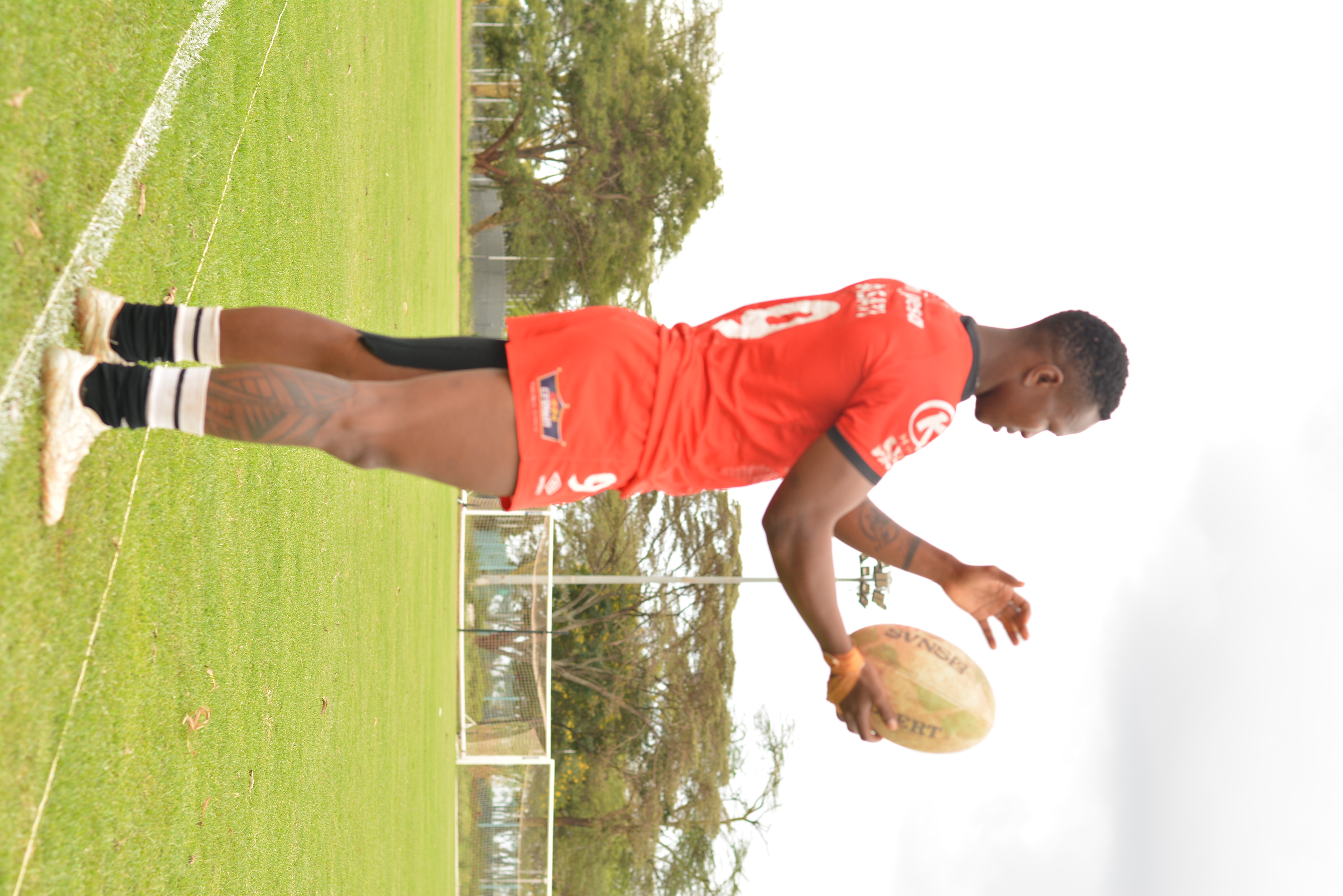
 Shujaa's Co-captain, Samuel Asati, during a training session at Moi Stadium, Kasarani/ CHARLENE MALWA
 Shujaa co-captain Samuel Asati wants Kenya to tighten their execution and stick to the team’s structure as they prepare for the next legs of the 2026 HSBC SVNS Division Two series in South America.
The national sevens side will compete in Montevideo, Uruguay, on March 21–22 before concluding the series in São Paulo, Brazil, on March 28–29, targeting improved performances after finishing third in the opening leg held at Nyayo National Stadium in Nairobi.
Read Also
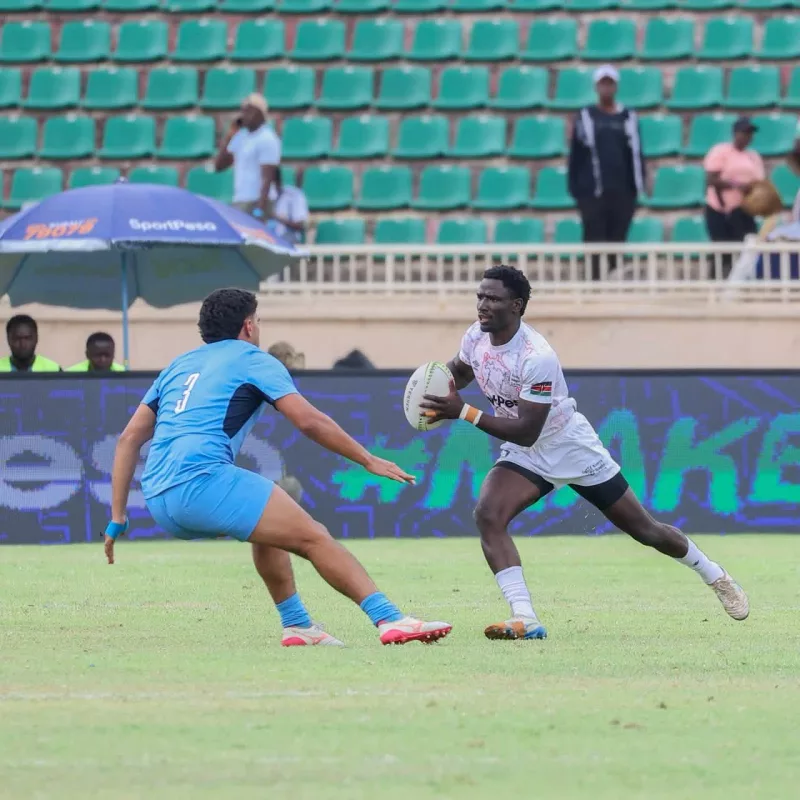
Kenya collected 12 points from the home tournament but missed out on the title after a 21–5 defeat to the United States in the decisive match.
Despite the setback, Shujaa had made a strong start in Nairobi, posting wins over Belgium, Uruguay, Germany and Canada during the pool stages to emerge as early contenders.
Germany eventually finished top of the standings with 13 points, while Kenya settled for third place on points difference. Asati said the team has intensified training to address the weaknesses that surfaced during the Nairobi leg.
“Training is good so far, and we intensified it this week. We focused more on what let us down in the first tournament and next week we will tone it down as we begin focusing on our opponents,” Asati said.
The playmaker noted that slow reactions during restarts and failure to convert scoring opportunities proved costly, particularly in their clash with the United States.
“What let us down was our return to action and the USA capitalised. If you watch that game, we had opportunities from scrums and attacking positions, but we failed to convert them into points,” he said.
“Our execution of set plays from line-outs, scrums and kick-off receipts must improve.”
Asati, who plays a central tactical role in the side, also emphasised the importance of leadership and decision-making on the pitch as Kenya seeks to bounce back in the next two tournaments.
“Personally, I have to lead from the front because I’m a playmaker. I have to make the right calls, such as when to go for touch, so decision making and execution will be very important for the team,” he said.
The Montevideo and São Paulo tournaments form part of the restructured SVNS pathway, where teams accumulate points across the series in pursuit of promotion back to the main World Sevens circuit.
Despite the pressure, Asati remains confident in the squad’s system and believes sticking to their structure will be key to success.
“We have a game structure which, whenever we employ it well, carries the day. Even when things get tough, we have to stick to the structure and execute,” he said.
The co-captain added that morale within the squad remains high as they prepare for the back-to-back tournaments.
“Our target is to go back to the main circuit and we have to take it one game at a time, starting with these two tournaments. The team spirit is high and finishing in the top four is our motivation.”
As the squad continues to blend experienced players with new faces, Asati challenged the newcomers to quickly adapt to the national team environment.
“We have new players and they have to showcase the X-factor. How they blend with the current group and how fast they learn the national team structure will be a big plus,” he said.