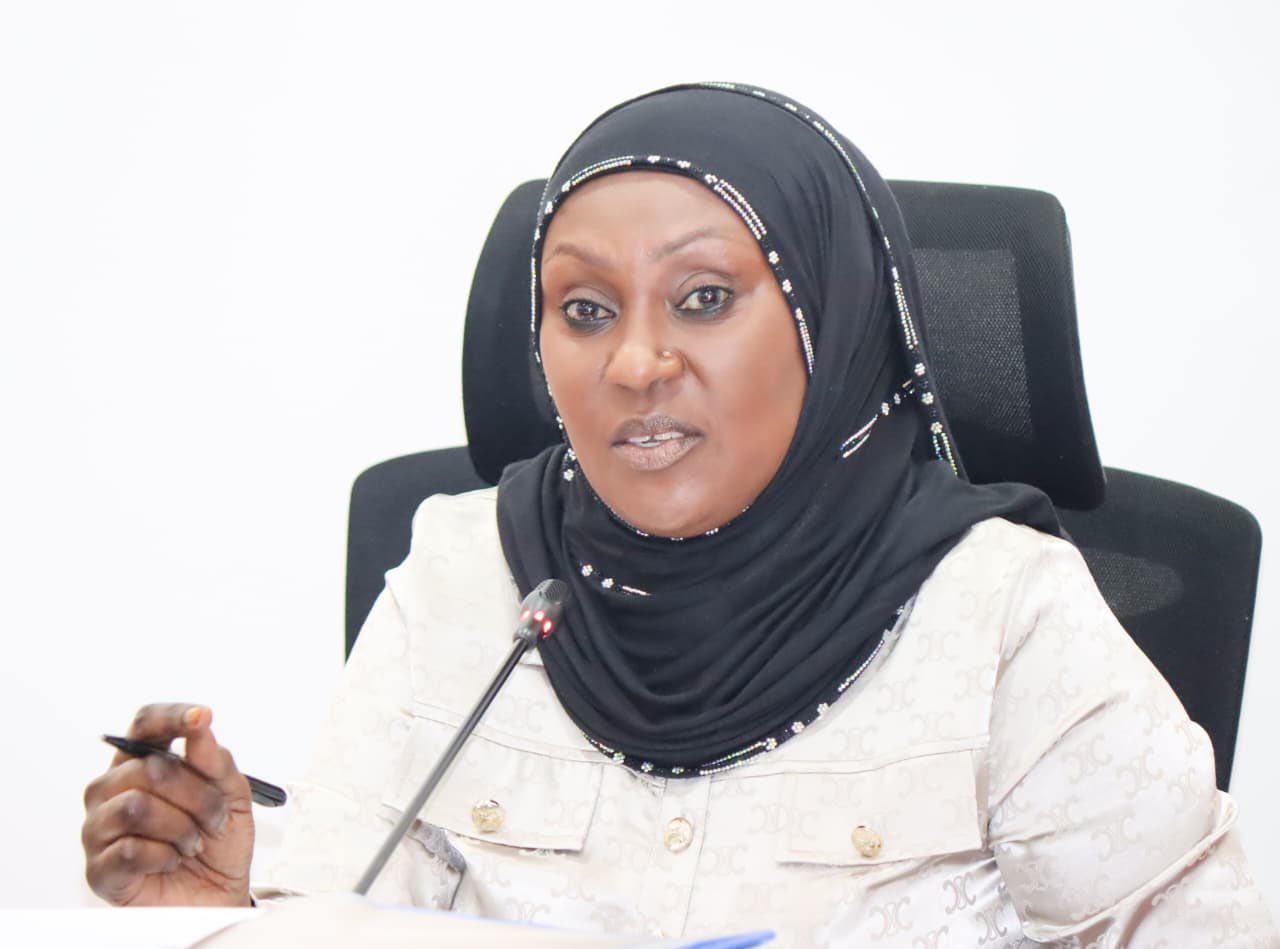
 National Assembly Special Funds Committee chairperson Fatuma Mohammed chairs session probing Husler Fund Sh12 billion loan default, March 5, 2026. /PARLIAMENT
Did you get a Hustler Fund loan and failed to pay it back? Well, your name could be headed to Parliament.
MPs have demanded the names of all defaulters after it emerged that Sh12.5 billion has yet to be repaid.
Hustler Fund CEO Henry Tanui told MPs on Thursday that defaulters are marked and cannot evade repayment even if they switch SIM cards.
He said, regardless of the mobile platform used to borrow the money, the identity of a borrower remains unique as the borrowing is tied to their national ID card numbers, not phone numbers.
"The young people who think that they borrowed and disappeared, they can't because the ID is your account. The loan is tied to a national ID of every individual," Tanui said.
He revealed that to date, Sh83 billion has been loaned out and Sh71 billion repaid, leaving a balance of Sh12.5 billion.
Appearing before the National Assembly's Special Funds Committee, Tanui maintained that no money had been lost as the default rate was only 15 per cent of the total amount loaned out.
Borrowers have different repayment periods, and those marked as defaulters could still be within their repayment schedules and not necessarily refusing to pay.
Tanui said they are engaging with mobile phone service providers to track defaulters, insisting that all monies disbursed as loans will be recovered except for those who have since passed on.
"We are engaging with our partner agents to leverage their customer touch points and communication channels to remind and incentivise borrowers to clear their arrears," Tanui said.
Committee chairperson Fatuma Mohammed directed the Fund to provide details of all the beneficiaries within 14 days.
Tanui said the agency was engaged in different loan recovery strategies, including dispatching reminders, personalised phone calls and face-to-face meetings with chronic defaulters to negotiate repayment plans.
He added that the fund is also sensitising defaulters on the need to repay the loans, ruling out legal action as an option.
"We don't take legal action, we don't arrest them, but we reach out humanely, and we sell the benefits of the fund."
The MPs probed further for answers on what happens with chronic defaulters who remain adamant about meeting their loan obligations.
Tanui said that where incentives such as phased repayment plans fail to bear fruit, the fund will resort to enforcement as a last resort.
"For borrowers who remain unresponsive, the fund will commence a phased enforcement process which includes forwarding accounts to dedicated debt collection agencies as a final recourse."
The CEO told MPs that the management is confident that this assertive and structured approach will significantly improve the recovery rate of the outstanding principal and interest.
Kenyans borrow about Sh50 million daily from the Hustler Fund, translating to about Sh1.5 billion every month.
Tanui said borrowers have saved Sh5.3 billion since inception, Sh1.1 billion of which is revolving, leaving Sh4.2 billion as actual savings.
"Majority of young people between the ages of 18 and 30 have saved Sh2 billion," he said.
Launched on November 30, 2022, the Hustler Fund, officially known as the Financial Inclusion Fund, was designed as a government-backed, digital-first microcredit scheme to provide affordable, unsecured credit to informal sector workers (MSMEs).
It was created under the Public Finance Management (Financial Inclusion Fund) Regulations, 2022, primarily to reduce reliance on expensive, unregulated digital lenders.
Tanui said most of the beneficiaries come from Nairobi county, followed by residents of Kiambu county, because of their huge populations.
He, however, said borrowers are scattered across all the counties.