 Judge Monica Mberu elected as new ELRC Principal Judge/JUDICIARY
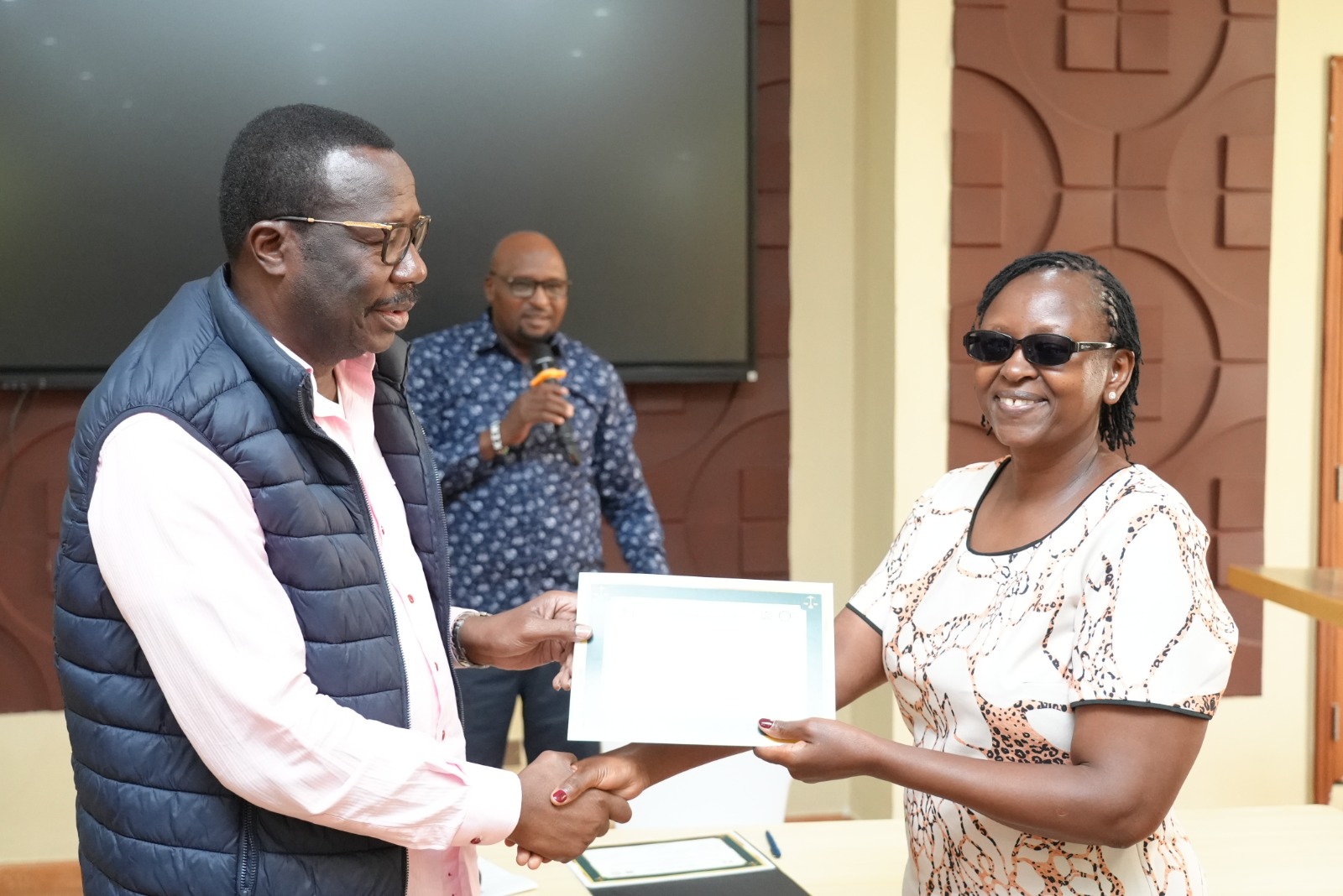
Judges of the Employment and Labour Relations Court have elected Monica Mbaru as the new Principal Judge.
She is taking over leadership of the court following the elevation of Byram Ongaya to the Court of Appeal.
Justice Mbaru, who currently serves as the presiding judge in Mombasa, was elected unopposed by her colleagues.
The position of principal judge carries a five-year term, which is renewable once, and involves administrative leadership and coordination of judicial functions within the specialised labour court.
Her election marks another milestone in a judicial career that has spanned years of legal practice, human rights advocacy, and service on the bench.
Justice Mbaru holds a Bachelor of Laws (LLB) degree from the University of Nairobi and a Master of Laws (LLM) from the University of Pretoria in South Africa.
She is currently pursuing a Doctor of Laws (LLD) at the University of Nairobi, where her research focuses on disability and the law, reflecting her longstanding interest in issues affecting vulnerable groups.
Before joining the judiciary, Justice Mbaru built a legal career rooted in social justice, human rights advocacy, and the protection of minority and marginalised communities, including women and persons with disabilities.
She worked with several organisations involved in legal aid and public interest litigation across the region.
Among them are the Hivos Foundation in East Africa, the International Commission of Jurists (Kenya Chapter), Kituo Cha Sheria (Legal Aid Centre), and the Legal Resources Foundation.
Through these roles, she contributed to programmes aimed at expanding access to justice, including legal aid services, paralegal training initiatives, and community outreach programmes designed to help ordinary citizens understand and assert their legal rights.
Justice Mbaru also served as a consultant with the Secretariat of the African Decade for Persons with Disabilities.
She supported the development of policy and legal frameworks in collaboration with the African Union and the East African Community.
Her work during this period focused on strengthening legal protections and institutional frameworks aimed at promoting the rights and inclusion of persons with disabilities across the continent.
Her involvement in international legal initiatives also includes participation in the development of the Yogyakarta Principles plus 10, adopted in Geneva in 2017.
The principles provide guidance on the application of international human rights law in relation to issues of equality, dignity, and protection from discrimination.
Within the judiciary, Justice Mbaru has handled a wide range of labour and employment disputes, contributing to the development of jurisprudence in employment law and workplace rights.
She is also an active member of regional and international judicial networks, including the African Judges Forum and the Africa Judges and Jurists Forum, platforms that bring together judicial officers across the continent to exchange experiences and strengthen the rule of law.
Her election as principal judge places her at the helm of one of Kenya’s specialised courts tasked with handling disputes relating to employment, labour relations and workplace rights.
The Employment and Labour Relations Court plays a critical role in resolving conflicts between employers and employees, interpreting labour laws, and safeguarding workplace protections under the Constitution and labour statutes.
As principal judge, Justice Mbaru will oversee the court’s administrative functions, coordinate judicial assignments and help guide its strategic direction as it continues to handle an increasing number of labour and employment disputes across the country.