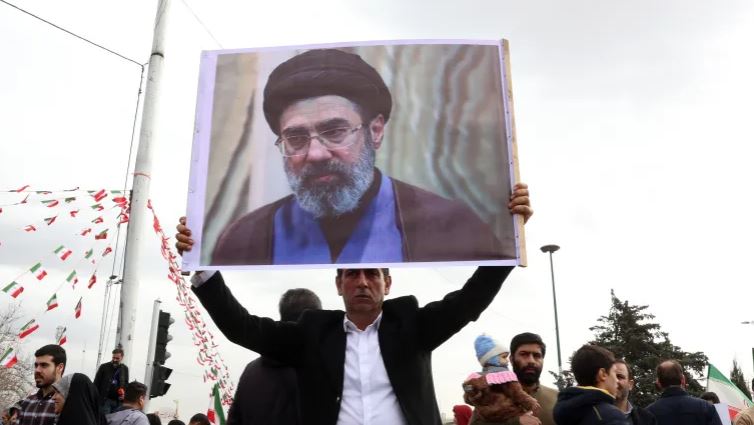
 An Iranian man holds a picture of Mojtaba Khamenei, the son of the Iran's then-supreme leader./SCREENGRAB
Mojtaba Khamenei, the second-eldest son of Iran’s late Supreme Leader Ali Khamenei, is alive, in good health and actively following developments in the country, according to Iran’s semi-official Mehr news agency.
Mehr reported Tuesday that it had received reliable information confirming Mojtaba’s well-being, saying he is currently focused on matters related to his slain family members while also reviewing key national affairs.
In recent years, Mojtaba Khamenei has frequently been mentioned as a possible successor to his father, who served nearly eight years as president and later ruled as Iran’s supreme leader for 36 years before he was killed in attacks on his compound in Tehran on Saturday.
Should Mojtaba eventually take over the leadership role, analysts say it could signal that hardline factions within Iran’s political establishment still hold strong influence, potentially suggesting little appetite for immediate negotiations or diplomatic agreements.
The 56-year-old cleric has never publicly addressed the question of succession, a topic considered highly sensitive in Iran. His rise to the country’s highest office would effectively mark the emergence of a political dynasty, drawing comparisons to the Pahlavi monarchy that ruled Iran before the 1979 Islamic Revolution.
The development comes as tensions in the Middle East continue to escalate, with Iran’s Islamic Revolution Guards Corps (IRGC) claiming it has struck a second U.S. Terminal High Altitude Area Defence (THAAD) anti-missile system in the West Asia region.
In a statement carried by its official outlet Sepah News, the IRGC said the system was hit and destroyed using precision-guided missiles, marking another dramatic moment in the unfolding standoff between Iran and the United States.
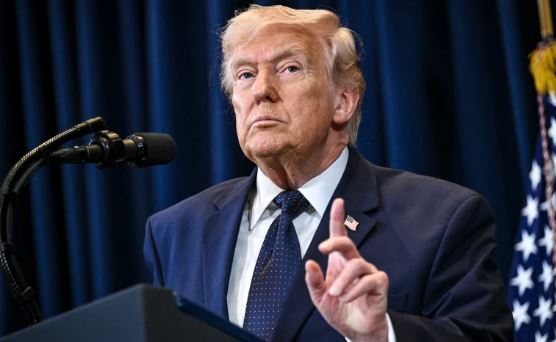
The situation has also drawn a sharp response from Washington. U.S. President Donald Trump said the United States Navy is prepared to escort oil tankers through the Strait of Hormuz if necessary, a move aimed at protecting one of the world’s most critical shipping routes.
“If necessary, the United States Navy will begin escorting tankers through the Strait of Hormuz as soon as possible,” Trump said in a social media post.
In Europe, French President Emmanuel Macron strongly criticised the military actions carried out by the United States and Israel, saying they were conducted outside international law.
Speaking in a televised address on the unfolding crisis in Iran and the wider Middle East, Macron warned that the conflict sparked by the strikes risks spreading across the region, with serious consequences for global peace and security.
As diplomatic tensions deepen and military rhetoric intensifies, the developments signal a rapidly evolving crisis that continues to draw in major world powers