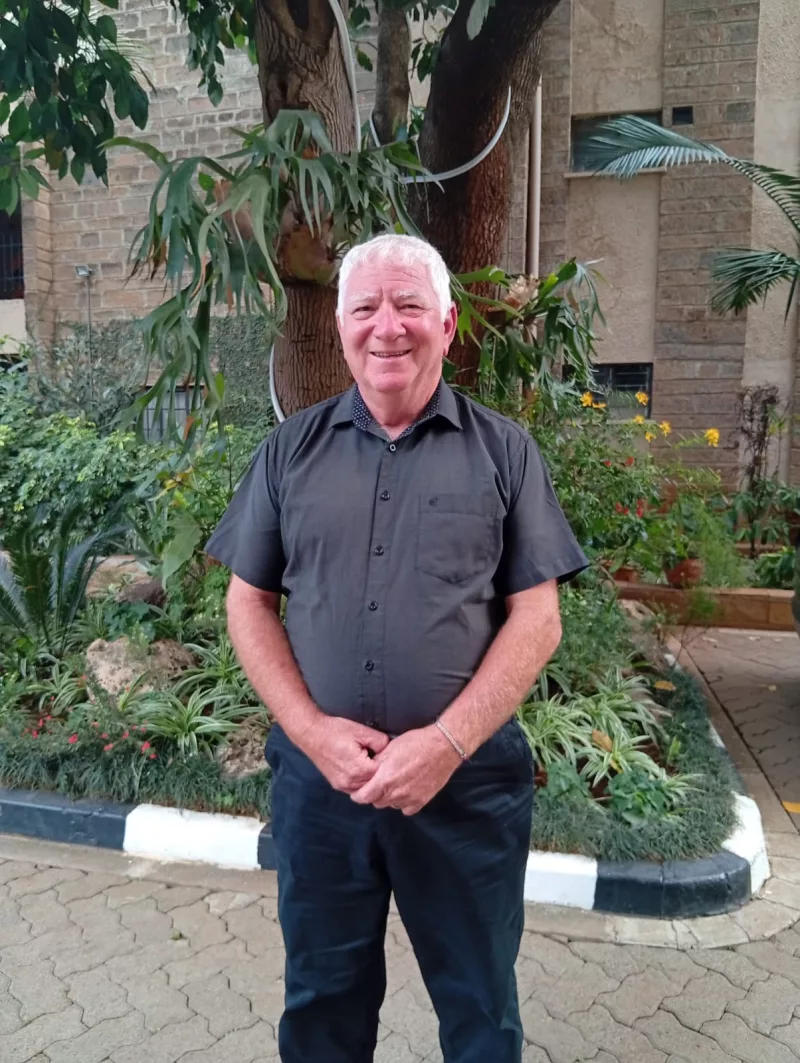
 Nairobi Governor Johnson Sakaja. /FILE
Nairobi Governor Johnson Sakaja once again finds himself fighting for political survival, barely six months after the first attempt to drive him from City Hall collapsed under the weight of national political intervention.
This time, the threat comes sharpened and emboldened. City MCAs, led by Minority Leader and Nairobi South MCA Waithera Chege, say they are pursuing an entirely fresh impeachment motion comprising 22 counts.
The renewed push follows the lapse of a 60-day grace period granted after the first ouster attempt for the governor to address concerns raised.
“This one has got nothing to do with the first impeachment; this is a completely new impeachment with 22 counts,” Chege said on Tuesday.
The irony is striking as the ouster bid comes just weeks after Sakaja stood at State House on February 17 to sign an Sh80 billion co-operation agreement with President William Ruto, aimed at enhancing service delivery in the capital.
The agreement, later unanimously approved by the county assembly, seeks to bolster infrastructure development in key sectors, including garbage collection, roads, street lighting and water provision.
Yet what was framed as a partnership for efficiency has been described by some critics as a “humiliating takeover” that underscores, in their view, the governor’s inability to manage the city independently.
The very deal meant to steady Sakaja's administration appears to have provided fresh ammunition to detractors who argue that Nairobi’s leadership is faltering.
While declining to disclose the specific 22 counts before the motion reaches the clerk, Chege signalled confidence in the number of Ward Reps that have endorsed the motion.
“I can assure you we have an overflow and therefore, moving forward, we will only be counting days from tomorrow,” she said, adding that the motion had already secured sufficient signatories in its initial round, with a second vote expected seven days later.
“In life, giving people a second chance is not a crime, but if you continue giving second chances and things don’t work, then that becomes a crime; it becomes negligence,” former Nairobi mayor Geoffrey Majiwa said.
The confrontation echoes the aborted impeachment drive of late August 2025, when MCAs accused Sakaja of poor service delivery and failing to meet pre-campaign promises made in 2022.
Dissatisfaction centred on governance disputes, political friction and resource allocation within the city administration.
Delays in disbursing ward development funds and bursaries became flashpoints, with assembly members arguing that grassroots projects had stalled due to lack of funds.
Others complained of a strained relationship with the executive that made coordination across wards difficult.
By early September 2025, more than 70 MCAs had backed the motion, plunging the capital into a full-blown political crisis.
What began as a county confrontation quickly escalated into a national crisis that attracted the attention of top political power brokers.
On September 2, 2025, President Ruto and the late ODM leader Raila Odinga, who at the time shared a working relationship under the broad-based government arrangement, intervened to defuse the crisis.
Ruto convened a meeting of Kenya Kwanza-aligned MCAs at State House, urging political stability and cautioning against destabilising the county leadership.
Raila separately engaged ODM-affiliated MCAs in closed-door talks, reportedly encouraging them to suspend the motion temporarily to allow dialogue between the executive and the assembly.
Both meetings, described by operatives as well coordinated, came within 48 hours of each other.
The impeachment was put on hold as Sakaja acknowledged the concerns raised and embarked on efforts to mend relations.
Political commentators described the move as a rare bipartisan intervention in devolved politics — a moment when national interests overshadowed county oversight.
But from the look of things, the high-profile mediation did not erase the grievances; it merely postponed them.
Raila’s sudden death on October 15, 2025, and the cultural rites and succession politics that followed appear to have extended Sakaja’s breathing space beyond the initial 60-day ultimatum.
With the mourning period behind it and internal rivalries crystallising, the centre of gravity within ODM shifted, and attention turned toward defending self-interests and saving political careers.
ODM’s divisions threaten to spill back into county politics. Sakaja’s survival may depend as much on those fault lines as on the 22 counts tabled against him.
Already, Embakasi East MP Babu Owino, a vocal critic and prospective Nairobi gubernatorial contender in 2027, has aligned himself with the ODM rebel faction led by Nairobi Senator and embattled party secretary general Edwin Sifuna.
Sifuna, a persistent critic of the governor, leads the Linda Mwananchi faction that emerged after a fallout with the Linda Ground wing associated with Oburu Oginga following Raila’s death.
The Sifuna camp is opposed to ODM backing Ruto’s re-election in 2027, a stance that complicates any assumption that ODM-aligned MCAs would heed pressure from State House to rescue Sakaja again.
If the party’s internal struggle hardens, the governor could find himself without the bipartisan shield that saved him last year.
During ODM’s parliamentary group meeting on March 3 at Parliament Buildings, multiple attendees described a conciliatory tone.
“The general feeling was that there should be no reason why the party should have two factions,” a second-term lawmaker said.
Oburu Oginga is said to have briefed members on forthcoming negotiations, stressing that ODM was not in a hurry to align with either the re-election or removal of President Ruto in 2027.
Yet still, Sifuna, who remains the substantive ODM secretary general after being reinstated by court, skipped the meeting chaired by Oburu. So did Babu Owino.
The optics suggest that ODM unity, a key determinant in Sakaja's fate should the ouster motion sail through, remains aspirational rather than settled.
Against this backdrop, Chege’s warning rings with finality.
“We are going until the end because we gave him a chance of 60 days to redeem himself; he’s completely unable to develop Nairobi and therefore, with the remaining timelines, we cannot just sit down and watch,” she said.
Sakaja thus stands at the intersection of two volatile arenas: a county assembly determined to test his mandate and a political party wrestling with its own identity in a post-Raila era.
Presidential backing may offer him insulation, but without a solid ODM position, that shield may be thinner than before.
The question is no longer whether the MCAs can secure the required signatures; it is whether Sakaja can navigate the shifting alliances that once rescued him.
His survival hinges not only on the numbers on the floor of the assembly but on the balance of forces beyond it.