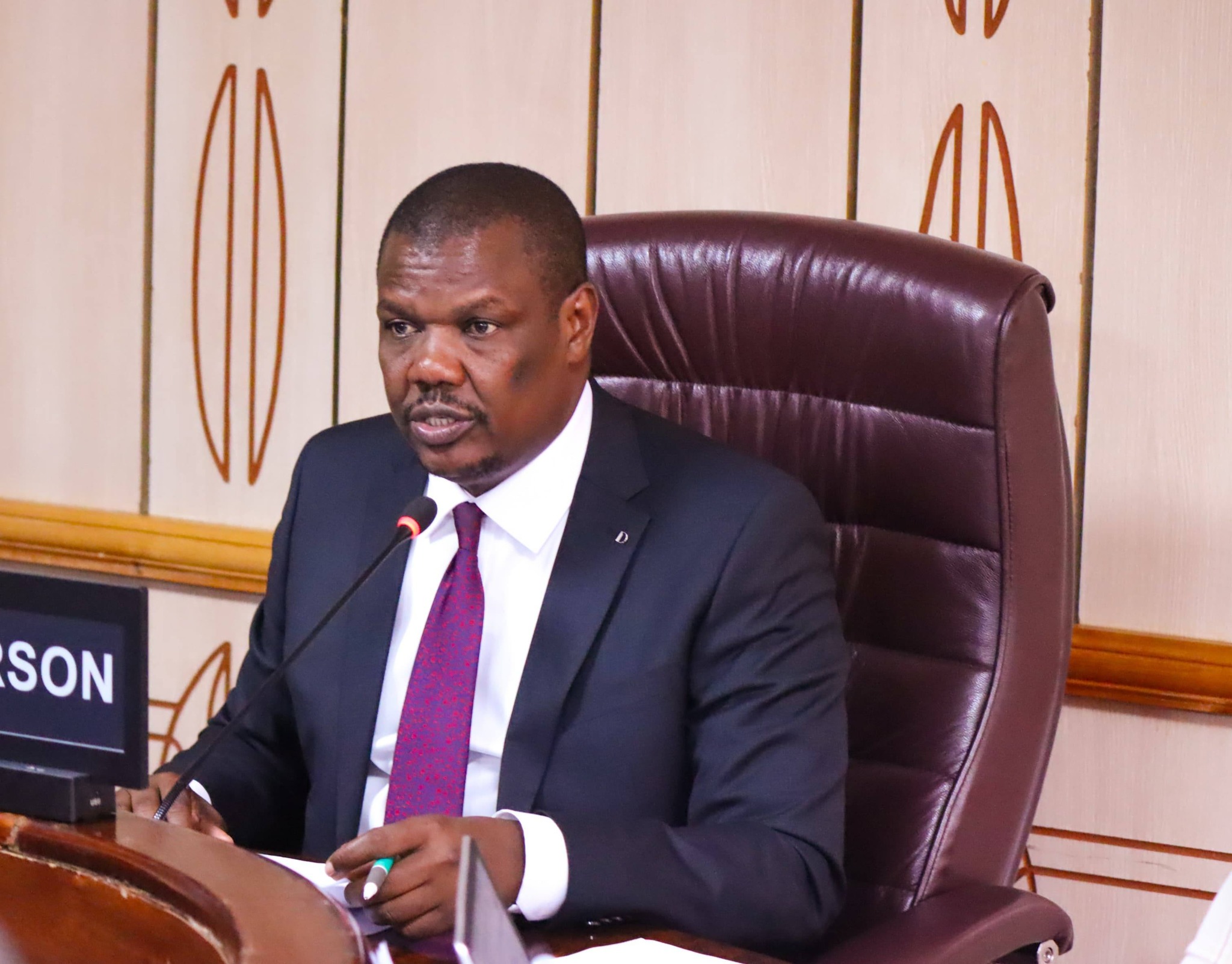
 National Assembly’s Public Investments Committee on Governance and Education chairperson Wanami Wamboka said chairs session on March 3, 2026. /PARLIAMENT
Members of the National Assembly’s Public Investments Committee on Governance and Education (PIC) have demanded stricter accountability across education agencies, warning that audit gaps and governance lapses threaten public confidence in the sector.
The committee made the demands Tuesday after examining audited accounts of several education institutions and agencies flagged in reports of the Auditor General Nancy Gathungu.
“Public funds allocated to education must deliver results that learners and taxpayers can see and trust,” committee chairperson Wanami Wamboka said.
At Tigania East Technical and Vocational College, the committee rescheduled a session requiring the former principal, accountant, procurement head and finance officer to appear over inaccuracies in the institution’s financial statements.
Concerns also emerged at the Kenya National Examinations Council (KNEC), where members questioned what was described as inadequate government funding.
Legislators signalled plans to engage the Budget and Appropriations Committee and the Departmental Committee on Education to review the council’s allocation, noting that reliance on grants is insufficient for an institution central to national assessments.
Management told the committee that Sh1 billion is required to complete a stalled building project, adding that constrained funding continues to affect operational efficiency.
At the School Equipment Production Unit (SEPU), the committee cited prolonged acting appointments, including one officer serving in an acting capacity for over four years, terming it a breach of public service regulations and calling for immediate regularisation.
The Kenya Institute of Curriculum Development (KICD) was directed to utilise available resources to complete a stalled education resource centre and to submit missing documentation, as the committee indicated it would engage the National Treasury over staffing gaps.
Eldoret National Polytechnic was given three months to regularise an unauthorised bank account and develop an ICT strategic plan.
Kaiboi and Kipsoen National Polytechnics were similarly directed to address stalled projects, compliance gaps and land documentation issues.
The scrutiny of agencies and technical institutions comes against the backdrop of broader concerns raised by the Office of the Auditor General in its 2023–24 review of 42 public universities.
Under the constitution, the Auditor General is required to audit and submit reports of public entities to Parliament and relevant county assemblies by December 31 each year.
Article 252 further empowers the office to conduct investigations, conciliations and mediations and to summon witnesses for investigative purposes.
In the year ended June 30, 2024, the audit of public universities revealed systemic challenges including inaccuracies in financial reporting, inadequate supporting documentation and weaknesses in internal control systems.
The report also flagged deficiencies in governance practices, instances of non-compliance with legal and regulatory frameworks and limited assurance regarding the efficient and effective use of public resources.
However, the analysis of audit opinions pointed to measurable improvement where the number of universities whose books of account matched expenditure rose from eight to 12, signalling enhanced compliance with accounting standards and greater financial transparency.
The number of institutions issued with qualified opinions remained at 28, while adverse opinions dropped from three to two.
An unmodified opinion indicates that financial statements agree with underlying records and are free from material misstatement.
A qualified opinion points to largely compliant records, except for specific material misstatements or omissions.
An adverse opinion reflects significant disagreement between financial statements and underlying records or standards.
“In light of these findings, accounting officers are encouraged to undertake a thorough analysis to establish the root causes of the systemic challenges and implement focused and effective corrective measures,” Auditor General Nancy Gathungu noted in her report.
The university audit trends underscore why governance vigilance across the entire education ecosystem remains critical.
PIC reiterated that strong oversight and timely corrective action are central to safeguarding public resources and strengthening confidence in Kenya’s education sector.