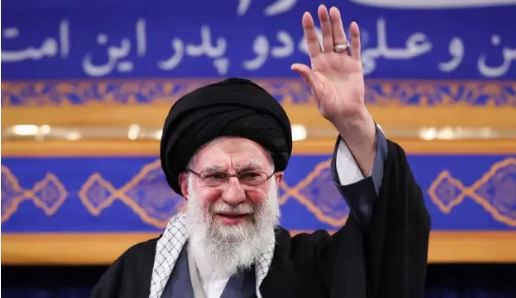
 Deceased Iranian Supreme Leader Ali Khamenei ./FILE
Claims have emerged that Iran’s Supreme Leader Ali Khamenei was killed in an airstrike targeting his office after he reportedly refused repeated security advice to relocate amid rising regional tensions.
The allegations were made by Abdul Majid Hakeem Ilahi, the representative of Khamenei in India, while addressing supporters.
Ilahi narrated that aircraft allegedly involved in a joint operation linked to the United States and Israel struck the Iranian leader’s office, killing him alongside members of his family, according to his account.
Ilahi described Khamenei as a leader who prioritised solidarity with ordinary citizens over personal safety. He claimed security officials had repeatedly urged the Supreme Leader to move to a safer location as tensions escalated, but he refused.
“Ayatollah Khamenei was in his office and several times security asked him to move to another city, but he refused,” Ilahi said.
According to Ilahi, security officials also suggested additional protective measures, including relocating Khamenei to a fortified shelter. However, he said the leader declined, arguing that he would not seek safety while ordinary Iranians remained exposed to risk.
“He said if you could move 90 million Iranians to another city, I will move after that,” Ilahi quoted him as saying.
Ilahi further claimed Khamenei rejected offers to hide in an underground bunker. He said the leader maintained that any protection offered to him should also be available to the wider population.
“They asked him to go to a basement for safety, but he said if you can build basements for all Iranians, then I will go,” Ilahi said.
The cleric alleged that Khamenei remained in both his office and residence despite continued warnings. He claimed that the airstrike struck early in the morning, killing Khamenei, his wife, daughter-in-law and several relatives.
Ilahi offered condolences to Khamenei’s supporters globally, saying he believed the incident would not weaken the political and ideological movement associated with the late cleric.
“I am sure the killing of Ayatollah Khamenei will not benefit them,” he said.
He added that the incident would instead strengthen the resolve of his followers.
“His blood will bring more power, more energy, and more awareness to society, and people will follow his path,” Ilahi said.
He concluded by saying that, although the death was unjust, he believed Khamenei’s followers would continue seeking what he described as justice and peace globally.
Iran state media confirmed early Saturday morning that the Supreme Leader Khamenei was killed.
US President Donald Trump earlier said Khamenei had been killed by US-Israeli strikes across Iran
An intelligence source and a military source told the BBC's US partner CBS that around 40 Iranian officials were killed in the air raids, including Khamenei.
Israel earlier identified seven officials it says it killed.
Born in the north-eastern city of Mashhad in 1939, the son of a religious scholar, Ali Khamenei joined the religious opposition movement of Ayatollah Khomeini in 1962.
After the Islamic Revolution in 1979, Ali Khamenei became deputy defence minister and helped organise the Islamic Revolution Guard Corps (IRGC).
When Khomeini died in June 1989, the Assembly of Experts - a council of clerics - chose Ali Khamenei to be the new supreme leader, changing the constitution to allow him to take charge even though he had not achieved the required rank among Shia clerics.
Ayatollah Khamenei has maintained a firm grip on Iran's politics and its armed forces ever since, suppressing challenges to the ruling system, sometimes violently.
He also consistently taken hard-line stances on external matters, including the ongoing confrontation with the United States, of whom he remained suspicious.